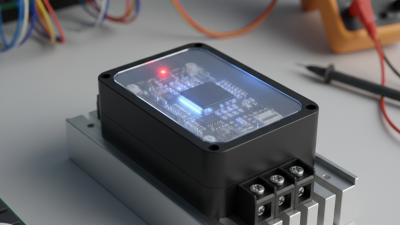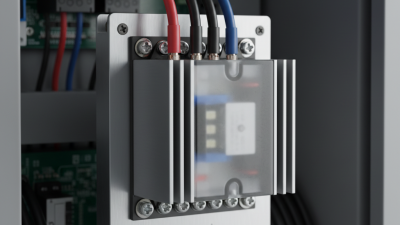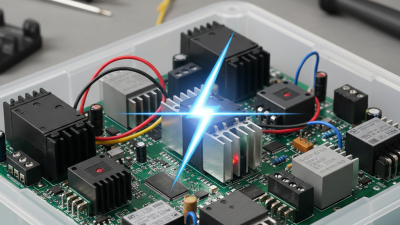
The growth of technology has led to significant innovations in the field of Isolated Solid State Relay (SSR) devices. These components play a vital role in electrical isolation and control. In sectors like industrial automation, telecommunications, and renewable energy, their importance is growing. Isolated Solid State Relays provide robust performance with enhanced reliability.
As the demand for energy-efficient solutions increases, manufacturers are investing in advanced designs. New trends focus on improving thermal management and reducing electromagnetic interference. Emerging technologies, such as wide-bandgap semiconductors, promise to push the boundaries of what SSRs can achieve. This evolution may potentially reshape power applications.
However, challenges remain in optimizing these systems. Developers must balance cost and performance while ensuring compliance with stringent standards. The landscape is full of opportunities for innovation, but careful consideration is essential to address these complexities. Thus, understanding the latest advancements in Isolated Solid State Relay technologies is crucial for stakeholders aiming to stay ahead in this competitive field.
The solid state relay (SSR) landscape is evolving rapidly as we approach 2026. One significant trend is the move toward improving energy efficiency. Reports suggest that more than 30% of energy loss in industrial systems can be attributed to inefficient switching devices. Innovative designs are focusing not only on reducing this waste but also enhancing the lifespan of relays. Advanced materials and semiconductor technologies are paving the way for these improvements, making SSRs more reliable and lower in power consumption.
Another area of innovation is integration with IoT devices. As industries look to become more automated, the need for SSRs that can seamlessly communicate with smart systems is crucial. Data from industry analysts indicate that the market for smart control systems is expected to grow by 25% by 2026. This integration could mean more precise control of electrical loads and better monitoring capabilities. However, the challenge remains as manufacturers must ensure that these systems maintain reliability under various environmental conditions.
In addition, the push towards miniaturization continues. Smaller, lighter SSRs are needed to accommodate modern design constraints in various applications. While this trend offers many advantages, it raises concerns over thermal management and potential overheating. Balancing size and performance will require deep industry knowledge and innovation. As we move forward, the emphasis on sustainable and effective designs will be vital for future developments in solid state relay technology.
| Innovation/Trend | Description | Advantages | Applications | Future Implications |
|---|---|---|---|---|
| High Voltage Isolation | Improved isolation ratings for enhanced safety in power applications. | Increased safety margins and reduced risk of failure. | Renewable energy systems, industrial automation. | Broader adoption in high-voltage applications. |
| Miniaturization | Development of smaller components without compromising performance. | Space-saving in electronic designs. | Consumer electronics, IoT devices. | Enables more compact and portable solutions. |
| Smart Control Features | Integration of smart technology for remote operation and monitoring. | Enhanced efficiency and real-time data access. | Smart buildings, automated systems. | Opens avenues for predictive maintenance and analytics. |
| Enhanced Thermal Management | Innovative designs for better heat dissipation. | Improved reliability and lifespan of components. | Electric vehicles, high-power electronics. | Supports ongoing advancements in high-performance applications. |
| Digital Communication Interfaces | Incorporation of digital protocols for better interfacing. | Seamless integration into modern control systems. | Industry 4.0 applications, smart grids. | Facilitates interoperability among various systems. |
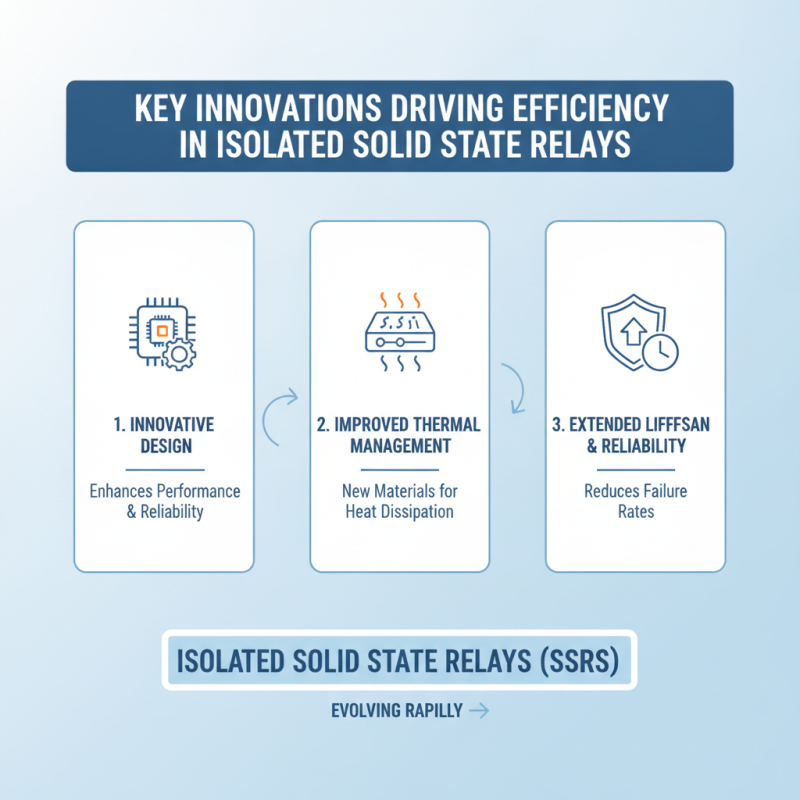
Isolated solid state relays (SSRs) are evolving rapidly. Innovations in design enhance their performance and reliability. One key trend is the improved thermal management. New materials help to dissipate heat efficiently. This reduces failure rates and extends the lifespan of the devices.
Another innovation focuses on advanced control algorithms. These algorithms improve switching speed and precision. As a result, applications become more responsive. Additionally, integrating smart technology enables better monitoring and control. Users can now manage their systems more effectively, reducing downtime.
Tips for selecting an isolated SSR include assessing the load requirements. Ensure the relay can handle voltage and current specifications. Review thermal performance ratings to avoid overheating. Always consult technical guidelines for installation. Small mistakes can lead to significant issues.
The miniaturization and packaging of solid-state relays (SSRs) is transforming the electronics landscape. As industries demand more compact solutions, SSRs are evolving. According to a recent industry report, the market for SSRs is projected to grow by 10% annually through 2026. This growth is driven by the increasing need for reliable and high-density components in sectors like automotive and industrial automation.
Innovations in packaging materials are playing a pivotal role. Advanced thermal management technologies allow for smaller packages without sacrificing performance. For instance, newer thermoelectric materials can dissipate heat efficiently. The challenge is balancing size with reliability. Smaller packages can lead to overheating, which affects longevity. Paying attention to thermal design is crucial in this miniaturization trend.
Tips: Always consider the application environment when selecting SSRs. Ensure that the chosen relay can handle the expected thermal load effectively. Keep an eye on packaging advancements that offer enhanced reliability. Embracing new materials can either be an opportunity or a potential risk. Make informed decisions based on detailed technical specifications.
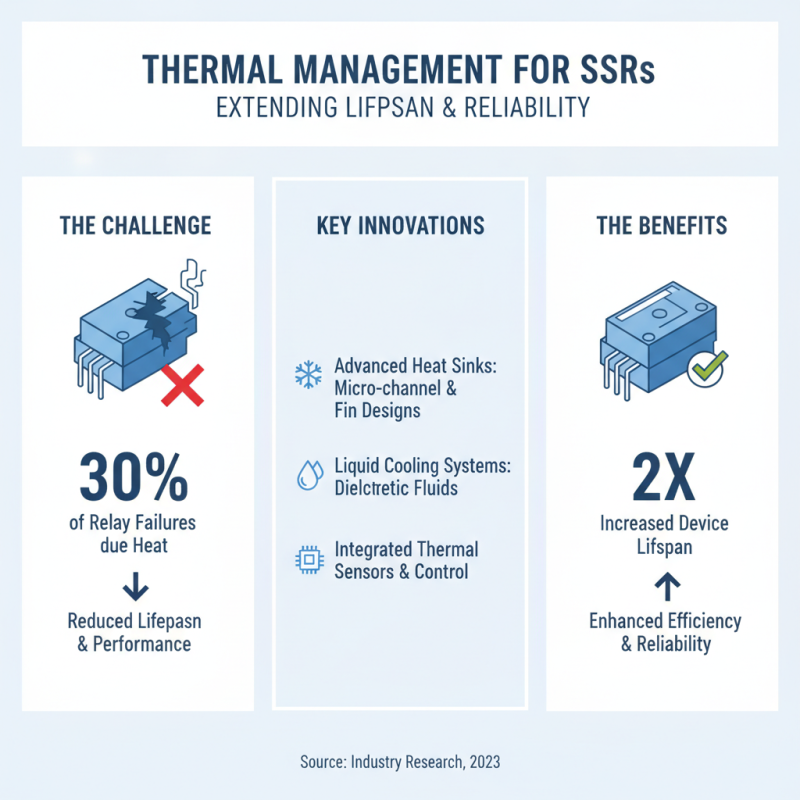
Advancements in thermal management solutions for solid-state relays (SSRs) are crucial. As the demand for efficient thermal management grows, significant innovations have surfaced. Research indicates that thermal issues account for nearly 30% of relay failures in operational environments. Effective solutions can drastically increase the lifecycle of these devices.
One emerging trend involves the use of advanced materials that improve heat dissipation. For instance, graphene-enhanced substrates promise impressive thermal conductivity. These materials can reduce junction temperatures significantly, enabling SSRs to operate at higher efficiency levels. Although challenges remain in the consistent production of these materials, their potential is noteworthy.
Active cooling methods are also gaining traction. Combining heat sinks with innovative cooling techniques can lead to better heat management. Data shows that SSRs with optimized cooling can enhance performance by 25% under high-load conditions. However, integrating these solutions often necessitates a careful balance between cost and effectiveness. Continuous effort is needed in this area to ensure reliability in diverse applications.
The market for solid state relays (SSRs) is evolving rapidly. Several factors drive this change, including the push for energy efficiency, miniaturization, and automation trends in various industries. Companies are increasingly searching for ways to streamline their processes, reduce power consumption, and improve reliability in electrical systems. This demand translates into new innovations in SSR designs, with an emphasis on enhancing thermal performance and switching speeds.
Emerging applications of SSR technology span different sectors. From industrial machinery to renewable energy systems, SSRs offer significant benefits. However, challenges remain. For instance, compatibility with legacy systems can complicate integration. Users must also consider the long-term viability of SSRs versus traditional relay options. Finding a balance between cost and performance is essential, requiring careful thought and assessment.
Future trends indicate a growing focus on IoT integration. SSRs are likely to become key components in smart devices. As industries continue to navigate these changes, continuous innovation will be necessary. Collaboration between engineers and industry leaders can foster breakthroughs. The path ahead is promising but demands ongoing reflection and adaptation to meet changing needs.
This chart illustrates the anticipated performance metrics of isolated solid state relays in 2026, focusing on key innovation trends including efficiency, response time, operating temperature, isolation voltage, and expected lifetime cycles.