China Top Rotary Encoders Overview and Applications in Industry?
Rotary encoders are pivotal components in modern automation and control systems. They convert rotational movements into electrical signals for precise positioning and feedback. According to a report by Markets and Markets, the global rotary encoder market is projected to reach $2.76 billion by 2027, demonstrating a significant compound annual growth rate (CAGR) of 6.7%. This indicates a rising demand for rotary encoders across various industries, including manufacturing and robotics.
Industry expert Dr. Helen Zhang notes, "Rotary encoders are vital in enhancing system accuracy and efficiency." Her insights reflect the growing reliance on these devices. They have applications in robotics, automotive systems, and industrial machinery, where precision is paramount. In manufacturing, for instance, rotary encoders help ensure that robotic arms operate with precision, reducing errors and increasing productivity.
However, challenges persist. Not all rotary encoders are suitable for every application. Choosing the right encoder requires careful consideration of factors like resolution and environment. Thus, understanding the specifics of rotary encoders is essential for effective implementation. This complexity invites continuous reflection on our selection processes and industry practices.

Overview of Rotary Encoders: Definition and Functionality
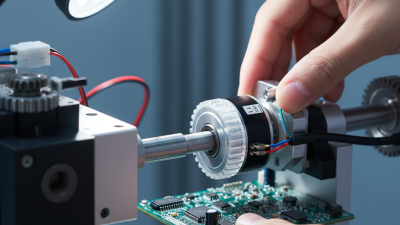
Rotary encoders play a crucial role in various industrial applications. They are devices that convert rotary position into electrical signals. These signals then inform control systems about the position and speed of machinery parts. Encoders help automate processes, ensuring precision and efficiency in manufacturing.
In terms of functionality, rotary encoders come in two main types: absolute and incremental. Absolute encoders provide a unique signal for every position. This allows for precise location tracking, even after power loss. Incremental encoders, on the other hand, track motion by measuring changes in position. They are generally simpler and less expensive but require a reference point to establish position.
Implementation requires careful consideration. Factors like resolution, speed, and environmental conditions all impact performance. Incorrect specifications can lead to inaccuracies. This may result in operational failures or costly downtime. Thus, selecting the right encoder is vital for operational success.
Types of Rotary Encoders Used in China: A Comparative Analysis
Rotary encoders are crucial components in various industrial applications across China. These devices convert the angular position of a shaft into an analog or digital signal. The distinct types of rotary encoders used in the industry include incremental, absolute, and relative encoders. Each type serves unique purposes and has advantages depending on the application. For instance, incremental encoders offer high-speed performance for real-time position tracking, while absolute encoders provide precise location data and eliminate the need for a reference point.
Recent industry reports indicate that incremental encoders hold a significant market share, accounting for over 50% of sales in China. Their simplicity and cost-effectiveness make them appealing for applications in automation and robotics. On the other hand, absolute encoders, though more expensive, have seen an increasing demand due to their reliability and precision. They are essential in high-stakes industries, like aerospace and medical equipment, where accuracy is paramount.
The comparison reveals that while both types meet specific needs, challenges remain. Incremental encoders can lose position if power is interrupted. Absolute encoders, while reliable, can be more complex and costly to implement. Understanding these differences is vital for industries to choose the right encoder type for their applications, ensuring efficiency and precision in operations.
Key Industries Utilizing Rotary Encoders in China
Rotary encoders play a vital role in various industries across China, enhancing automation and precision. The automotive sector has been a major adopter, utilizing encoders in assembly lines for precise control of robotic arms. Reports indicate that around 40% of rotary encoders are used in automotive applications. This demand is driven by the shift towards electric vehicles, requiring advanced automation solutions.
Additionally, the manufacturing industry relies heavily on rotary encoders for monitoring and controlling machinery. They provide critical feedback for position and speed, which improves efficiency. Data shows that about 30% of rotary encoders in China are employed in manufacturing processes. This sector is undergoing significant transformation, with a growing emphasis on smart manufacturing technologies.
In the robotics field, rotary encoders also find extensive use. They enable accurate movement and positioning, essential for robots in warehouses and factories. Experts suggest that as industries continue to adopt Industry 4.0 principles, reliance on rotary encoders may increase sharply. However, challenges remain, such as ensuring long-term reliability in harsh environments. Continuous innovation and adaptation are necessary to address these issues effectively.
China Top Rotary Encoders Overview and Applications in Industry
Innovations and Advancements in Rotary Encoder Technology
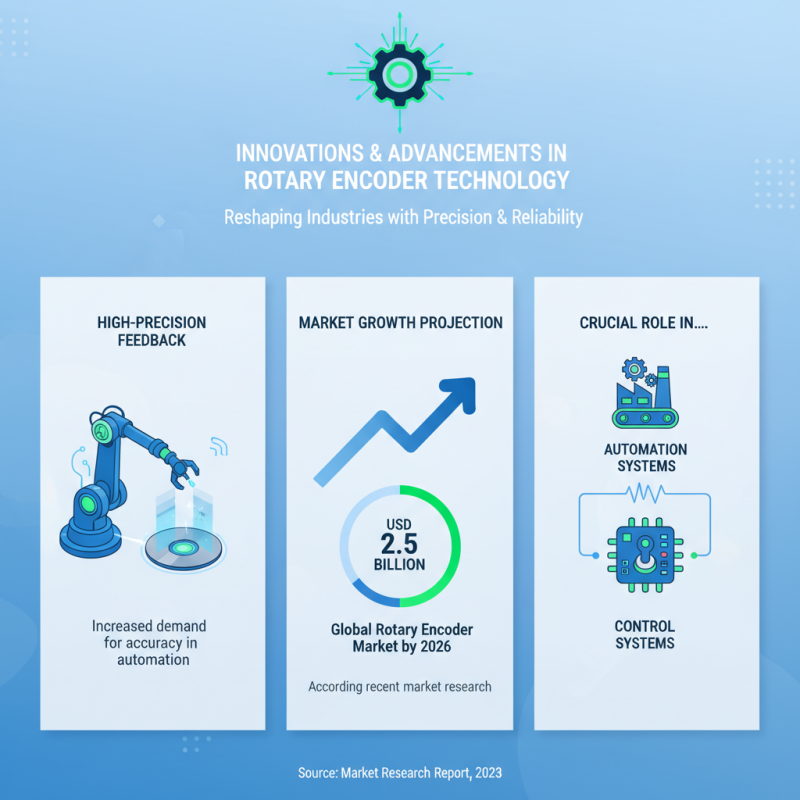
Advancements in rotary encoder technology are reshaping various industries. The demand for high precision and reliable feedback systems is increasing. According to a recent market research report, the global rotary encoders market is projected to reach USD 2.5 billion by 2026. This growth reflects the crucial role rotary encoders play in automation and control systems.
Innovative designs and smart technology are becoming prevalent. For instance, optical rotary encoders now incorporate advanced signal processing techniques. This improves accuracy while reducing error margins. Additionally, wireless communication features are enhancing connectivity. However, integration challenges remain, especially in legacy systems. Many industries struggle to adopt new technologies, facing resistance from workers accustomed to older methods.
Data indicates that industries such as manufacturing and robotics are leading in rotary encoder applications. These sectors emphasize efficiency and automation, increasing their reliance on advanced encoders. Yet, the durability of these components is sometimes questioned in harsh environments. Addressing these concerns is vital for broader adoption. Continued research and development will help overcome these barriers, ensuring that rotary encoders meet industry demands effectively.
Challenges and Solutions in Rotary Encoder Applications in Industry
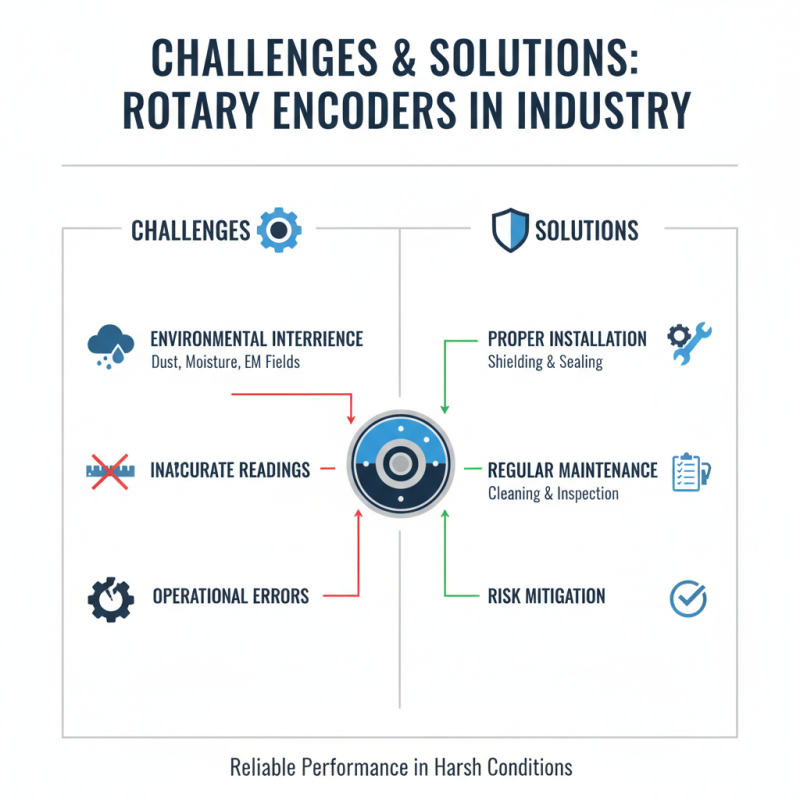
In industrial settings, rotary encoders face various challenges. One common issue is environmental interference. Dust, moisture, and electromagnetic fields can disrupt these devices. Such disruptions lead to inaccurate readings and operational errors. Proper installation and regular maintenance are crucial to mitigate these risks.
Tips: Always ensure encoders are protected. Use enclosures that shield from dust and moisture. Regular inspection helps catch potential issues early.
Another challenge lies in integrating rotary encoders with modern automation systems. Compatibility between different technologies can be problematic. This issue results in inefficiencies and reduced productivity. Testing new configurations in a controlled environment can provide insights.
Remember, not every installation will be flawless. Sometimes, incorrect wiring or software integration can lead to malfunctions. Reflect on past experiences to improve future implementations. Utilize comprehensive training for technicians to minimize human error.