How to Choose the Right Solid State Relay for Your Application?
Choosing the right solid state relay (SSR) is crucial for any electrical application. The right SSR ensures reliability and efficiency in controlling power. With various options available, it can be overwhelming to make the right choice.
Solid state relays offer many advantages over traditional electromechanical relays. They are faster, quieter, and have a longer lifespan. However, selecting the appropriate SSR requires careful consideration of factors like load type, voltage, and current ratings. Mistakes can lead to performance issues, potentially damaging your equipment.
Reflect on the specific needs of your application. Consider the environment where the relay will operate. Will it face extreme temperatures or vibrations? These factors influence the SSR’s performance. Understanding these details can enhance your equipment's reliability and efficiency. Selecting the right solid state relay isn't just about specifications; it's about ensuring optimal performance in real-world situations.
Understanding Solid State Relays: Basics and Functionality
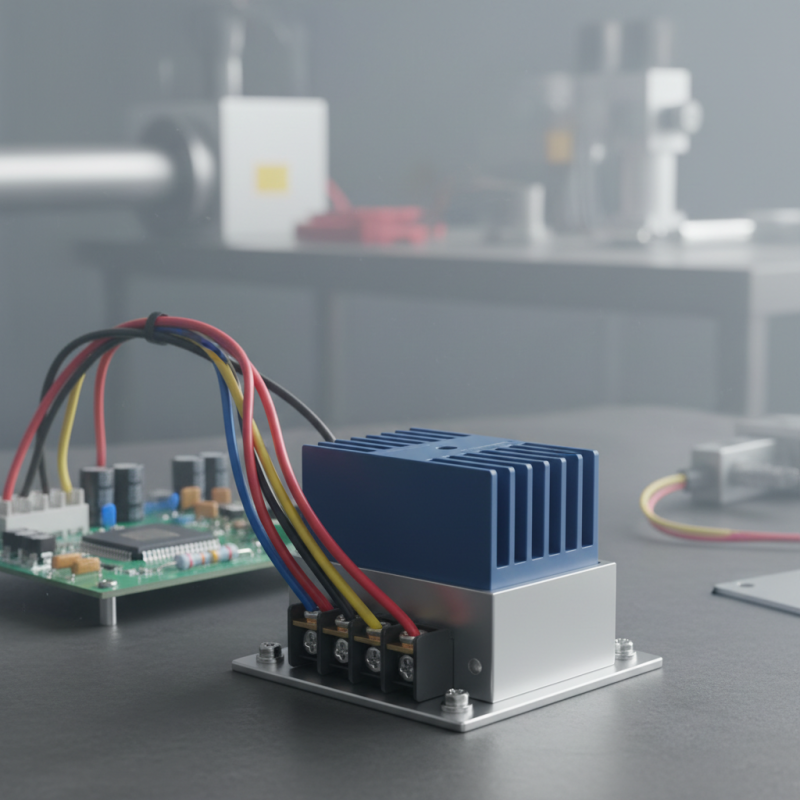
Solid state relays (SSRs) are crucial in modern automation systems. They ensure reliable switching with minimal wear. Unlike mechanical relays, SSRs react quickly and handle high voltages efficiently. A typical SSR can switch loads at frequencies exceeding 1 kHz, which is vital in applications like motor control.
Understanding the basics of SSRs is essential. They utilize semiconductor devices to perform switching. This design reduces the risk of failure due to physical wear. According to a recent market report, the global SSR market is projected to grow by 7% annually. This growth reflects the increasing demand for efficient, reliable control systems.
While SSRs offer numerous advantages, they have limitations. For instance, they may experience thermal runaway without proper heat management. Additionally, voltage transients can pose risks to SSRs, potentially leading to failures. As applications become more demanding, selecting the right SSR requires careful consideration of specifications and operating conditions. Ensuring robustness in these systems is key for longevity and operational success.
Key Factors to Consider When Selecting a Solid State Relay
Choosing the right solid state relay (SSR) is crucial for ensuring optimal performance in your application. Several key factors can influence your decision.
First, consider the load type. SSRs vary based on whether they control resistive, inductive, or capacitive loads. According to a recent industry report, 65% of SSR failures occur due to improper load selection.
Next, pay attention to the voltage and current ratings. Exceeding these limits can lead to failure or reduced lifespan. Check if the SSR can handle inrush currents, particularly in applications with motors or transformers. This is often overlooked but can be significant.
Tips: Always refer to the manufacturer's datasheet for detailed specifications. Keep ambient temperature in mind; excessive heat may necessitate additional cooling solutions. Maintain a good balance between performance and cost.
Another essential factor is the switching speed. Applications like automation often demand faster response times. Slower relays may not meet your needs, leading to inefficiencies.
Decide whether you need a zero-crossing SSR for minimal electrical noise. This is particularly useful in sensitive environments. Measurement studies indicate that the right SSR can improve energy efficiency by up to 20% in industrial settings.
Types of Solid State Relays and Their Applications
Solid state relays (SSRs) play a crucial role in various applications, offering reliability and speed. These devices can be classified into several types based on their functions and features. For example, zero-crossing SSRs are ideal for resistive loads like heaters, as they minimize electrical noise. In contrast, instantaneous SSRs are perfect for inductive loads, with minimal delay in switching.
According to a report by MarketsandMarkets, the global solid state relay market is expected to reach $2.12 billion by 2025, growing at a CAGR of 9.6%. This growth is driven by the increasing demand for automation in industries such as manufacturing and energy. Moreover, photoMOS relays have gained traction due to their compact design and high-performance attributes. They are often preferred in telecommunications and measurement applications.
Understanding the specific needs of each application is vital. For instance, while solid state relays offer longer lifespans compared to electromechanical relays, they can generate heat—requiring careful thermal management. Furthermore, some SSRs may not handle high inrush currents efficiently, leading to potential failures. Therefore, assessing load characteristics and environmental conditions is crucial for optimal performance.
Evaluating Electrical Ratings and Specifications for Relays
When selecting a solid state relay (SSR), electrical ratings are crucial. Each relay has specific voltage and current ratings. Matching these ratings to your application is vital for reliable performance. For instance, consider the input control voltage. It needs to be compatible with the triggering source. An input voltage mismatch can lead to poor function.
Additionally, the output ratings matter. Each SSR has a maximum load current and voltage it can handle. Exceeding these limits risks relay failure or damage to connected equipment. Look at the thermal characteristics too. Relays have defined temperature ranges. Operating outside these ranges can lead to malfunction.
You also need to examine switching specifications like on-state voltage drop. This detail can impact energy efficiency. Small discrepancies can lead to significant operational costs over time. Many users overlook these factors, putting their whole system at risk. An informed decision based on careful evaluation ensures longevity and reliability in various applications.
How to Choose the Right Solid State Relay for Your Application? - Evaluating Electrical Ratings and Specifications for Relays
| Specification |
Value |
| Relay Type |
Photonic Solid State Relay |
| Input Voltage (V) |
3-32 V DC |
| Output Voltage (V) |
24-480 V AC |
| Output Current (A) |
10 A |
| On-State Voltage Drop (V) |
1.5 V |
| Control Signal Current (mA) |
20 mA |
| Isolation Voltage (V) |
2500 V AC |
| Operating Temperature (°C) |
-30°C to +80°C |
| Dimensions (mm) |
60 x 30 x 15 |
| Mounting Type |
DIN Rail |
Common Pitfalls in Choosing Solid State Relays and How to Avoid Them
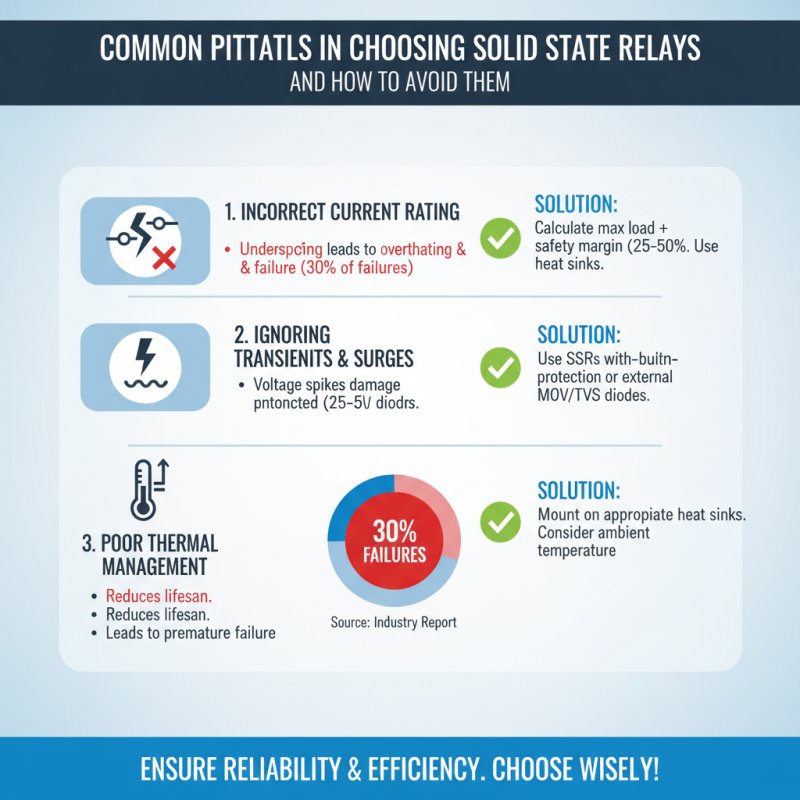
Choosing the right solid state relay (SSR) is crucial for ensuring reliability and efficiency in applications. Many engineers fall into common pitfalls when selecting these components. A leading industry report indicated that 30% of SSR failures are attributed to incorrect specifications. Understanding these common mistakes can help prevent costly errors.
One major pitfall is overlooking voltage ratings. Selecting an SSR that cannot handle the load voltage can lead to failures. For example, if you choose an SSR rated at 120V for a 240V application, the results could be catastrophic. Not checking for sufficient current capacity is another mistake. A study revealed that 25% of SSRs failed due to inadequate current ratings, causing overheating and eventual failure.
To make informed choices, consider these tips: always review the SSR's load specifications. Ensure it matches the application’s requirements. Pay close attention to thermal management; overheating is a common failure point. Also, factor in the switching frequency. A mismatch can lead to performance issues or reduced lifespan. Always consult technical data sheets to avoid unnecessary complications.