How to Choose the Best Solid State Power Controller for Your Needs?
Choosing the right Solid State Power Controller can significantly impact your project’s efficiency. These devices manage power distribution with precision, ensuring your systems operate smoothly. However, the selection process can be daunting.
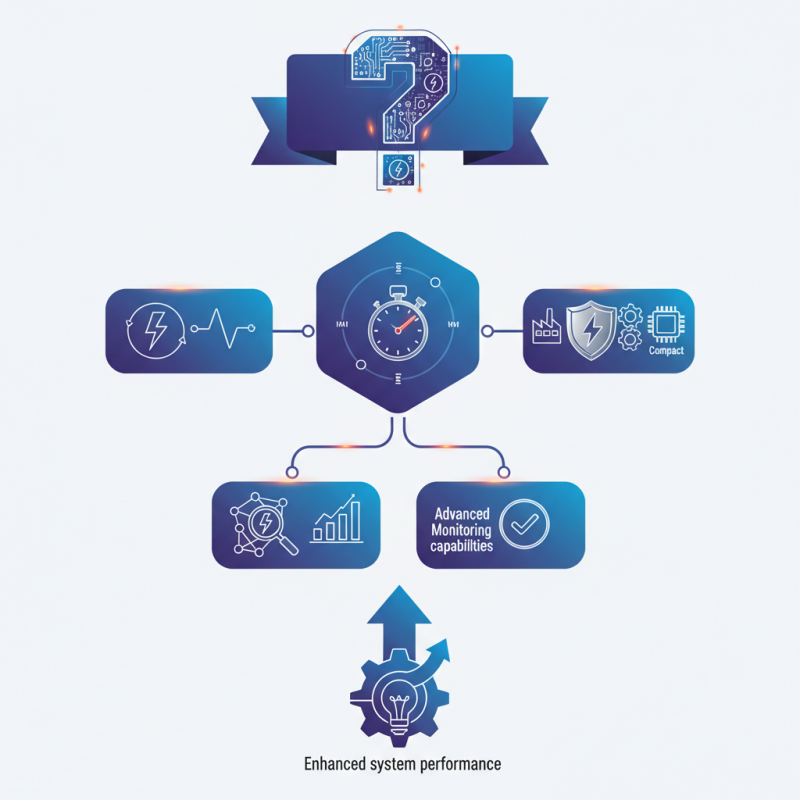
Consider your specific needs: the voltage range, current capacity, and response time. Each application may call for different parameters. For example, an industrial setting may need robust controllers, while a smaller application requires compact options.
Evaluate the available features critically. Some Solid State Power Controllers offer advanced monitoring capabilities. Yet, not all projects benefit from these extras. Sometimes, simplicity is key. Reflect on what you truly need. Make informed decisions based on practicality and performance. The right controller enhances system performance without unnecessary complexities.
Understanding Solid State Power Controllers and Their Functionality
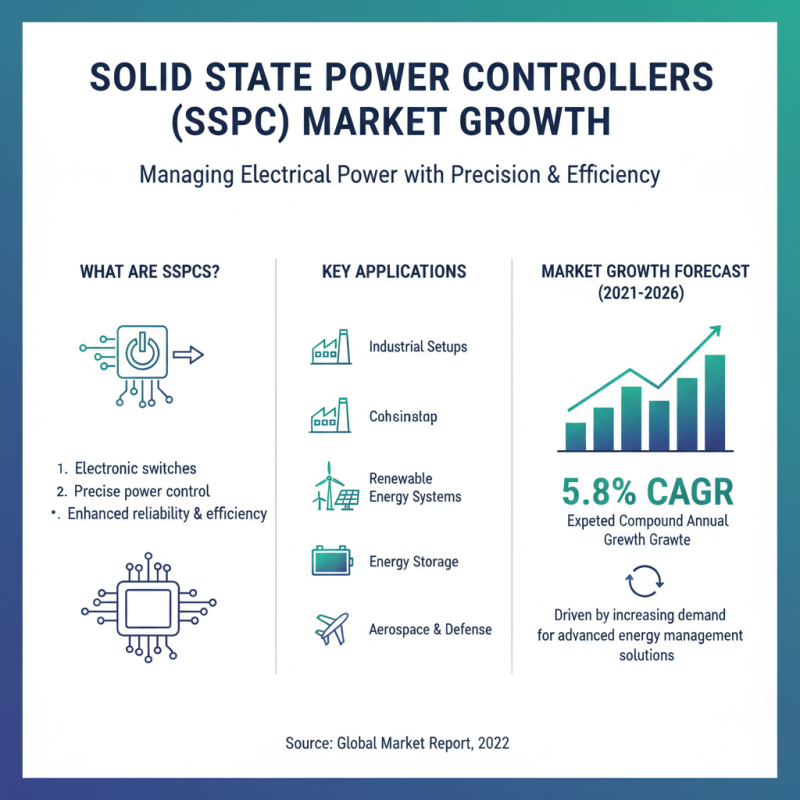
Solid State Power Controllers (SSPCs) play a crucial role in managing electrical power in various applications, from industrial setups to renewable energy systems. These devices offer precise control over electrical loads, ensuring reliability and efficiency. A recent market report indicated that the global SSPC market is expected to grow at a compound annual growth rate (CAGR) of 5.8% through 2026. This growth reflects the increasing demand for energy management solutions.
The functionality of SSPCs centers around their ability to provide fast switching and control. Unlike traditional electromechanical relays, SSPCs use semiconductor technology to manage power without moving parts. This leads to a longer lifespan and increased durability. For instance, a study showed that SSPCs could enhance system performance by reducing power losses by up to 50%. However, there are challenges. Heat dissipation can be an issue, requiring careful thermal management to maintain operability.
When selecting an SSPC, consider the specific requirements of your application. Factors such as voltage ratings, current capacity, and control interfaces are vital. Not all SSPCs are created equal; some may not meet high-performance demands. Users often overlook compatibility with existing systems, leading to inefficiencies. Thus, a thorough evaluation of both specifications and system interactions is essential for optimal performance.
Key Factors to Consider When Selecting a Solid State Power Controller
When selecting a Solid State Power Controller (SSPC), there are several key factors to consider.
Start with the voltage and current ratings. Ensure the SSPC can handle the required load without overheating.
A mismatch here can lead to equipment failure.
Next, consider the control method. Does your application require precise temperature controls?
Look for features that allow fine adjustments. Some controllers offer various input signals.
Choose one that matches your system’s requirements.
It's essential to evaluate if the control interface is user-friendly or if it requires advanced knowledge.
Another important aspect is integration. Assess how easily the SSPC fits into your existing system.
Sometimes, compatibility issues arise, leading to operational headaches. Some features might look appealing but result in complexity.
Thus, weighing benefits against potential drawbacks is crucial for optimal decision-making.
Evaluating Your Power Requirements and Load Types
When selecting the best solid state power controller, understanding your power requirements is crucial. Begin by assessing the total load your system will draw. Consider both the maximum and average power demands. Each device has unique power needs. These can vary during operation. If your load fluctuates, ensure the controller can handle peak demands without failure. This is where careful evaluation becomes key.
Different types of loads require different controller capabilities. Resistive loads, like heaters, behave differently than inductive loads, such as motors. Inductive loads can cause voltage spikes and require specialized protection. Take time to analyze your specific applications. Testing your setup under various conditions can reveal unforeseen challenges. Don't overlook the potential for overheating or inefficiency in your system. Each factor impacts your choice of power controller and its overall performance. Understand these details to avoid future issues.
How to Choose the Best Solid State Power Controller for Your Needs?
| Power Requirement (W) |
Load Type |
Controller Type |
Temperature Range (°C) |
Protection Features |
| 100 |
Heating Element |
Zero Crossing |
-20 to 70 |
Overload, Over Temperature |
| 250 |
Inductive Load |
Phase Control |
-10 to 60 |
Short Circuit, Current Limit |
| 500 |
Lighting |
PWM Control |
0 to 50 |
Over Voltage, Surge Protection |
| 1000 |
Motor Drive |
Smart Control |
-40 to 85 |
Reverse Polarity, Thermal Shutdown |
| 150 |
Resistive Load |
Simple ON/OFF |
-10 to 50 |
Fuse, Voltage Monitoring |
Assessing Reliability and Performance Specifications
When selecting a solid state power controller (SSPC), assessing reliability and performance is crucial. Industry standards indicate that robust performance can cut operational costs by about 15%. Look for controllers that meet or exceed IEC standards. These devices often undergo rigorous testing for thermal, electrical, and mechanical stress. Compliance with these standards typically indicates a longer lifespan and reduced failure rates.
Tip: Consider the thermal management features of the SSPC. Efficient thermal design can enhance the device's reliability. Overheating is a leading cause of power controller failure, accounting for nearly 30% of reported issues. Information from performance reports suggests that controllers with built-in temperature monitoring systems can extend device life.
The performance specifications of your chosen SSPC can greatly influence your application's success. High switching speeds and low on-state resistance are key indicators of an efficient controller. Data shows that controllers with lower resistance can improve system efficiency by up to 20%. However, be mindful of the trade-offs. A high-performance controller may have a higher upfront cost, which can be a concern for some projects. Consider the long-term benefits versus immediate expenses.
Performance Characteristics of Solid State Power Controllers
Exploring Cost-Effectiveness and Warranty Options
When selecting a solid state power controller (SSPC), cost-effectiveness is a crucial factor. According to a recent industry report, over 60% of companies prioritize budget considerations when making purchasing decisions. SSPCs can vary significantly in price, often influenced by features, quality, and durability. Users should look for models that not only fit their budget but also offer long-term savings through energy efficiency. High-quality controllers can lead to reduced energy costs of up to 20% annually, proving their worth over cheaper alternatives.
Warranty options should also be a focal point during the selection process. A survey revealed that 75% of buyers value warranty length and coverage details. A robust warranty can safeguard against potential failures, reducing future repair costs. However, some controllers come with limited warranties, often leading to hesitation among users. It’s essential to assess the warranty terms clearly to avoid unforeseen expenses later.
Reflecting on these considerations, it’s crucial to evaluate both upfront costs and potential hidden expenses tied to low-quality controllers. Many users overlook this, only to regret their choice later. An informed decision, balancing cost with reliable performance and warranty support, ultimately leads to more sustainable and cost-effective outcomes.