How to Choose the Right Scr Power Regulator for Your Needs?
Choosing the right SCR power regulator is crucial for any electronic project. Several aspects need careful consideration. An SCR power regulator can manage voltage and current effectively. It converts AC to DC, ensuring your devices receive stable power.
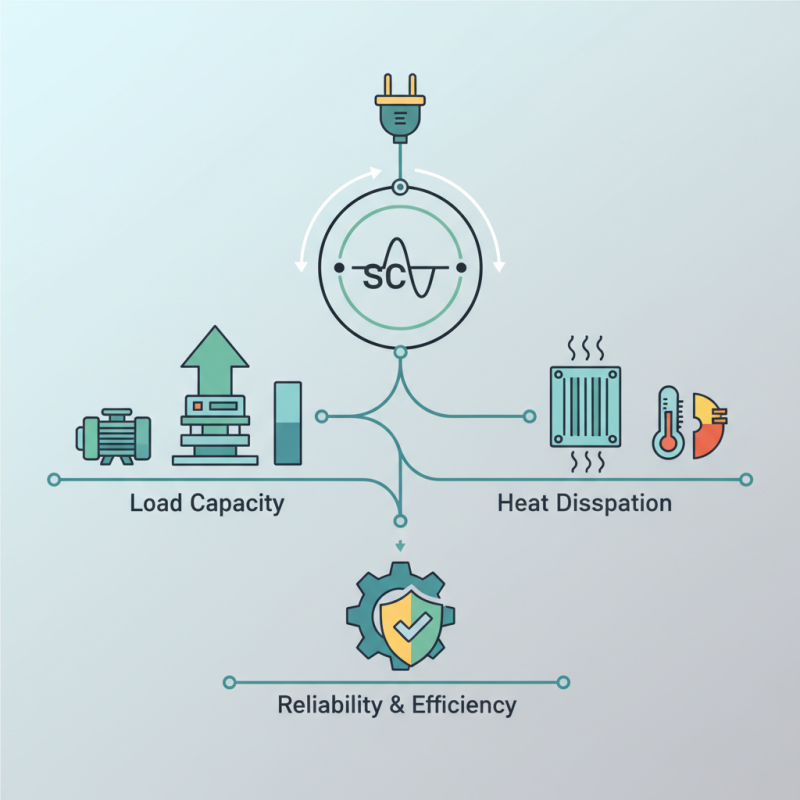
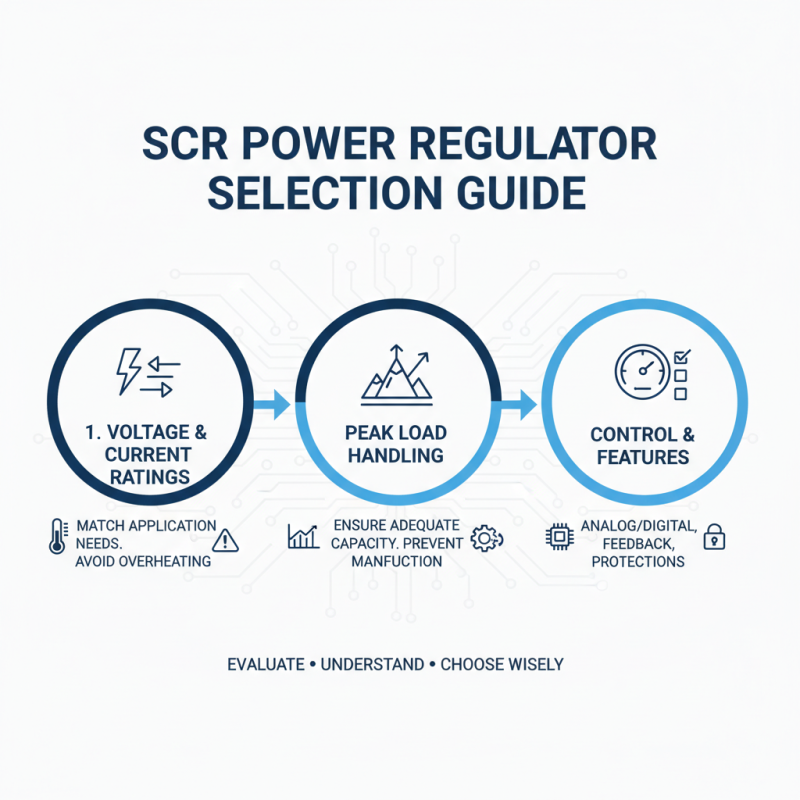
When selecting an SCR power regulator, think about your specific requirements. Load capacity often dictates the type you need. For example, high-power applications require robust models. Don’t rush this choice; it could impact performance. A wrong regulator can lead to inefficiency or even damage.
Moreover, consider heat dissipation. Some SCR power regulators may overheat under certain conditions. This issue needs to be assessed to ensure safety and longevity. Reflect on your application. An ideal regulator will foster reliability and efficiency. The right SCR power regulator enhances your project significantly. Make your decision wisely.
Understanding SCR Power Regulators and Their Applications
Understanding SCR power regulators is crucial, as they play a significant role in various applications. SCR stands for Silicon Controlled Rectifier. These devices control power in electrical circuits, allowing for smooth adjustments of voltage and current. They are commonly used in industrial settings, furnace control, and lighting systems. According to a recent industry report, the SCR power regulator market is projected to grow by 7% annually. This signals increasing adoption and diversification.
When selecting an SCR power regulator, consider the specific needs of your application. The load type is essential. Resistive loads, such as heating elements, may require different specifications than inductive loads, like motors. Data shows that improper matching can lead to inefficiencies or equipment damage. For instance, an incorrect SCR selection can cause overheating, which may damage components.
Additionally, think about control methods. Some SCR regulators are voltage-based, while others are phase-control type. Depending on their design, they can influence how smoothly power is delivered. Current trends in the market show a shift toward more integrated systems, which could simplify setup but may limit customization. These factors add complexity to the selection process, showcasing the need for careful evaluation.
Comparing Different Types of SCR Power Regulators
When selecting an SCR power regulator, it’s essential to compare different types. Various designs serve unique purposes. Some are suitable for light control, while others handle heavy industrial loads. Each type has its strengths and weaknesses.
For instance, phase control regulators provide smooth adjustments. They are ideal for resistive loads. Yet, they may not work well with inductive loads. On the other hand, burst firing regulators excel at maintaining stable outputs. They reduce thermal stress in heavy equipment but can introduce noise. Users must consider their specific requirements to avoid mismatches.
In addition, the environment plays a crucial role. For example, high humidity can impact performance. Cooling requirements may vary based on usage. It’s important to reflect on the intended application. Would a more robust design be necessary? Evaluating personal needs ensures the right choice. Remember, the wrong regulator can lead to energy waste or even damage.
Evaluating Load Requirements for Optimal SCR Performance
When selecting an SCR power regulator, you must understand your load requirements. Loads can vary significantly based on application. For instance, heating elements may demand a steady, high current. In contrast, motor controls might require variable power for speed regulation. Knowing these variations is crucial.
Evaluating load requirements starts with understanding peak and average loads. Determine the maximum current needed during operation. This can prevent overheating and ensure the regulator performs efficiently. It's not enough to guess. Use actual data whenever possible. For critical applications, consider safety margins.
Another consideration involves the load type. Resistive loads behave differently than inductive ones. Inductive loads often create back EMF, affecting SCR performance. This complicates the selection process. Regularly revisiting your load evaluation can mitigate potential issues. Don't ignore changing requirements over time. Users must stay adaptable and aware of their system's needs.
How to Choose the Right SCR Power Regulator for Your Needs?
| Load Type |
Load Current (A) |
Voltage Rating (V) |
SCR Rating (A) |
Cooling Method |
| Resistive Load |
10 |
230 |
20 |
Air Cooling |
| Inductive Load |
15 |
120 |
25 |
Liquid Cooling |
| Capacitive Load |
8 |
240 |
15 |
Fan Cooling |
| Mixed Load |
20 |
380 |
40 |
Heat Sink |