How to Choose the Right Temperature Controller for Your Needs?
Choosing the right temperature controller is essential for many applications. John Smith, an industry expert in temperature control systems, once stated, "The right temperature controller can make all the difference in your process efficiency." This highlights the importance of selecting a suitable device for your specific needs.
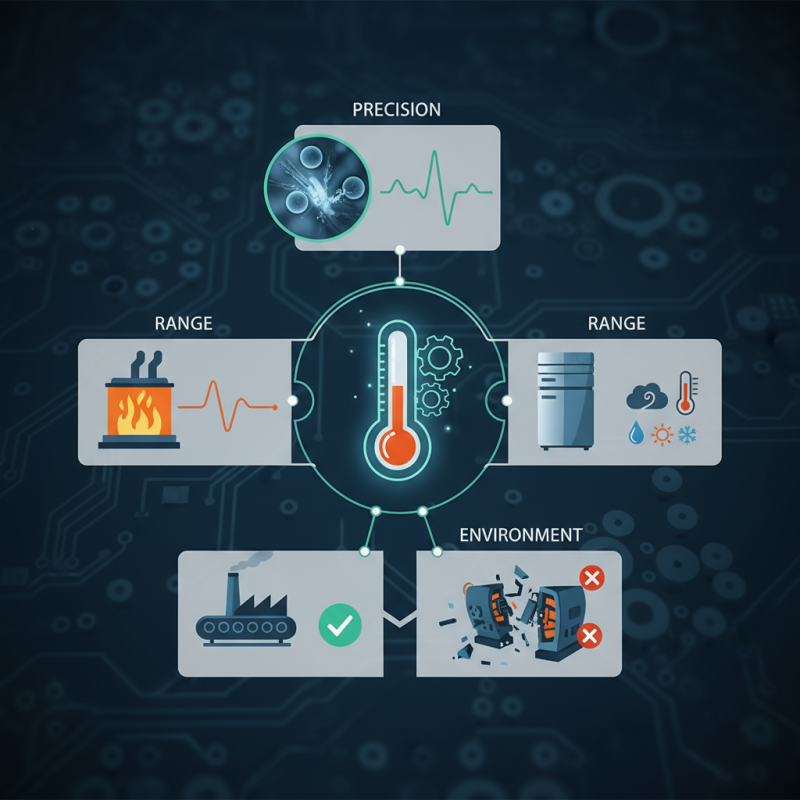
Temperature controllers come in various sizes and functionalities. Understanding your requirements is crucial. For instance, you may need precise control for sensitive materials, while other processes may allow for broader temperature ranges. Reflecting on these needs helps narrow down your options.
Moreover, consider the environment where the temperature controller will be used. Factors such as humidity, potential for dust, and temperature extremes must be assessed. Not all controllers perform well in every setting. It is vital to choose a controller designed for your unique challenges. A hasty decision may lead to inefficiencies and costly adjustments later on. Always take time to evaluate your choices carefully.
Understanding the Basics of Temperature Controllers and Their Functions
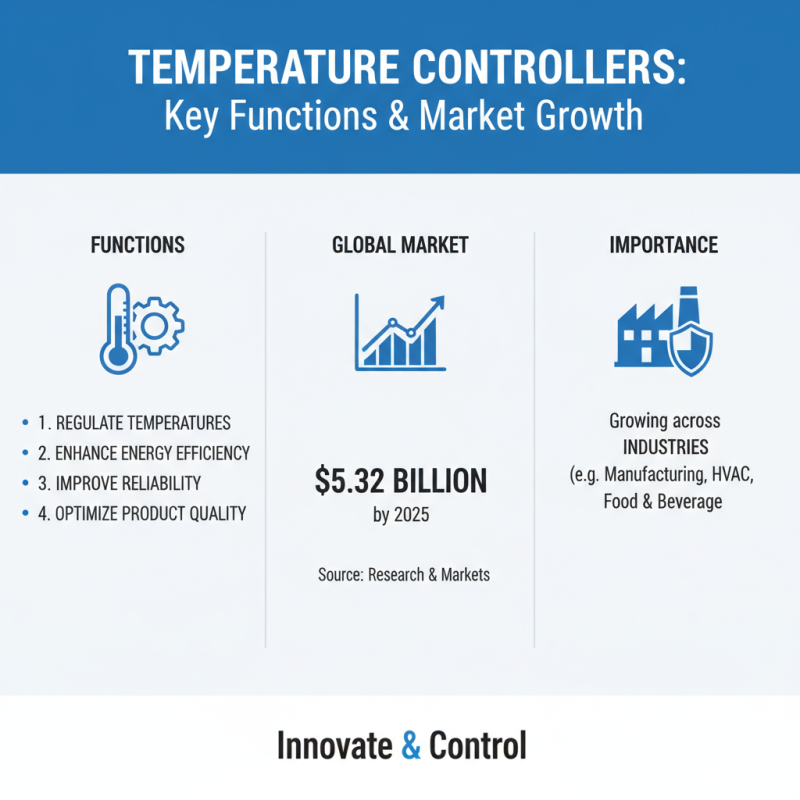
When selecting a temperature controller, it's essential to understand its functions. Temperature controllers regulate systems to maintain desired temperatures. This can enhance energy efficiency, reliability, and product quality across various industries. According to a report by Research and Markets, the global temperature controller market is predicted to reach $5.32 billion by 2025, reflecting their growing importance.
There are different types of temperature controllers. Basic models offer on/off control, while more advanced ones provide PID control, allowing for precise temperature management. These controllers are vital in applications like HVAC systems, food processing, and chemical manufacturing. You might find that understanding your specific needs is crucial before making a decision.
**Tips:** Assess the required temperature accuracy. This can impact your overall process quality. Consider the installation space and ensure compatibility with existing systems. Sometimes, it’s about balancing precision and practicality. Not every environment will require the same level of temperature control, so reflect on your priorities.
Identifying Your Specific Temperature Control Requirements
When selecting a temperature controller, it’s crucial to identify your specific needs. Consider the application and environment where the controller will be used. For example, industrial settings may require robust units that can endure harsh conditions. In contrast, laboratory settings might need precision and minimal fluctuations. Aim to gather information about the ideal temperature range and accuracy required for your application.
**Tips:** Define the range of temperatures you need. Consider if you require heating, cooling, or both.
Another essential factor is the control method. Do you need on/off control or a proportional system? Each method has its advantages and drawbacks. An on/off system can be simple and cost-effective but may result in temperature swings. A proportional system offers finer control but might be more complex to have in place. Analyze the trade-offs before making a decision.
**Tips:** List the pros and cons of each control method. Think about initial costs versus long-term benefits.
Your requirements may evolve over time. Be prepared to adjust your choice. Multiple controllers might be necessary for varying processes. Remember to review your choice periodically to ensure it meets your needs effectively.
How to Choose the Right Temperature Controller for Your Needs?
| Feature |
Description |
Ideal Use Case |
Temperature Range |
Control Type |
| Digital Thermostat |
Provides precise temperature readings with easy-to-read digital display. |
Home HVAC systems, refrigeration. |
-30°C to 60°C |
On/Off Control |
| PID Controller |
Offers advanced control using a Proportional-Integral-Derivative algorithm. |
Industrial processes, ovens. |
0°C to 1200°C |
Closed-loop Control |
| Hysteresis Controller |
Simple temperature control with a set point and a defined hysteresis band. |
Aquarium heating, brewing. |
-10°C to 100°C |
On/Off Control |
| Smart Temperature Controller |
Integrates with smart home systems, allows remote monitoring and control. |
Home automation, greenhouses. |
-20°C to 80°C |
On/Off Control, Smart Control |
| Temperature Logger |
Records temperature over time, ideal for monitoring trends. |
Laboratory experiments, storage facilities. |
-50°C to 150°C |
Data Logging |
Evaluating Different Types of Temperature Controllers Available
When selecting a temperature controller, understanding the types available is crucial. There are mainly three types:
ON/OFF controllers,
PID controllers, and
smart controllers.
ON/OFF controllers are simple and cost-effective. They have basic functionality but can lead to temperature swings. According to industry reports, about 40% of users experience fluctuations with this type, impacting product quality.
PID controllers offer more precision. They adjust the heat based on real-time data. Their continuous adjustments minimize overshooting and undershooting of temperatures. Research indicates that systems utilizing PID control can achieve a temperature stability of ±0.5°C. However, they can be complex to set up and require some expertise in tuning parameters.
Smart controllers bring advanced features like connectivity and remote monitoring. They allow users to control temperatures from mobile devices. However, they can be susceptible to data security issues. Surveys show that 30% of users expressed concerns about the security of their systems.
Selecting the right type hinges on balancing your needs, budget, and long-term goals. It's worth assessing how each type aligns with your specific applications.
Key Features to Consider When Selecting a Temperature Controller
When selecting a temperature controller, key features can make a significant difference. One critical aspect is the temperature range. Ensure the controller covers your specific needs. Consider whether you require high precision or basic regulation. Different applications demand varying degrees of accuracy. Sometimes, controllers can be over-engineered, leading to unnecessary complexity.
Another vital feature is the type of control method. Whether it’s ON/OFF control or a PID controller, each has its merits. Think about how fast you need temperature adjustments. A PID controller offers greater stability but may be harder to configure. Start by evaluating your experience level. An oversimplified controller might not meet your advanced needs.
User interface also matters. A clear display and intuitive settings can save time. If you can’t easily navigate the options, it may lead to frustration. Check for features like alarms and data logging. These can help monitor performance but could be excessive for simple applications. Reflect on what you truly need versus what appears appealing. Balancing features with your specific requirements is key.
Temperature Controller Comparison
This chart illustrates the key features of different temperature controllers, including Accuracy, Operating Range, Response Time, and Price. It's essential to compare these features when selecting a temperature controller that fits your specific needs.
Assessing Compatibility with Existing Equipment and Systems
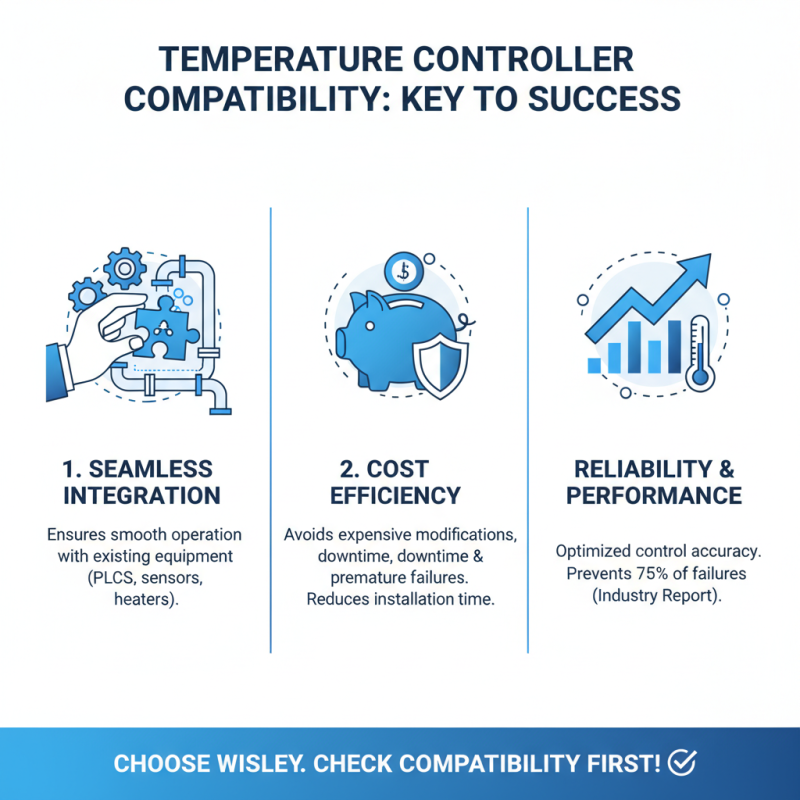
Choosing a temperature controller involves understanding how it fits with your existing systems. Compatibility is crucial. It ensures smooth operation and avoids unnecessary costs. Many facilities have specific equipment that requires tailored solutions. According to a recent industry report, 75% of temperature control failures stem from compatibility issues.
When assessing compatibility, consider all interfaces. Check voltage levels, communication protocols, and control methods. For instance, a device using Modbus may not function well with one designed for analog signals. This mismatch could lead to equipment inefficiencies. You should also assess the physical aspects. Mounting configurations and sizes matter.
**Tip:** Always consult technical specifications. They provide insight into what equipment can work together.
**Tip:** Create a compatibility checklist. List all relevant equipment details. This strategy helps in making informed decisions.
Incompatible systems can lead to operational delays. Facilities might face downtime due to improper setups. Reflect on past experiences. Identifying mistakes can guide future decisions. Compatibility is not just about fitting parts together; it’s about ensuring they work in harmony.