10 Essential Tips for Choosing Ic Smps Power Supply for Your Projects
Choosing the right IC SMPS power supply for your projects can be a daunting task. With so many options available, it is crucial to understand your specific needs. An IC SMPS power supply can significantly influence the performance and reliability of your project. Therefore, it’s essential to consider various aspects before making a decision.
Pay close attention to the voltage and current requirements of your application. Different applications require different specifications. You might find yourself overwhelmed by the choices. It’s easy to overlook critical factors like efficiency, size, and thermal performance. These details can make or break your project. A poor choice may lead to inefficiency or even damage to other components.
Ultimately, the goal is to find an IC SMPS power supply that meets your requirements without exceeding your budget. Keep in mind that cheaper options are not always the best. They may come with hidden drawbacks. So, take your time to reflect on your choices. Evaluating options carefully will ensure your project's success.
Understanding the Basics of IC SMPS Power Supplies in Electronics Design
When designing electronic projects, understanding IC SMPS (Switched Mode Power Supply) is crucial. These power supplies convert electrical energy efficiently. They are compact and versatile. An integrated circuit (IC) simplifies the design process, especially for beginners. But the journey can be challenging. Many new designers struggle with selecting the right components.
Mistakes often happen in calculating input and output voltages.
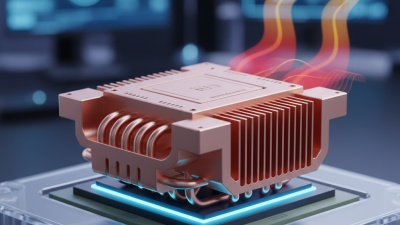
IC SMPS operates using high-frequency switching techniques. This allows smaller components and reduced sizes. However, users must consider heat dissipation. Neglecting thermal management can lead to failure. Understanding the specifications of different ICs can also be daunting. Some datasheets are technical and overwhelming. It might take time to grasp the required parameters like efficiency, ripple voltage, and load regulations.
Another common issue is noise generation. Switching power supplies typically introduce noise into circuits. Beginners often overlook this aspect, leading to performance problems in sensitive applications. Shaping filters can help, yet they add complexity.
Making a checklist of project requirements can guide designers. Evaluate your project's needs carefully. Each detail counts. Remember, perfect results come from learning through experience.
Key Specifications to Consider When Selecting an SMPS for Your Project
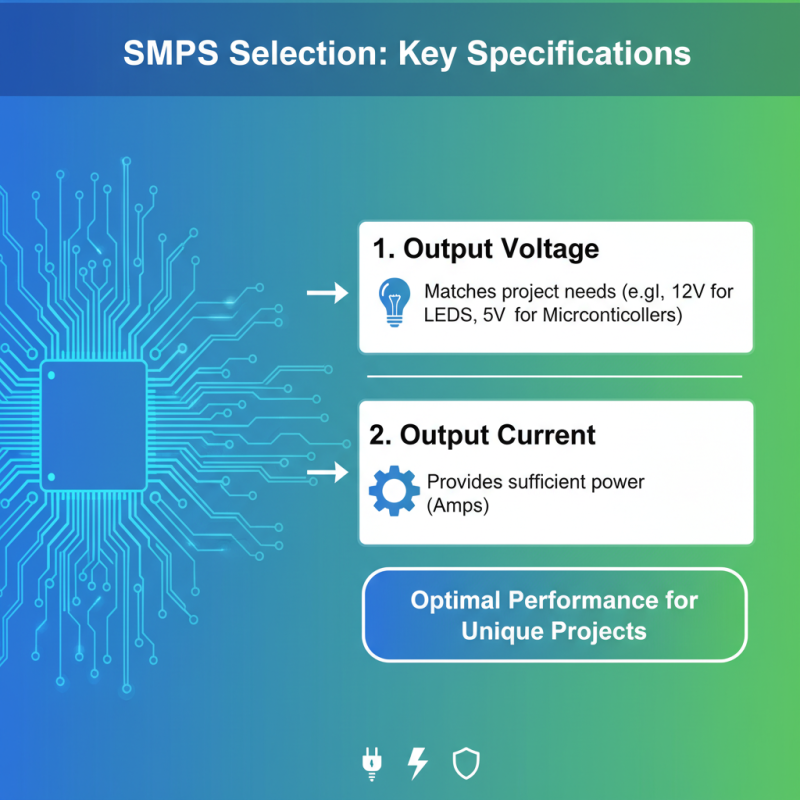
When selecting a switching mode power supply (SMPS) for your project, certain specifications play a crucial role. Start by examining the output voltage and current requirements. Each project is unique. For example, an LED strip may need 12V, while a microcontroller might require 5V. Matching these specifications ensures optimal performance.
Next, consider efficiency ratings. A higher efficiency means less wasted energy, which translates to lower heat output. Heat can damage components over time. When reading the specs, look for ratings in the range of 85% or higher. Don’t overlook ripple voltage, either; it can introduce noise into your circuit. Check the data sheet for acceptable limits.
Lastly, think about safety features. Over-voltage protection and short-circuit protection can save your project from catastrophic failures. Some SMPS units come with thermal protection, which can prevent overheating. Relying solely on these features may feel unnecessary, but they can provide peace of mind. Evaluate your design and ensure that the chosen power supply aligns with its demands. This reflection can significantly affect your project's success.
Evaluating Efficiency Ratings: Importance of Typical and Maximum Efficiency
When selecting an SMPS power supply for your projects, the efficiency ratings matter significantly. Efficiency is measured in terms of typical and maximum efficiency. Typical efficiency usually ranges between 80% and 95%. However, the peak efficiency is often higher, reaching above 97%. This data shows the importance of looking beyond just the peak numbers.
Consider the load conditions under which the power supply will operate. Reports indicate that many systems run at varying loads. Thus, relying solely on maximum efficiency can be misleading. If a unit operates at lower loads often, its typical efficiency becomes crucial. For example, an SMPS with 93% maximum efficiency might drop to 83% during typical usage.
**Tip:** Always check the efficiency curves when evaluating options. Look for the point where the power supply operates most frequently.
**Tip:** Ensure your choice aligns with the energy consumption goals of your project. Higher efficiency translates to less energy loss and can minimize heat generation. This is vital for long-term operation and reliability.
Balancing efficiency with costs can be challenging. Higher efficiency units may carry a premium price but could save costs in other areas. Evaluating these factors helps you make an informed decision.
Efficiency Ratings of SMPS Power Supplies
Common Topologies in IC SMPS Design and Their Applications Explained
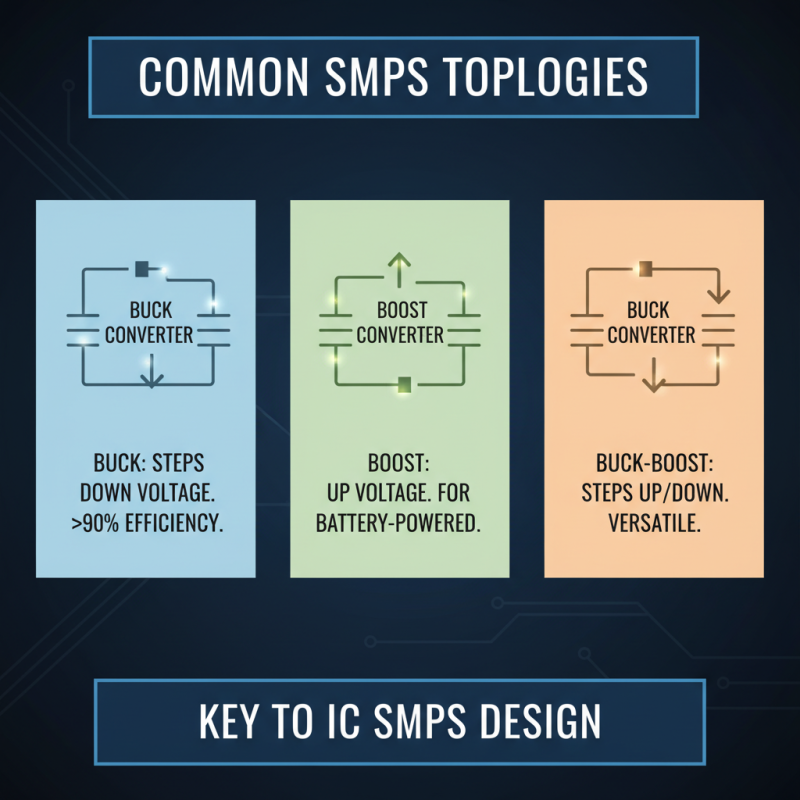
When designing an IC SMPS (Switched-Mode Power Supply), understanding common topologies is crucial. Buck, boost, and buck-boost are prevalent configurations, each serving different needs. For instance, buck converters are efficient for stepping down voltage. They offer over 90% efficiency in many applications, as reported in industry analyses. Boost converters provide necessary voltage increases, making them ideal for battery-powered devices.
Choosing the right topology depends on your project's requirements. Consider efficiency, size, and cost. If space is constrained, you may favor a buck converter for its compact design. However, if you need to elevate voltage, a boost converter shines despite potentially lower efficiency. Many designers overlook thermal management. Heat can degrade performance and lifespan, so ensure adequate cooling.
In practice, the layout of components impacts noise and efficiency. Keep traces short to minimize inductive and resistive losses. Implement proper filtering techniques to reduce output ripple. These details often get sidelined, leading to suboptimal designs. Prioritizing these elements can enhance performance significantly.
Cost vs. Performance: Balancing Budget and Quality in Power Supply Choices
Choosing an IC SMPS power supply is crucial for balancing cost and performance. Many projects require reliable power, but budget constraints often hinder choices. It’s essential to evaluate the specific needs of your project. A cheaper option may disrupt performance. However, spending too much doesn't guarantee better quality.
One tip is to consider efficiency ratings. Efficient power supplies reduce heat generation. Lower heat means increased longevity and performance stability. Look for models with specified efficiency at different loads. This detail can save you money in the long run.
Another crucial factor is load capacity. Understand your project’s power requirements. Oversizing a power supply may impose unnecessary costs, while undersizing can lead to potential failures or power shortages. Always plan for peak loads. Balance your needs with available budgetary resources. Remember, compromising on quality can lead to expensive repairs down the line. Assess your priorities carefully.
10 Essential Tips for Choosing Ic Smps Power Supply for Your Projects
| Criteria |
Importance (1-5) |
Cost ($) |
Performance Rating (1-10) |
Notes |
| Output Voltage Range |
5 |
30 |
9 |
Critical for compatibility |
| Power Rating |
5 |
50 |
8 |
Match project requirements |
| Efficiency |
4 |
40 |
9 |
Higher efficiency saves energy |
| Thermal Management |
4 |
20 |
7 |
Essential for longevity |
| Size and Form Factor |
3 |
25 |
6 |
Check physical space |
| Protection Features |
4 |
15 |
8 |
Over-current, Over-voltage, Short-circuit |
| Load Regulation |
4 |
35 |
9 |
Stability during fluctuations |
| Noise and Ripple |
3 |
20 |
7 |
Minimize interference |
| Compliance and Certifications |
4 |
10 |
8 |
Safety and reliability standards |
| Manufacturer Reputation |
5 |
Variable |
9 |
Trustworthy sources preferred |