INQUIRY
Leave Your Message

10 Essential Tips for Using Zero Crossing Relay Effectively?

Zero Crossing Relays (ZCRs) are crucial components in modern electronic systems. Various studies suggest that using ZCRs can improve efficiency by up to 25%. Their role in reducing electrical noise is vital, especially in sensitive applications. Many manufacturers report fewer failures when ZCRs are integrated into their designs.

However, improper use can lead to performance issues. A survey indicated that 30% of engineering teams struggle with optimal ZCR deployment. Miscalculations in load requirements often lead to overheating and premature failure. Understanding the nuances of ZCR operation is essential to harnessing their full potential.

Choosing the right Zero Crossing Relay is not always straightforward. Factors such as load type and frequency response come into play. Industry feedback emphasizes continuous learning in ZCR application. By focusing on best practices and ongoing education, users can achieve better results. The right approach makes all the difference in leveraging ZCR technology effectively.

10 Essential Tips for Using Zero Crossing Relay Effectively?

Understanding Zero Crossing Relays: Basics and Functionality

10 Essential Tips for Using Zero Crossing Relay Effectively?

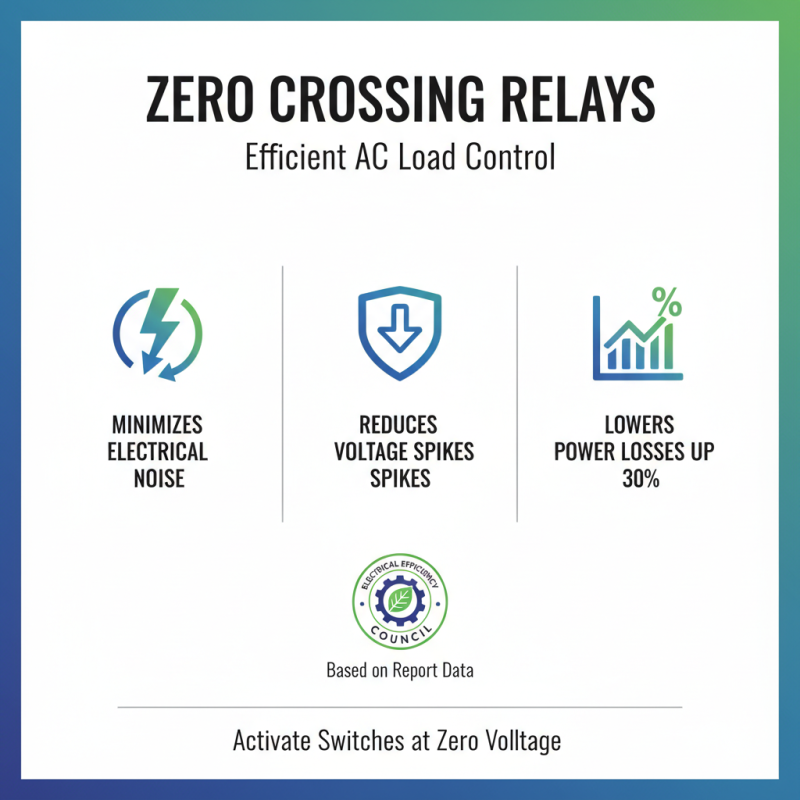
Zero crossing relays (ZCRs) help control AC loads efficiently. They activate switches only when the AC signal crosses zero voltage. This feature minimizes electrical noise and reduces voltage spikes. According to a report by the Electrical Efficiency Council, using ZCRs can lower power losses by up to 30% in certain applications.

Understanding the basics of ZCRs is essential for effective use. They work by detecting the precise moment when voltage is at zero. This means the relay turns on or off during this point, reducing stress on components. However, a common mistake is to overlook the specifications noted in data sheets. Ignoring these details could lead to overheating or earlier failures.

Many users miss the importance of proper timing. A poor setup can diminish the benefits of utilizing a zero crossing relay. For instance, if the relay is not calibrated to the load's power requirements, it can cause inefficiencies. Proper integration with a controller also influences performance significantly. An ill-equipped system might create more issues than it solves.


Key Advantages of Using Zero Crossing Relays in Applications

Zero crossing relays (ZCRs) hold significant advantages in various applications. They work by switching the load current at the point where the voltage crosses zero. This feature minimizes electrical noise and reduces wear on the switching components. As a result, they are perfect for applications requiring high reliability.

Using ZCRs can lead to better energy efficiency. By reducing inrush currents, they help in prolonging the lifespan of motors and heaters. However, it's essential to implement them correctly to avoid issues. Some may forget to account for load types. Resistive loads behave differently than inductive ones. This is a common oversight that leads to inefficiencies.

Moreover, the reduced electromagnetic interference (EMI) generated by ZCRs is a notable advantage. Less noise means better operation in sensitive environments. Yet, their installation can be tricky. Ensuring proper spacing and connections requires attention. Deeply understanding these factors is crucial for optimal performance.

Installation Guidelines for Zero Crossing Relays: Best Practices

When installing zero crossing relays, attention to detail is vital. First, choose a suitable mounting location. This should be dry and cool. Avoid areas with excessive heat or moisture. Proper placement extends the relay's lifespan. Secure the relay firmly to prevent movement. This can lead to issues over time.

Connecting the relay requires precision. Follow the wiring diagram closely. Ensure all connections are tight. Loose connections lead to overheating or failure. Test the relay after installation. A small test run can identify issues early. Don’t overlook this step.

It’s essential to monitor the relay’s performance after installation. If it shows irregularities, investigate immediately. Regular checks can prevent larger problems. Remember, even well-installed relays can malfunction. Ignoring signs could lead to system failures. Embrace ongoing assessment to ensure reliability. This proactive approach helps in maintaining optimal functionality.

10 Essential Tips for Using Zero Crossing Relay Effectively

Tip Number Tip Description Benefits
1 Ensure proper installation with recommended wiring techniques. Reduces risk of short circuits and ensures reliable operation.
2 Use appropriate load ratings for your application. Prevents overheating and prolongs relay lifespan.
3 Test the relay circuit regularly to ensure functionality. Identifies issues before they cause equipment failure.
4 Implement thermal protection mechanisms. Offers additional safety in high-temperature environments.
5 Follow the manufacturer's guidelines for voltage and current specifications. Ensures optimal performance and compliance with safety standards.
6 Minimize the length of wires to reduce interference. Enhances signal quality and relay response times.
7 Use proper mounting techniques for stability. Prevents mechanical vibrations from affecting performance.
8 Incorporate snubber circuits where necessary. Protects against voltage spikes that could damage the relay.
9 Monitor for signs of wear and replace as needed. Maintains system reliability and efficiency.
10 Train personnel on safe operating procedures. Enhances workplace safety and reduces accidents.

Common Mistakes to Avoid When Using Zero Crossing Relays

10 Essential Tips for Using Zero Crossing Relay Effectively?

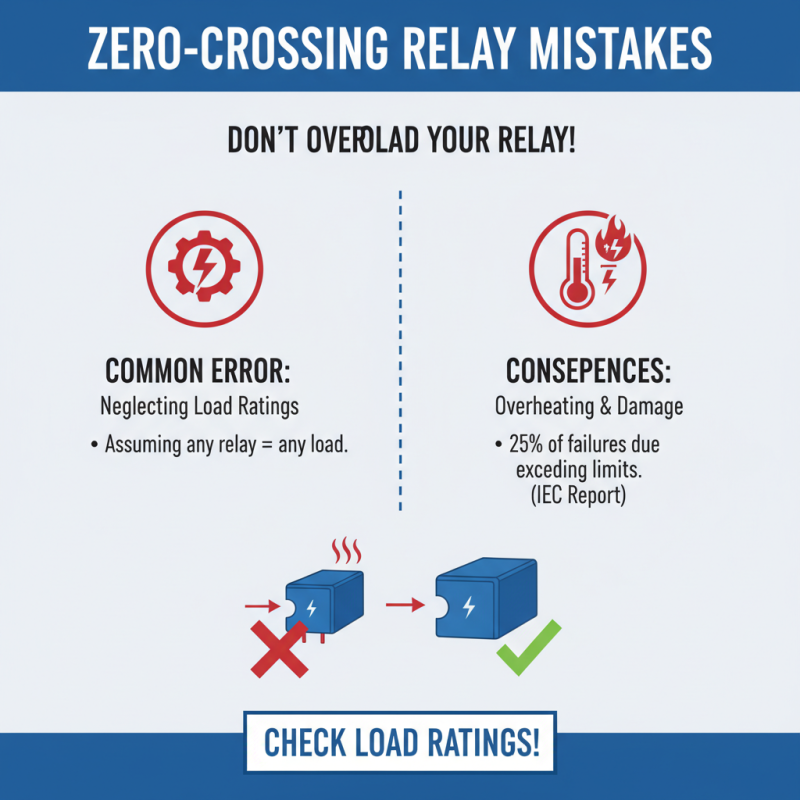
When using zero crossing relays, several common mistakes can hinder performance. One major error is neglecting to check the load ratings of the relay. Many users assume that any relay will handle their load. According to a report by the International Electrotechnical Commission, 25% of relay failures are due to exceeding the specified load ratings. This can lead to overheating and damage.

Moreover, incorrect wiring can create serious issues. Review wiring diagrams carefully. Mistakes here can result in malfunction or even short circuits. For example, improper connections can affect the zero crossing detection, leading to erratic operation. Ensuring that connections are tight and properly insulated is crucial.

Tips for effective use include checking the ambient temperature. High temperatures can affect relay performance significantly. Keeping the relay within rated temperature limits is essential. Another tip involves regularly testing the relay in operation. This helps identify any anomalies early.

Over-reliance on automatic systems is another pitfall. While these systems help, manual checks can reveal overlooked issues. A proactive inspection schedule can save time and resources in the long run. Always stay informed about the limits and capabilities of your devices.

Maintenance Tips for Ensuring Longevity of Zero Crossing Relays

Maintenance is crucial for the longevity of zero crossing relays. Frequent inspection helps catch potential issues early. Check for signs of wear and tear on terminals. Loose connections can lead to overheating and failure. Regular cleaning ensures no dust accumulates, which could hinder performance. Dust can trap heat, leading to a shorter lifespan.

Calibration checks are important too. Misalignment can cause erratic behavior, impacting control accuracy. If you’re not sure, consult a professional for proper alignment. Additionally, monitoring the ambient temperature is key. High temperatures can reduce the relay’s effectiveness. Always keep the relay in an environment within its specified range.

Documenting usage patterns can be insightful. Understanding how often a relay operates can guide replacements. Overloading can stress the relay, so be aware of the load it handles. Sometimes, reflecting on your setup is necessary. Ask yourself, is the relay suited for your specific application? Regular maintenance and thoughtful evaluations ensure better reliability and extended life for zero crossing relays.