Why Are Infrared Sensors Essential for Modern Technology?
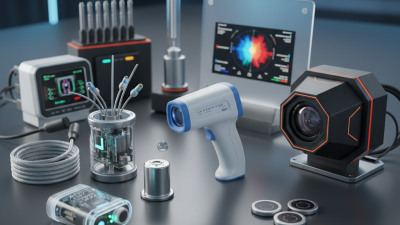
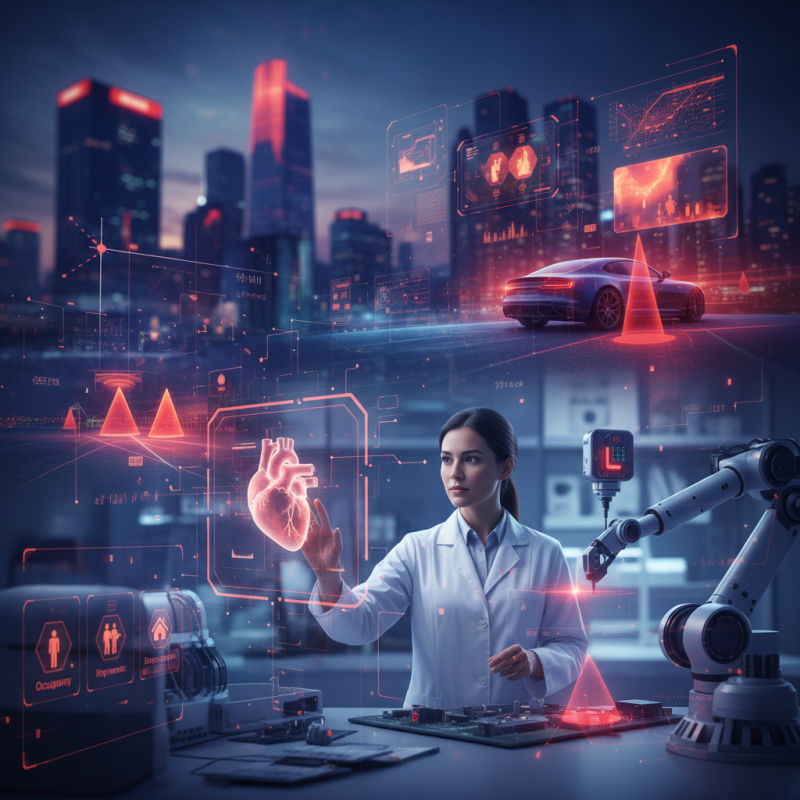
In today's fast-paced technological landscape, infrared sensors play a crucial role. Dr. Emily Chen, a leading expert in the field, states, “Infrared sensors are the unseen backbone of modern automation.” These devices detect infrared radiation, enabling various applications in industries like healthcare, security, and automotive.
The significance of infrared sensors lies in their ability to enhance precision and efficiency. They allow for temperature monitoring, motion detection, and even communication without direct visibility. For instance, in smart home systems, they trigger actions based on occupancy, improving energy management. However, as technology advances, challenges emerge. Sensor calibration and integration can be complex and may lead to errors if not properly handled.
Understanding the role of infrared sensors is essential. Their applications are vast and impactful. Yet, the technology must continuously evolve. Experts need to stay ahead of potential issues, ensuring reliability and effectiveness in critical systems. This way, we can harness the full potential of infrared sensors, while also recognizing their limitations.
The Role of Infrared Sensors in Smart Home Automation Technologies
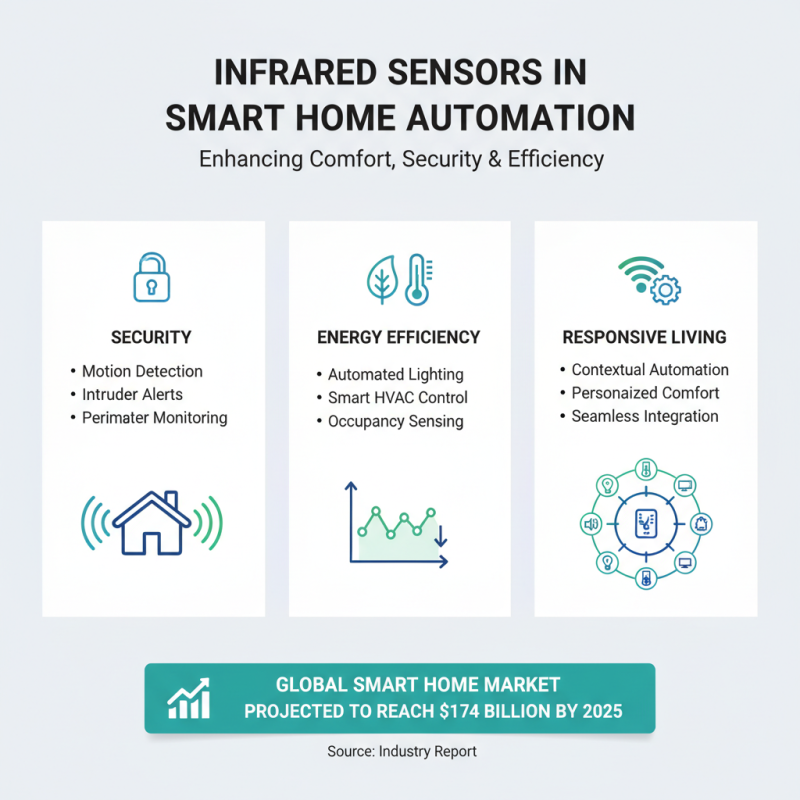
Infrared sensors are pivotal in smart home automation. Their ability to detect heat and motion enhances security and energy efficiency. In fact, the global smart home market is projected to reach $174 billion by 2025, largely driven by advancements in sensor technology. Infrared sensors help automate lighting, heating, and cooling systems, creating a responsive living environment.
In smart homes, the role of these sensors is crucial. They can trigger actions based on occupancy. For example, an infrared sensor can turn off lights when a room is unoccupied. This not only saves energy but also extends the lifespan of light bulbs. Moreover, sensors improve home security by detecting intruders. They can notify homeowners of unusual movements, providing peace of mind.
Tips: Regularly check the placement of sensors for optimal performance. Misalignment can reduce their effectiveness. Also, consider integrating multiple types of sensors for increased reliability. Combining infrared with other technologies can enhance overall system functionality. Lastly, ensure your system is regularly updated to incorporate the latest advancements in sensor capabilities for continued efficacy.
Applications of Infrared Sensors in Healthcare Monitoring Systems
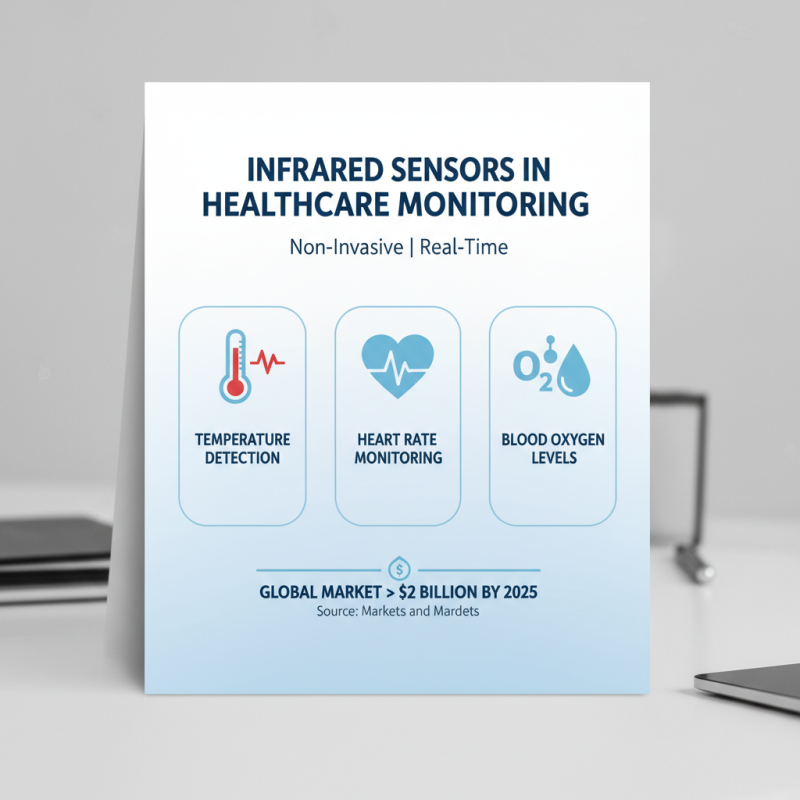
Infrared sensors play a pivotal role in modern healthcare monitoring systems. These sensors can detect changes in temperature, heart rate, and blood oxygen levels. According to a report by Markets and Markets, the global infrared sensor market is projected to reach over $2 billion by 2025. This growth stems from an increasing demand for non-invasive monitoring technologies in clinical and at-home settings.
In hospitals, infrared sensors are crucial for patient monitoring. They allow continuous observation without physical contact. This can significantly reduce the risk of infection. Furthermore, remote monitoring using infrared technology has been a game-changer during the COVID-19 pandemic. A study published in the Journal of Healthcare Engineering noted that infrared thermometers deployed at entrances of healthcare facilities reduced infection spread by over 30%.
However, like any technology, infrared sensors have limitations. Their accuracy can be affected by external factors like ambient temperature and skin conditions. Continuous advancements are necessary to address these challenges. The balance between accuracy and usability remains an ongoing conversation in the healthcare field. As infrared sensor technology evolves, understanding these nuances will be key to optimizing patient outcomes.
Impact of Infrared Sensors on Industrial Automation and Safety
Infrared sensors play a crucial role in industrial automation and safety. They detect heat emitted by objects, enabling real-time monitoring. This capability helps to identify potential issues. For instance, machinery overheating can trigger maintenance alerts before failures occur. Early detection minimizes downtime and enhances productivity.
Safety within industrial environments also improves with infrared technologies. These sensors can monitor personnel movements, ensuring that workers remain at a safe distance from dangerous machinery. In scenarios where visual surveillance may be limited, infrared sensors offer an invisible yet effective form of monitoring. They help prevent accidents, making workplaces safer.
However, reliance on infrared sensors does come with challenges. Their effectiveness can be influenced by environmental factors, such as dust or obstructions. False alarms can occur, leading to unnecessary downtime. It’s vital for industries to continuously evaluate the performance of these sensors. Regular calibration and maintenance are necessary for optimal operation. This reflection on technology ensures that we harness their capabilities effectively, while also addressing inherent limitations.
Advancements in Infrared Sensor Technology for Autonomous Vehicles
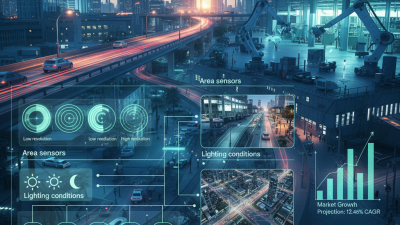
Infrared sensors play a critical role in advancing autonomous vehicle technology. These sensors detect heat emitted from objects, enabling vehicles to recognize pedestrians, animals, and other obstacles. In low-light conditions, infrared technology shines. It enhances the vehicle's ability to see and interpret the environment. This capability is essential for ensuring safety and reliability on the road.
Recent developments in infrared sensors have improved their accuracy and range. Enhanced algorithms process the data gathered, ensuring quick responses during driving. However, challenges remain. Sensor accuracy can falter in adverse weather, like heavy rain or fog. Manufacturers continually work to refine these technologies, striving for systems that perform under all conditions. Integrating infrared sensors with other technologies, such as LIDAR and radar, also poses difficulties. The need for seamless data fusion becomes evident as engineers build smarter vehicles. Each step forward is a leap toward safer and more efficient transportation.
Why Are Infrared Sensors Essential for Modern Technology? - Advancements in Infrared Sensor Technology for Autonomous Vehicles
| Dimension |
Description |
Importance in Autonomous Vehicles |
Current Trends |
| Sensitivity |
Ability to detect thermal radiation emitted by objects. |
Detects pedestrians and obstacles in low-visibility conditions. |
Integration of more sensitive materials such as graphene-based sensors. |
| Range |
Effective distance over which the sensors can operate. |
Critical for detecting objects at various distances. |
Development of long-range infrared sensors to enhance vehicle awareness. |
| Response Time |
Speed at which sensors can detect and process data. |
Faster response aids in making real-time driving decisions. |
Advancements in AI algorithms to reduce processing delays. |
| Integration |
Compatibility with other vehicle sensors and systems. |
Enhances overall vehicle functionality and safety features. |
Growing trend toward sensor fusion technologies. |
| Cost |
Financial investment required for sensor technology. |
Affects affordability and adoption rates in the automotive industry. |
Decreasing costs due to mass production and improved manufacturing processes. |
Market Trends: Growth of Infrared Sensor Adoption in Consumer Electronics
The consumer electronics market has witnessed a surge in the adoption of infrared sensors. These sensors have become integral in various devices. Their ability to detect heat and movement enhances user experience. Products such as smart home devices and wearable technology are leading this trend. Many consumers now expect features like motion detection or temperature sensing in their gadgets.
As we analyze market trends, it's clear that comfort and convenience drive this growth. Infrared sensors improve efficiency in daily tasks. They automatically adjust settings based on user presence. However, some devices may struggle with accuracy in different environments. This inconsistency raises questions about reliability. Manufacturers need to address these challenges to maintain consumer trust.
The versatility of infrared sensors in applications is impressive. They are not limited to simple on-off functionalities. Many devices use them for advanced features, from security systems to smart lighting. Yet, this rapid integration into everyday technology can overwhelm consumers. Some users might not fully understand how these sensors work. Educating consumers is crucial to foster acceptance and proper usage.