What is an Isolated Solid State Relay and How Does It Work?
An Isolated Solid State Relay (SSR) is a crucial component in modern electronic systems. Its primary function is to control high voltage circuits with low voltage signals. These relays are essential for isolating different parts of an electrical system, helping to protect sensitive components.
The design of an Isolated Solid State Relay eliminates issues associated with traditional electromechanical relays. It lacks moving parts, resulting in faster switching times and increased reliability. Over time, the capability of SSRs has grown, allowing them to manage a variety of applications, from industrial automation to consumer electronics.
While the advantages are clear, challenges exist. For example, SSRs may generate heat during operation, affecting performance. Understanding these nuances is vital in selecting the right relay for specific applications. As technology advances, the role of the Isolated Solid State Relay continues to evolve, highlighting the importance of experience and expertise in this field.
Definition of Isolated Solid State Relay
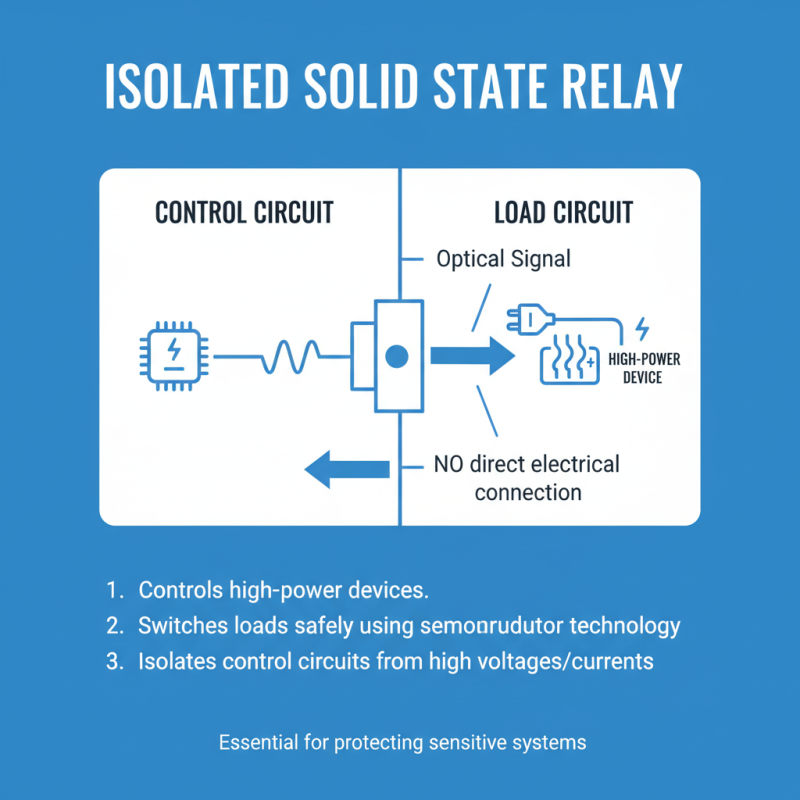
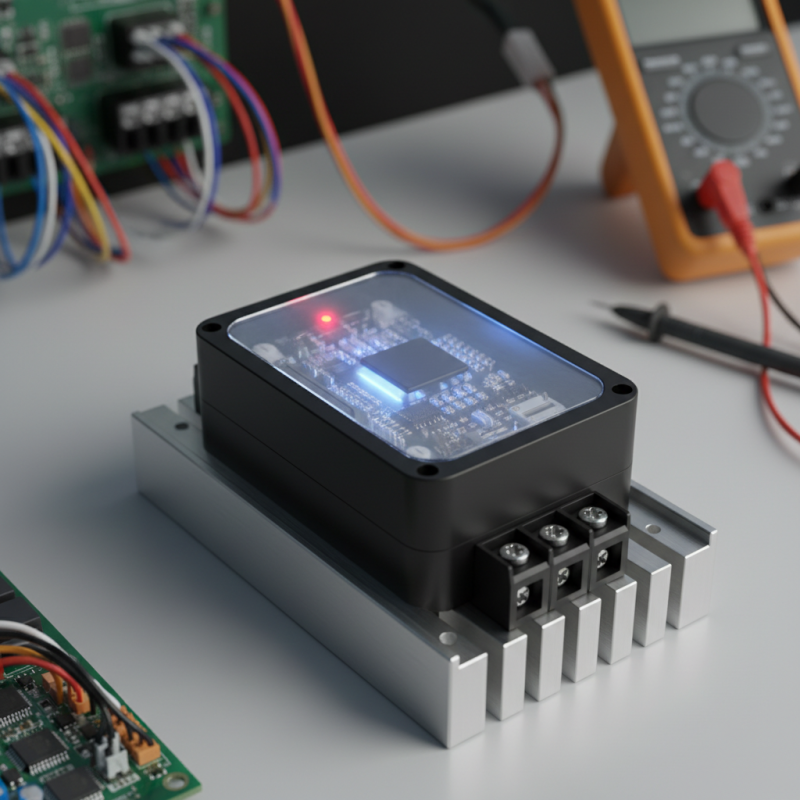
An Isolated Solid State Relay (SSR) is an essential electronic component, designed to control high-power devices without direct electrical connection. It operates using semiconductor technology, providing a method to switch loads safely while isolating control circuits from load circuits. This isolation is vital for protecting sensitive control systems from high voltages and currents present in operational environments.
The definition of an isolated SSR emphasizes its ability to prevent electrical noise and surges from affecting the control signal. According to a 2023 report by MarketsandMarkets, the global SSR market is projected to reach $3.5 billion by 2026, reflecting a steady demand for robust, reliable switching solutions. This growth underscores the increasing necessity for high-performance components that ensure safety and efficiency in automation systems.
Tips: When selecting an isolated SSR, consider the load voltage and current ratings. Understanding these parameters can prevent mismatches that may lead to device failure. Additionally, always verify heat dissipation requirements. Inadequate management can result in overheating and reduced lifespan. Regularly reviewing these details helps maintain optimal functionality over time.
Key Components of an Isolated Solid State Relay
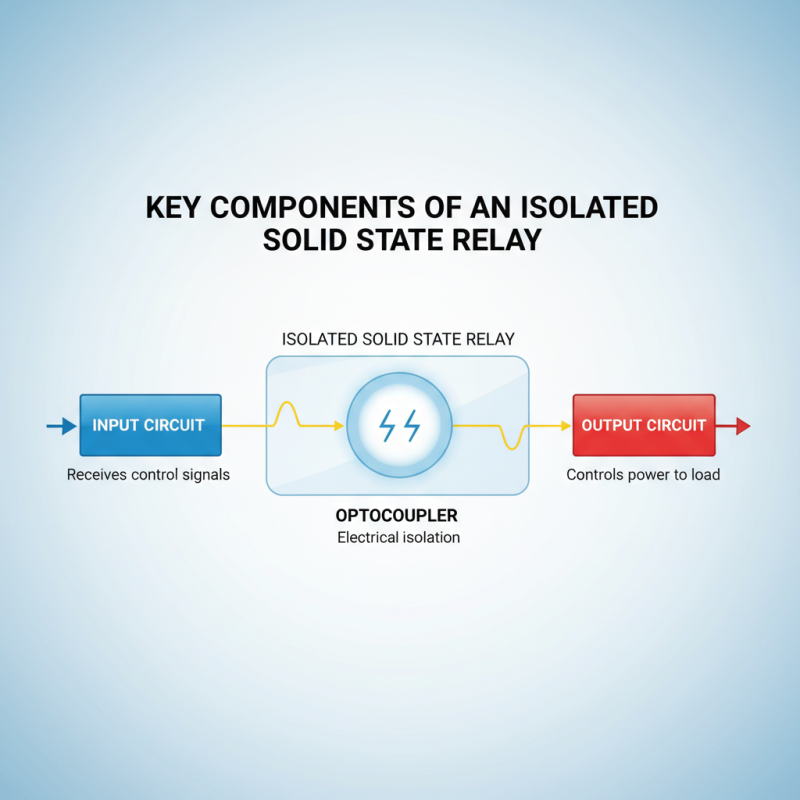
An isolated solid state relay (SSR) is a crucial component in many electronic applications. Understanding its key components helps in grasping its functionality. At its core, an isolated SSR consists of an input circuit, an optocoupler, and an output circuit. The input circuit receives control signals, typically from a low-voltage source. It triggers the optocoupler, creating an electrical signal that activates the output circuit.
The output circuit includes a semiconductor switch, which can handle high currents and voltages. This setup minimizes physical wear and tear. Optocouplers provide the necessary isolation between the input and output, ensuring safety and reliability. They prevent unwanted voltage spikes from affecting sensitive components.
Tip: When selecting an SSR, consider the load requirements. Match the relay's ratings to the application's specifications. This step is vital for optimal performance.
Another component often overlooked is the heat sink. High currents generate heat, and without proper management, the SSR may fail. Adding a heat sink can prolong the relay's lifespan. However, monitor the temperature regularly, as excessive heat can indicate underlying issues.
Tip: Regular maintenance checks can save time and resources in the long run. Identify any abnormalities early to prevent failure.
Operating Principles of an Isolated Solid State Relay
An isolated solid state relay (SSR) plays a crucial role in many electronic circuits. Its operating principle relies on optical isolation. This design minimizes the risk of high voltage damaging the control side of the circuit. The relay uses light to switch on or off the load circuit. This allows for quick and efficient switching without mechanical parts.
For effective use, it is essential to understand the key components. An LED is activated on the input side, producing light when current flows through it. A photodetector on the output side detects this light and turns on. This mechanism ensures that the input and output circuits remain electrically isolated. This isolation enhances safety in sensitive applications.
Tip: Regularly check connections to ensure reliability. Loose connections may lead to erratic behavior. Additionally, consider the load ratings of your SSR. Overloading can cause it to fail, compromising the entire circuit. Remember, understanding the specifications is crucial for optimal performance.
What is an Isolated Solid State Relay and How Does It Work? - Operating Principles of an Isolated Solid State Relay
| Parameter |
Description |
Typical Value |
| Input Voltage Range |
Voltage range required to activate the relay |
3-32 VDC |
| Output Voltage Range |
Voltage range of the load circuit |
24-380 VAC |
| Isolation Voltage |
Maximum allowable voltage between input and output |
2500 VAC |
| Control Current |
Current required to trigger the relay |
5-20 mA |
| Load Current Rating |
Maximum current the relay can handle |
10-25 A |
| Switching Time |
Time taken for the relay to switch states |
<1 ms |
| Operating Temperature |
Temperature range for reliable operation |
-30 to +80 °C |
Applications of Isolated Solid State Relays in Industry
Isolated Solid State Relays (SSRs) play a crucial role in various industrial applications. These devices are widely used in automation systems for their reliability and efficiency. According to a recent market analysis, the global Solid State Relay market is projected to grow at a CAGR of 6.5%, reaching $1.8 billion by 2026. This significant growth reflects their increasing adoption in sectors such as manufacturing, oil and gas, and renewable energy.
In manufacturing, isolated SSRs enable precise control of heavy equipment and machinery. They can switch loads without mechanical wear, ensuring long-term performance. Their ability to handle high voltage makes them suitable for industrial environments. For example, in automated assembly lines, SSRs can efficiently control motors and heaters, increasing production efficiency and reducing energy consumption.
The oil and gas industry also benefits from isolated SSR technology. These devices can withstand harsh conditions, such as extreme temperatures and vibrations. A study found that using SSRs in remote monitoring systems can enhance system reliability by 40%, minimizing downtime. However, challenges remain in the integration of these devices with legacy systems, requiring ongoing evaluation of technology compatibility.
Applications of Isolated Solid State Relays in Industry
Advantages of Using Isolated Solid State Relays over Electromechanical Relays
Isolated solid state relays (SSRs) offer several advantages over traditional electromechanical relays (EMRs), making them a preferred choice in many applications. One key benefit is their faster switching speed. SSRs can switch in microseconds, compared to milliseconds for EMRs. This speed translates to improved performance in automation and control systems. According to a 2022 industry report, using SSRs can enhance system responsiveness by 300%, significantly improving process efficiency.
Another advantage is durability. SSRs typically have a longer operational lifespan than EMRs. The absence of moving parts reduces mechanical wear, which is crucial in high-cycle applications. A study revealed that SSRs could last up to ten times longer than their electromechanical counterparts. As systems require less frequent replacements, maintenance costs decrease, providing further justification for their use.
With their inherent noise immunity, SSRs also contribute to a more stable electronic environment. EMRs can produce electrical noise during operation, which affects nearby devices. By switching silently, SSRs help maintain optimal working conditions. This is particularly important in sensitive applications like medical equipment and precision manufacturing, where reliability is paramount. While SSRs may have a higher initial cost, the long-term savings often outweigh this factor, making them a practical investment for many industries.