Isolated Solid State Relay Tips for Enhanced Performance and Reliability?
Isolated Solid State Relays (SSRs) are essential in modern electrical systems. They offer reliable performance and improved safety. However, users often encounter challenges that affect reliability. Understanding these relays is key to maximizing their potential.
The design of Isolated Solid State Relays involves various techniques that can enhance performance. It’s crucial to select the right components. Factors like heat dissipation and voltage ratings matter. Improper choices can lead to failures. Users should closely evaluate their application requirements.
In application scenarios, environmental factors can influence relay function. Extreme temperatures or vibrations can degrade performance. Regular checks and maintenance are overlooked by many. Recognizing these aspects is vital for optimal operation. Awareness can lead to better longevity and reliability of Isolated Solid State Relays.
Understanding Isolated Solid State Relays: Fundamentals and Functionality
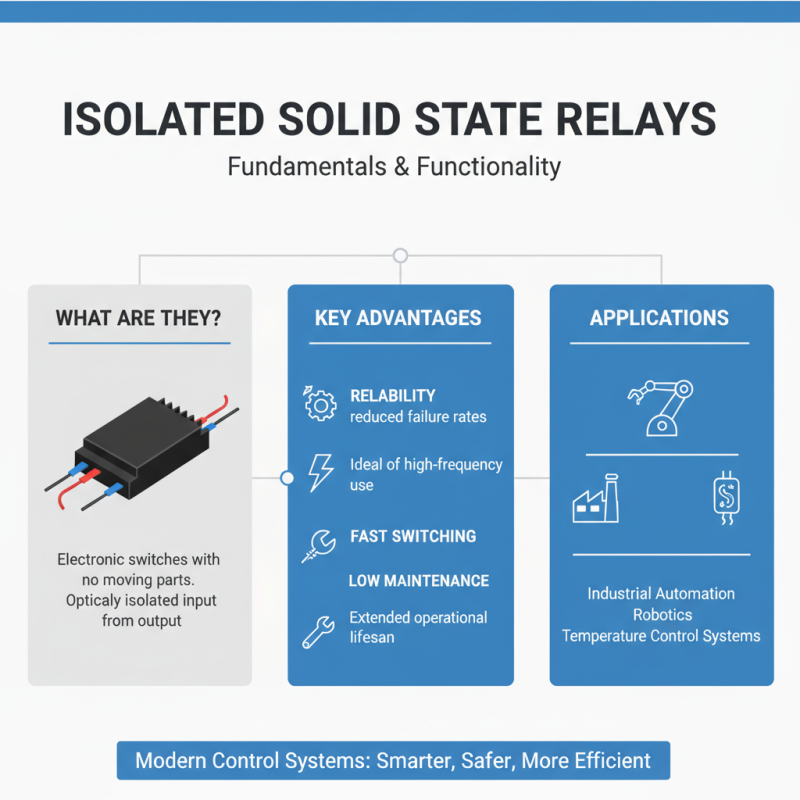
Isolated Solid State Relays (SSRs) play a vital role in modern automation and control systems. These devices offer superior reliability compared to traditional electromechanical relays. Reports indicate that SSRs can reduce failure rates by over 50%. This improvement is essential in applications requiring high-frequency switching and minimal maintenance.
The fundamental functionality of isolated SSRs lies in their design. They use semiconductor technology to achieve fast switching times and higher input-output isolation. Typically, these relays can handle switching frequencies in the range of kilohertz, making them suitable for various industrial applications. However, not all SSRs are designed equally. Some consumers overlook the specifications related to thermal management. Heat dissipation is critical; poor heat management can lead to premature failure.
In addition, the voltage ratings of isolated SSRs must be carefully considered. Many devices are rated for high-voltage applications, but the real-world performance can differ. A study showed that up to 20% of failures are attributed to voltage overstress. Thus, professionals must analyze their specific operational environments. Proper selection and application are key to ensuring reliability and performance in the long run.
Key Advantages of Using Isolated Solid State Relays in Applications
Isolated Solid State Relays (SSRs) offer distinct advantages in various applications. Their primary benefit is electrical isolation. This trait protects sensitive components from high voltages. When using SSRs, noise interference is minimized. This leads to more reliable operations in critical systems. A strong performance advantage is the fast switching capability. It allows devices to operate efficiently without mechanical wear.
Another significant advantage is durability. Unlike mechanical relays, SSRs have no moving parts. This characteristic leads to a longer lifespan. However, SSRs can generate heat during operation. Proper heat management is essential. Excessive temperatures can cause failures. Thus, ensuring adequate cooling systems is crucial for optimal performance.
Cost is often a concern. While SSRs may have a higher initial price, their longevity can offset this expense. Users should weigh upfront costs against long-term reliability. Regular monitoring of SSRs can also help maintain performance. Some may overlook the importance of checking connections and functionality. Regular maintenance can prevent unexpected failures, ensuring smooth operation.
Isolated Solid State Relay Tips for Enhanced Performance and Reliability? - Key Advantages of Using Isolated Solid State Relays in Applications
| Advantage |
Description |
Applications |
Efficiency Improvement |
| Electrical Isolation |
Provides safety by electrically isolating the control circuit from the load circuit. |
Industrial automation, HVAC systems |
Reduces risk of shock and damage to control systems. |
| High Speed Switching |
Faster response times compared to mechanical relays. |
Communication equipment, robotics |
Improves overall system performance and reduces latency. |
| Durability |
No moving parts, leading to longer operational life. |
Energy management systems, automotive applications |
Lower maintenance costs and downtime. |
| Compact Size |
Smaller form factor allows for more efficient circuit designs. |
Consumer electronics, compact control systems |
Saves space and reduces overall product size. |
| Low Power Consumption |
Requires less power to operate compared to traditional relays. |
Battery-operated devices, green technologies |
Enhances energy efficiency in applications. |
Enhancing Performance: Design Considerations for Solid State Relays
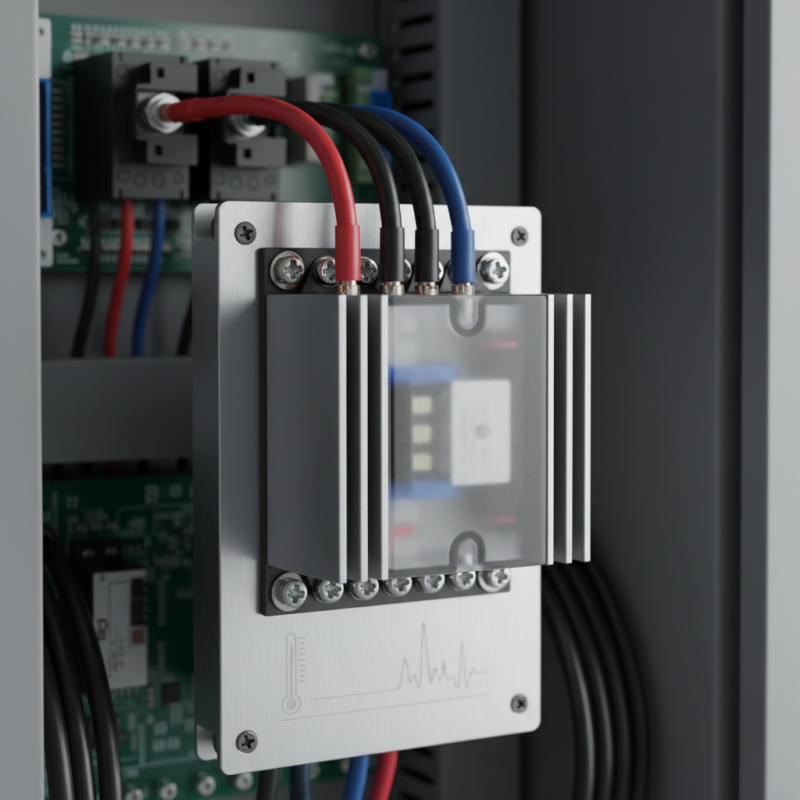
When considering solid state relays, design matters. Effective thermal management is crucial. Heat can significantly impact relay performance. Use heat sinks to dissipate excess energy. Choosing the correct mounting method also influences functionality. A poor connection may lead to voltage drops or overheating.
Isolation is another key factor. It ensures safety and prevents feedback issues. However, designers must balance isolation and signal integrity. Sometimes, increasing isolation can introduce unwanted capacitance. Testing different configurations is essential for optimization.
Finally, material selection affects overall reliability. The wrong materials can lead to early failure. Pay attention to environmental factors, such as humidity and temperature. Each detail can enhance or compromise relay performance. Regular evaluations are important. Design isn't a one-time process; it's iterative and reflective.
Reliability Factors: Common Challenges and Solutions for Solid State Relays
Solid state relays (SSRs) are pivotal in modern applications where reliability is crucial. However, common challenges persist. For instance, significant thermal management issues can impact performance. A study indicates that poor temperature control can reduce relay lifespan by up to 70%. Therefore, addressing heat dissipation is vital for enhancing reliability.
To tackle these issues, consider proper heat sinks or forced air cooling. Ensuring SSRs operate within their specified temperature range improves their performance. Additionally, implementing regular maintenance checks can catch potential failures before they escalate. Monitor for any signs of wear, as overlooked components may lead to unexpected downtimes.
Another challenge is electromagnetic interference (EMI). SSRs are sensitive to external noise, which can lead to erratic behavior. Using guided cables and proper grounding can mitigate these effects. Shielding can also help maintain signal integrity. Reflecting on these challenges allows for better design and application of SSRs in critical systems.
Best Practices for Maintenance and Testing of Isolated Solid State Relays
Regular maintenance of isolated solid state relays is essential for optimal performance. Dust and grime can accumulate over time, leading to overheating. Cleaning the relays periodically helps reduce this risk. Use a soft brush or compressed air to remove debris. Ensuring proper ventilation around the relays can also enhance their efficiency.
Testing isolated solid state relays should occur at regular intervals. Check for proper voltage and current levels during tests. Monitor their response times under varying loads. Testing can reveal potential failures early, allowing for timely replacements. However, some users overlook this step, leading to unexpected downtime. Regularly scheduled tests should be part of your operational routine.
Documentation is crucial for each maintenance session and test result. Keeping a detailed record allows for better analysis over time. Teams can spot trends or recurring issues. However, many overlook the importance of documentation. This can lead to unaddressed problems that escalate. Reflect on your practices to improve long-term reliability and performance.
Performance Comparison of Isolated Solid State Relays
This bar chart compares the performance ratings of different isolated solid state relays based on testing data. Higher ratings indicate better reliability and performance in applications.