What is a Thyristor Controller and How Does It Work?
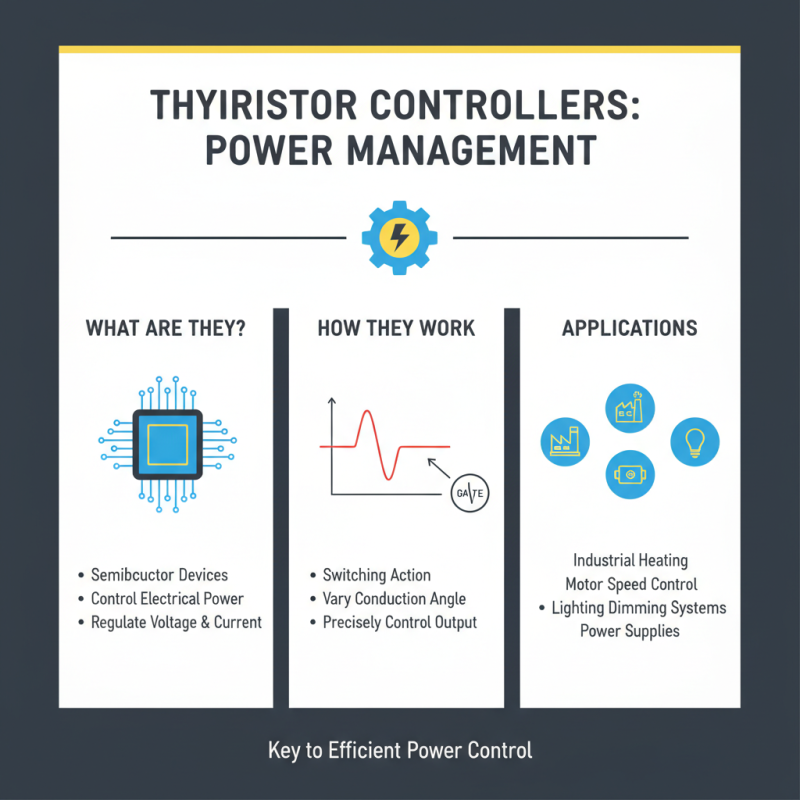
The Thyristor Controller is a vital component in power electronics. It offers precise control of electrical power. This device acts as a switch, regulating voltage and current in circuits. By using semiconductor technology, it enhances the efficiency of various applications.
Many industries rely on Thyristor Controllers for smooth operations. They are found in motor drives and heating systems. Their ability to handle high voltages makes them invaluable. However, understanding their function can be challenging. Some users may struggle to grasp their working principles.
A Thyristor Controller enables various applications, but it is not without its flaws. It may face issues like overheating or incorrect triggering. These problems require careful monitoring and adjustments. Recognizing these imperfections can lead to better designs and practices. Embracing the benefits of Thyristor Controllers can transform how we manage electrical power.
Definition and Functionality of Thyristor Controllers
Thyristor controllers play a vital role in electrical engineering. They are semiconductor devices that manage electrical currents. Their ability to control power effectively makes them essential in various applications. The main function of a thyristor controller is to regulate voltage and current in circuits. This regulation allows for smoother operation of electrical devices, reducing wear and tear.
When using thyristor controllers, some may find challenges. For instance, they can generate heat, which requires careful management. If the heat isn't controlled, it might lead to failure. Users must consider heat dissipation methods. Regular maintenance is also crucial to ensure long-lasting performance. It’s easy to overlook these factors, but neglecting them can result in inefficiencies.
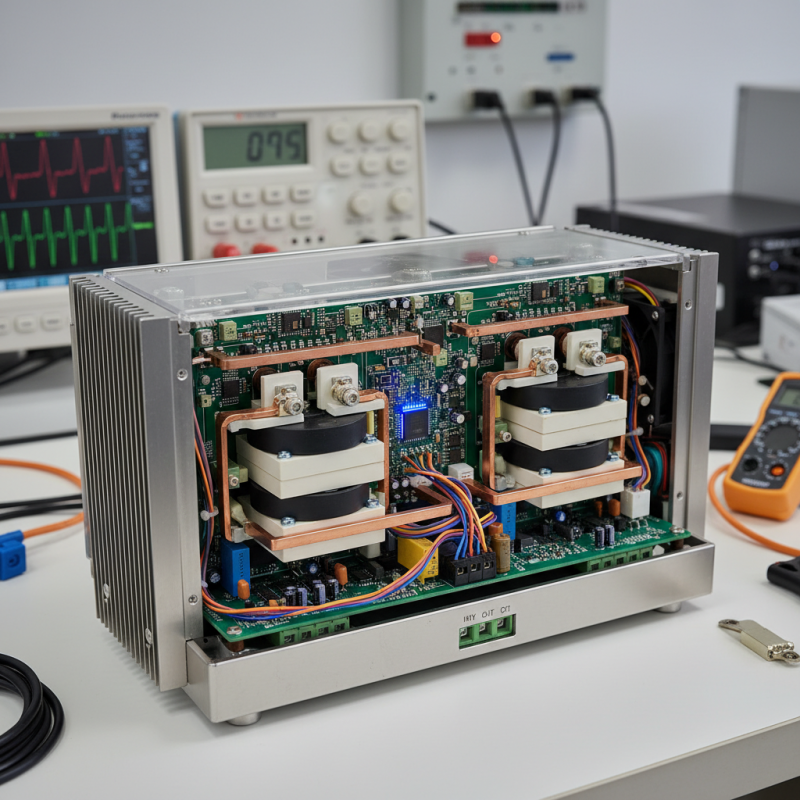
The design of a thyristor controller often includes several components. These include triggering circuits and heat sinks. Each part must work in harmony to achieve optimal performance. In practice, adjusting parameters can be tricky. Finding the right balance is essential, but sometimes difficult to achieve. It's an ongoing learning process for many engineers.
What is a Thyristor Controller and How Does It Work? - Definition and Functionality of Thyristor Controllers
| Feature |
Description |
| Definition |
A thyristor controller is an electronic device used to control power output, typically for AC loads. |
| Working Principle |
It works by turning on and off the thyristor at specific points in the AC waveform, controlling the voltage and current supplied to the load. |
| Applications |
Used in light dimmers, motor speed controls, and temperature controls. |
| Advantages |
High efficiency, robust performance, and capability to handle high power loads. |
| Disadvantages |
Can produce electromagnetic interference and requires careful thermal management. |
| Control Methods |
Phase-angle control and zero-crossing switching are commonly used methods in thyristor control. |
Components of a Thyristor Controller
A thyristor controller is a pivotal component in power electronics. It manages the flow of electrical energy in various applications, from industrial drives to household appliances. The main components of a thyristor controller include the thyristor itself, the control circuit, and the heat sink.
The thyristor is a semiconductor device that acts as a switch. When triggered, it allows current to flow in one direction. The control circuit manages this triggering process. It ensures that the thyristor turns on and off at the right intervals to control power delivery. This circuit uses a variety of signals to determine when to activate the thyristor.
Heat sinks are equally important. They dissipate heat generated during operation. Effective heat management is crucial. Otherwise, overheating can damage the thyristor. Inadequate cooling can lead to reduced efficiency or failure. Overall, a thyristor controller’s components work together. However, ensuring optimal performance can be tricky. Regular monitoring is essential to identify issues before they escalate.
Thyristor Controller Performance Analysis
This bar chart displays the performance metrics of a Thyristor Controller, illustrating the voltage, current, power output, and efficiency rates measured in relevant units. The data showcases optimal operation conditions for effective performance.
Operating Principles of Thyristor Controllers
Thyristor controllers play a crucial role in managing electrical power. They use semiconductor devices to control voltage and current flow. Understanding their operating principles helps in grasping their importance in various applications.
A thyristor has four layers of semiconductor material. It can be turned on by applying a small gate signal. Once triggered, it continues to conduct until the current drops below a certain level. This ability allows for precise control of power delivery. Devices can operate at high voltages and currents, making them suitable for industrial applications.
However, there are limitations to consider. Thyristors can be sensitive to over-voltage conditions, which might lead to device failure. Also, once turned on, they require careful management to turn off. In many systems, complex circuitry is needed to handle these aspects. These challenges remind us that while thyristors offer advantages, they also come with hurdles that engineers must navigate.
Applications of Thyristor Controllers in Industry
Thyristor controllers play a vital role in various industrial applications. They are essential in managing power smoothly and efficiently. In sectors like steel manufacturing, these controllers regulate electric arc furnaces. Reports indicate that the global thyristor market is expected to reach $10 billion by 2026. This growth reflects increasing demand in heavy industries.
In addition, thyristors are widely used in traction systems for trains. Their ability to control high voltages makes them suitable for rail applications. A recent study found that thyristor-based systems improve energy efficiency by about 30%. However, these controllers can introduce complexities in system design. Companies often face challenges when integrating them into existing setups.
Thyristors also find applications in renewable energy systems. They manage the output from solar inverters and wind turbines. As the push for cleaner energy rises, their significance grows. Yet, there are concerns about reliability. Failures in thyristor components can lead to significant downtimes. Industries need to weigh the benefits against potential risks when adopting thyristor technologies.
Advantages and Limitations of Thyristor Technology
Thyristor technology has its set of advantages and limitations that are worth examining closely. On the positive side, thyristors are highly efficient in controlling power. They can handle high voltage and current levels. This makes them ideal for industrial applications. Another key benefit is their durability. Once triggered, thyristors remain in the "on" state until the current falls below a certain level. This feature simplifies control systems, reducing the need for continuous power supply.
However, there are notable limitations. One primary drawback is the complexity of control circuits. Managing thyristors can be tricky, especially in dynamic situations. They generate heat, requiring proper thermal management. This adds to the overall system costs. Additionally, thyristors can exhibit a delay in response time. This latency might be problematic in applications demanding rapid adjustments. Some people overlook these factors. It's essential to consider them for efficient designs.
In terms of robustness, while thyristors are resilient, they can be sensitive to voltage spikes. Protective measures must be implemented. This introduces another layer of complexity. Balancing their advantages against these limitations is crucial for effective use. They can be powerful tools, but they are not foolproof.