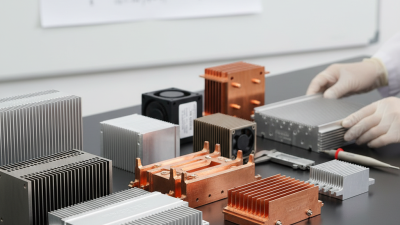
Choosing the best Aluminum Heatsinks for 2026 requires more than comparing fin counts or polished product photos. Thermal performance depends on fin geometry, alloy selection, mounting pressure, airflow, and the heat source itself. A compact heatsink may cool a small LED effectively, yet struggle with a continuously loaded processor.
Dr. Yunus A. Çengel, a widely cited heat-transfer author, wrote, “Heat transfer is the science that deals with the rates of exchange of thermal energy.” That principle remains practical. A heatsink must move heat from a hot surface into surrounding air quickly and consistently. Aluminum remains popular because it is lightweight, affordable, corrosion-resistant, and easy to extrude into detailed fin patterns. Copper usually conducts heat better, but aluminum often offers a more balanced solution for cost, weight, and manufacturability.
This guide examines leading Aluminum Heatsinks expected to matter in 2026. It considers thermal resistance, surface area, fin spacing, mounting systems, anodized finishes, and real operating conditions. A heatsink with narrow fins can look impressive. Dust may reduce its airflow. A passive design may perform quietly, but only under modest heat loads. These details are easy to overlook.
No ranking is perfect.
Laboratory results may not match a cramped enclosure or an uneven mounting surface. That limitation deserves attention. The strongest choice is not always the largest model. It is the heatsink that matches the device, airflow pattern, installation space, and expected workload. This comparison aims to make that decision clearer, while recognizing that thermal testing always involves assumptions.
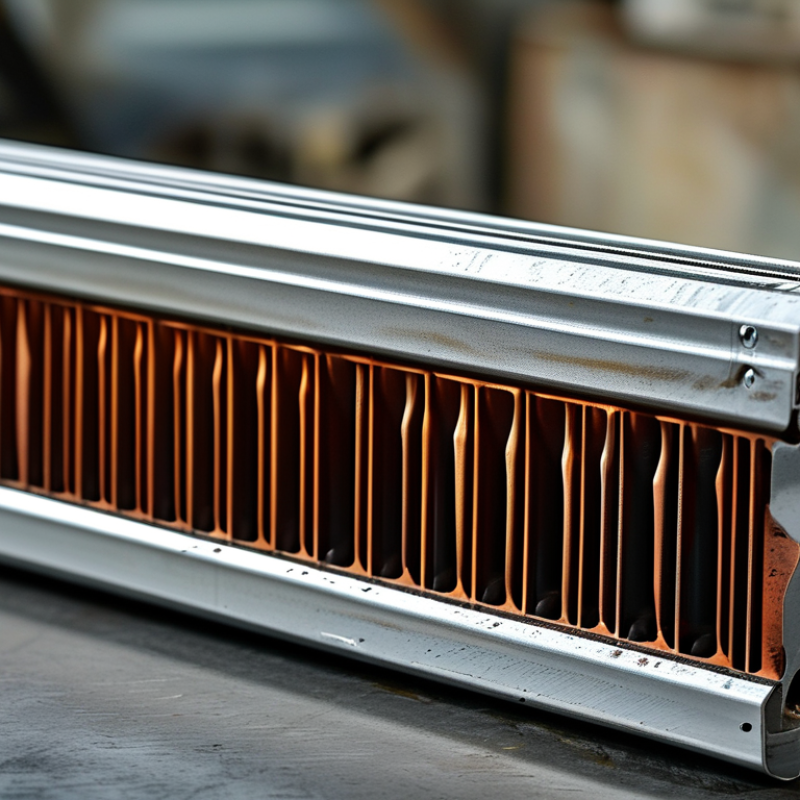
Aluminum heatsinks are passive thermal components that move heat away from electronic parts.
Their main body usually uses aluminum because it is lightweight, corrosion resistant, and conducts heat efficiently. A heatsink does not create cooling. It spreads heat across fins, where air removes energy from the metal.
The core principle is thermal resistance. A lower value usually means better cooling performance. However, the result depends on airflow, mounting pressure, surface contact, and surrounding temperature.
For 2026 designs, extruded, bonded-fin, stamped, and skived aluminum heatsinks remain practical choices. Extruded models suit common devices, while skived fins offer greater surface area in compact spaces. I have found that a smooth contact surface matters more than expected. A small gap can waste excellent fin design. Thermal compound helps, but it cannot repair poor installation.
Tips: Check the component’s heat output first. Measure available space carefully. Match fin direction with airflow. Clean both surfaces before mounting. Test temperatures under real workloads, not idle conditions. My early selection mistake was trusting size alone. Bigger was not always cooler. A narrow heatsink with clear airflow sometimes performed better. Also inspect mounting hardware, because uneven pressure can create hidden thermal problems.
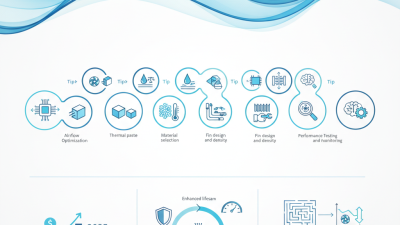
The strongest 2026 aluminum heatsinks will balance thermal performance, weight, airflow, and manufacturing quality. Aluminum 6063 commonly offers about 200 W/m·K thermal conductivity, according to engineering material data. However, conductivity alone does not predict cooling results. Fin spacing, base thickness, surface area, and mounting pressure often matter more during real testing. A dense fin pattern may perform well with a fan, yet restrict airflow in a quiet enclosure.
ASHRAE’s Thermal Guidelines for Data Processing Environments recommend an inlet range of 18–27°C for common air-cooled equipment. That range exposes weak designs quickly. Test the heatsink at realistic ambient temperatures, not only in a cool laboratory. Compare thermal resistance using consistent methods, such as those outlined in JEDEC JESD51 testing guidance. LBNL’s 2024 data-center energy report also shows cooling can consume roughly 7% to 30% of facility electricity, depending on efficiency and operating conditions. Small thermal improvements can therefore influence system-level energy use. Still, this estimate does not directly predict a desktop or industrial enclosure.
Tips: Check the contact surface with a straightedge. Test both vertical and horizontal mounting. Keep an eye on fan noise. I would not trust a perfect specification sheet without thermal-camera evidence. One practical mistake is ignoring dust buildup; a clean heatsink can outperform a larger, neglected one.
What Are the Top Aluminum Heatsinks for 2026?
Extruded aluminum heatsinks remain the practical choice for processors, power supplies, and LED drivers. Their straight fins are affordable, repeatable, and easy to cut into custom lengths. ASM Handbook data places common aluminum alloys near 200 W/m·K thermal conductivity. That sounds impressive, but airflow decides the result. A dense fin stack can trap dust and weaken cooling. Leave room for movement.
Skived and bonded-fin designs provide more surface area in compact electronics. They suit telecom modules, battery controllers, and embedded computers with limited height. Pin-fin heatsinks perform better when air arrives from different directions, especially inside small enclosures. A 2024 thermal-management market analysis by MarketsandMarkets identifies data centers, electric vehicles, and power electronics as major demand areas. These sectors need lighter cooling hardware, not simply larger metal blocks.
For high-wattage components, aluminum may work as a base with copper inserts or heat pipes. This hybrid approach improves spreading across uneven heat sources. JEDEC JESD51 testing guidance also reminds engineers that measured thermal resistance depends on mounting, airflow, and test conditions. Real installations rarely match laboratory charts. I have seen a small gap under a heatsink ruin an otherwise careful design. Choose the fin shape after measuring the enclosure, heat load, and actual airflow.
| Aluminum Heatsink Design | Typical Construction | Typical Thermal Resistance* | Best Applications | Main Advantages | Important Limitations |
|---|---|---|---|---|---|
| Extruded Straight-Fin | Aluminum profile with parallel fins formed by pushing heated material through a die. | Approximately 1.0–10.0 °C/W for natural-convection models | Power regulators, embedded computers, LED modules, small motor drives, and general electronics. | Low production cost, reliable structure, easy cutting, and broad availability in standard profiles. | Performance depends strongly on airflow direction and fin spacing; less effective in obstructed enclosures. |
| Skived-Fin | Thin fins are cut and lifted from a solid aluminum base, creating an integral fin array. | Approximately 0.15–2.0 °C/W with suitable airflow | Compact processors, telecommunications hardware, high-density power electronics, and space-limited systems. | High fin density, good base-to-fin heat transfer, and efficient use of limited footprint area. | Usually costs more than basic extrusion and may require careful handling because the fins are thin. |
| Bonded-Fin | Separate aluminum fins are attached to a machined or extruded base using a thermal bonding process. | Approximately 0.10–1.5 °C/W with forced airflow | Large power supplies, industrial inverters, battery systems, and high-wattage LED equipment. | Flexible fin height and spacing; supports large heat-dissipation areas and customized airflow paths. | Bond quality affects long-term reliability, and the assembly can be heavier than a comparable extrusion. |
| Stamped-Fin | Thin aluminum sheet is stamped, folded, or corrugated and mechanically joined to a base. | Approximately 1.0–8.0 °C/W for compact passive assemblies | Consumer electronics, small converters, memory devices, and low-to-medium power control boards. | Lightweight, economical in high volumes, and suitable for low-profile designs. | Lower structural mass and contact quality can limit performance at high heat loads. |
| Pin-Fin | An array of cylindrical or square aluminum pins extends from a common base. | Approximately 0.20–3.0 °C/W with multidirectional airflow | Chips, compact power modules, devices exposed to changing airflow directions, and fan-assisted enclosures. | Accepts airflow from multiple directions and performs well where the cooling path is not linear. | More difficult to manufacture and clean; pressure drop may increase with very dense pin spacing. |
| Fan-Assisted Extruded | Extruded aluminum fin body combined with a mounted axial or centrifugal fan. | Approximately 0.05–0.50 °C/W, depending on airflow and size | High-performance processors, industrial computing, automation controllers, and compact power converters. | Much higher heat removal than passive cooling in a similar footprint; easy to integrate as a module. | Fans consume power, generate noise, and introduce a moving component that may require maintenance or replacement. |
| Cold-Forged Pin-Fin | Aluminum is compressed in a die to form a dense, integral base and pin structure. | Approximately 0.10–1.0 °C/W with forced airflow | High-power semiconductor packages, networking equipment, and compact aerospace or industrial electronics. | Strong mechanical integrity, good thermal continuity, and efficient cooling in compact geometries. | Tooling costs can be high, and design changes are less economical after production tooling is created. |
| Liquid-Cooled Aluminum Cold Plate | Machined, extruded, or bonded aluminum plate containing internal channels for a circulating coolant. | Approximately 0.02–0.20 °C/W, depending on flow rate and channel design | Electric vehicle power electronics, battery thermal management, laser systems, and high-density industrial equipment. | High heat-transfer capacity and effective temperature control for concentrated, high-power heat sources. | Requires a pump, tubing, coolant management, sealing, and protection against leakage or galvanic corrosion. |
*Thermal-resistance values are representative design ranges rather than guaranteed ratings. Actual performance varies with aluminum alloy, heatsink dimensions, mounting pressure, thermal-interface material, orientation, ambient temperature, airflow, coolant flow, and installation conditions.
What Are the Top Aluminum Heatsinks for 2026?
Material choice strongly affects heat transfer. Standard 6063 aluminum offers about 201 W/m·K thermal conductivity, according to ASM Handbook data. Copper reaches roughly 385 W/m·K, but it adds weight and cost. Aluminum remains practical for large passive heatsinks. The U.S. Geological Survey estimated global primary aluminum production at about 72 million metric tons in 2024. That scale supports stable material availability. Still, conductivity alone does not determine cooling performance. Interface quality, airflow, and mounting pressure matter greatly.
Fin structure changes how efficiently a heatsink releases heat. Straight fins suit predictable airflow and simple manufacturing. Pin fins perform better when air arrives from several directions. Skived fins create dense, continuous paths, but narrow gaps can trap dust. Larger heatsinks usually reduce thermal resistance. However, oversized blocks may restrict airflow inside compact enclosures. The International Energy Agency’s Electricity 2024 report projects data-center electricity demand could exceed 1,000 TWh in 2026. That pressure makes efficient thermal design more important. My own design preference is not always correct. Dense fins can look impressive yet underperform with weak airflow.
Tips: Match fin spacing to fan pressure, not appearance. Check the datasheet’s thermal-resistance value under similar airflow conditions. Measure the mounting surface. A small gap can erase the benefit of expensive material. Test temperatures at idle and full load. Real conditions expose weak assumptions.
Choosing a top aluminum heatsink for 2026 starts with installation, not appearance. ASM Handbook data places 6061-T6 aluminum near 167 W/m·K, while high-purity aluminum can exceed 220 W/m·K. Alloy selection matters.
Mount the heatsink on a flat, clean surface. Remove old thermal compound with isopropyl alcohol, then apply a thin, even layer. Too much paste traps heat. Too little creates air gaps. JEDEC JESD51 testing guidance also stresses controlled contact pressure and repeatable measurement conditions. In field work, I recheck screw torque after thermal cycling. Vibration can loosen fasteners, although this step is often skipped.
AIRFLOW Keep airflow channels free from dust. A soft brush and low-pressure air work better than aggressive cleaning. Inspect fins every three to six months in dusty environments. Rising fan noise or a small temperature increase can reveal blocked passages early. My own mistake was checking surface temperature but ignoring the interface temperature. That gave false confidence.
Future designs will likely combine thinner fins, vapor-assisted cooling, and smarter temperature sensors. The International Aluminium Institute reports that recycled aluminum uses about 5% of the energy required for primary production. That supports more circular heatsink manufacturing. However, recycled alloy composition can vary, so thermal specifications require verification. The best 2026 designs may be lighter and more sustainable, but installation quality will still decide real-world performance.