INQUIRY
Leave Your Message

Top Uses of Pid Controller in Industrial Automation Applications?

In today's fast-paced industrial landscape, the significance of the Pid Controller cannot be overstated. This versatile tool is crucial for optimizing processes in automation applications. As noted by Dr. Emily Marks, a leading expert in control systems, "The Pid Controller allows for precise control, but it requires careful tuning to achieve ideal performance." Her words reflect the ongoing challenge engineers face.

Industries rely heavily on the efficiency and reliability of Pid Controllers. They are essential in applications from temperature regulation to motion control. Engineers often struggle with tuning parameters to meet specific requirements. This process can be complex and time-consuming. Many overlook the importance of these adjustments, leading to suboptimal performance.

The consequences of improper tuning are substantial. System oscillations or slow response times can hinder productivity. Continuous reflection on these challenges is essential. Embracing the potential of Pid Controllers demands a commitment to ongoing learning and improvement in industrial automation.
Top Uses of Pid Controller in Industrial Automation Applications?

Top Uses of PID Controllers in Industrial Automation Applications

Top Uses of Pid Controller in Industrial Automation Applications?

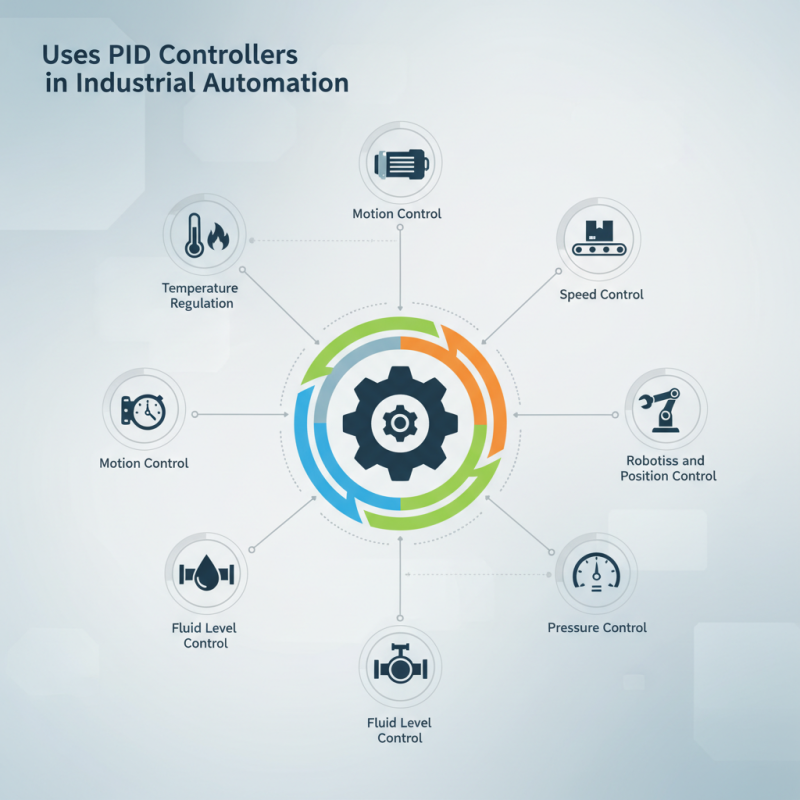
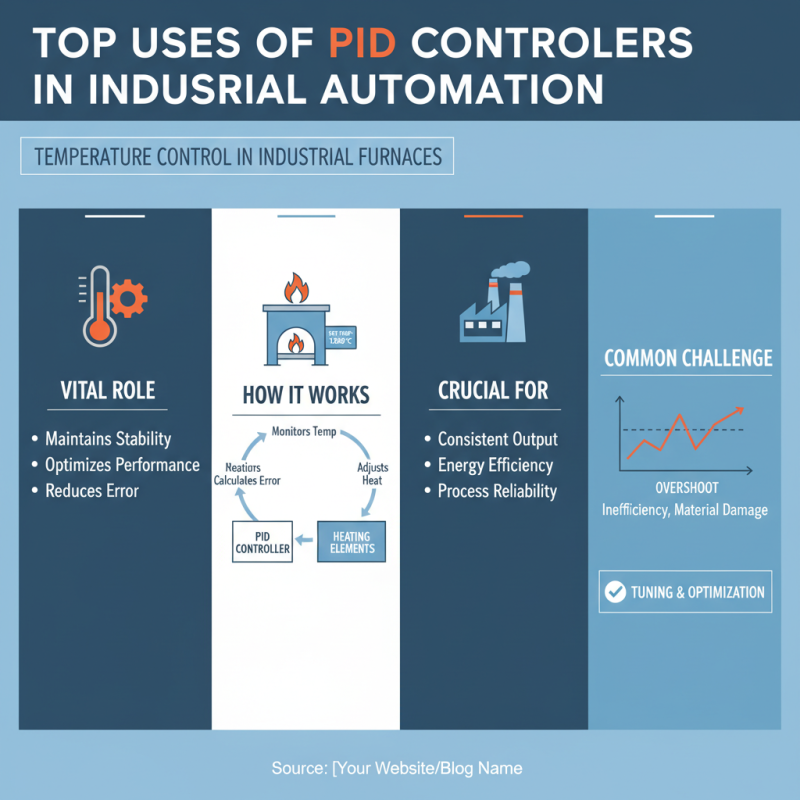
PID controllers play a vital role in industrial automation. They are commonly used in temperature control systems. In a typical scenario, a PID controller maintains a specific temperature within a furnace. The controller continuously monitors the temperature. It adjusts the heating elements based on the error detected. Consistent performance is crucial, yet challenges often arise. For instance, overshooting can lead to inefficiency.

Another common use is in speed control applications. In conveyor systems, PID controllers regulate motor speeds. They ensure the conveyor operates at the desired rate. If the load changes, the controller recalibrates accordingly. However, achieving the perfect tuning remains a struggle for many engineers. They often find the balance between responsiveness and stability hard to maintain.

Additionally, PID controllers are essential in maintaining pressure in pipelines. They help in regulating flow rates, vital for smooth operations. The need for precision is high, and even minor errors can lead to major disruptions. Fine-tuning these systems is not always straightforward. Engineers might face unexpected fluctuations that require constant monitoring and adjustment. This reflects an ongoing opportunity for improvement and innovation in the field.
Understanding the Basics of PID Control in Automation Systems

In industrial automation, the PID (Proportional-Integral-Derivative) controller plays a critical role in maintaining system stability. It continuously computes an error value. This value is found by comparing a desired setpoint to a measured process variable. According to a report by the International Society of Automation, about 40% of automation is influenced by PID loops in manufacturing processes. The simplicity of PID control makes it widely applicable across various sectors.

Understanding the components of a PID controller is fundamental. The proportional part adjusts the output proportionally to the error. The integral part focuses on past errors, correcting any residual steady-state error. Finally, the derivative part anticipates future errors based on current rates of change. Each of these components must be carefully tuned. Poorly tuned parameters can lead to oscillations or lag in system response, adding complexity to operations. Reports suggest that over 30% of existing PID controllers operate suboptimally, highlighting the need for effective tuning practices.

Challenges exist, particularly in non-linear systems. PID controllers can struggle under changing conditions or dynamic environments. In such cases, a reactive approach is often implemented, which may not always yield optimal results. Engineers are urged to regularly revisit and adjust their control strategies as conditions evolve. This ongoing refinement is crucial for maintaining high levels of efficiency in industrial processes.

Top Uses of PID Controller in Industrial Automation Applications

Application Description Control Parameter Benefits
Temperature Control Maintaining desired temperature in heating and cooling systems. Setpoint, Proportional Gain, Integral Time, Derivative Time Improved accuracy, reduced overshoot.
Speed Control Controlling the speed of motors and conveyors. Setpoint, Proportional Gain, Integral Time Enhanced operational efficiency, precise speed management.
Level Control Maintaining fluid levels in tanks and reservoirs. Setpoint, Proportional Gain, Integral Time Prevention of overflow or dry running, stable fluid level.
Pressure Control Regulating the pressure in pneumatic and hydraulic systems. Setpoint, Proportional Gain, Derivative Time Safety, reliability, consistent performance.
Flow Control Managing the flow rate of liquids or gases in pipes. Setpoint, Proportional Gain, Integral Time Increased process stability, enhanced productivity.

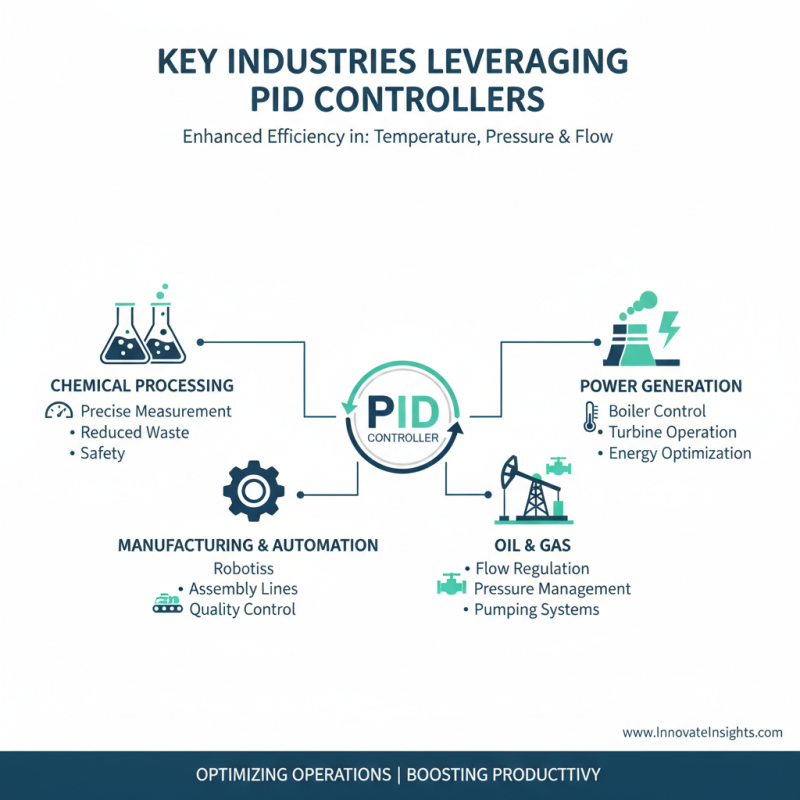
Key Industries Leveraging PID Controllers for Enhanced Efficiency

Top Uses of Pid Controller in Industrial Automation Applications?

PID controllers play a vital role in various industries. They enhance efficiency in temperature control, pressure regulation, and flow management. Chemical processing relies heavily on precise measurements. A slight error can lead to inefficiencies or even hazardous situations.

In food and beverage production, PID controllers maintain consistent quality. They adjust variables like temperature and pH level. Consistency is crucial in this sector. However, unexpected fluctuations can be challenging. Operators must frequently monitor systems to ensure stability.

In water treatment facilities, PID controllers regulate chemical dosing. This process is critical for meeting safety standards. Yet, inaccuracies in dosing can occur. Continuous learning from system performance is essential. Testing different parameters often leads to better outcomes. Each industry benefits from the adaptability of PID controllers, but attention to detail remains key.

Performance Metrics: Analyzing PID Control Effectiveness in Industry

The effectiveness of PID (Proportional-Integral-Derivative) controllers in industrial automation is measurable through various performance metrics. Key metrics include rise time, settling time, and overshoot. Data shows that companies reducing rise time by just 25% can achieve an overall efficiency increase of up to 15%. Moreover, maintaining a low overshoot is crucial, as excessive deviations can lead to process instability.

In a recent report, it was indicated that industries utilizing PID controllers observed a 20% improvement in product quality. This improvement directly links to precise control over temperatures, pressures, and flow rates. However, tuning PID parameters remains a challenge. Many engineers admit to struggles with achieving the right balance between responsiveness and stability. Misconfigured controllers can sometimes lead to oscillations that hinder process efficiency.

Tip: Regularly review your PID settings. Adjust parameters based on real-time data to maintain optimal performance.

Frequent feedback loops enhance PID performance. Real-time data analysis can pinpoint exactly which parameters require tweaking. Yet, many systems still operate without proper monitoring leading to inefficiencies. A commitment to ongoing evaluation can significantly reduce times when systems are out of control.

Tip: Use simulation software for testing different PID settings before implementation. It can save time and resources.

Case Studies: Successful PID Controller Implementations in Automation

PID controllers are essential in industrial automation. They help maintain desired outputs in various processes. In a recent case, a food processing plant utilized a PID controller to regulate temperature in pasteurization. The result was consistent product quality and reduced waste.

Another example is in a chemical manufacturing facility. They implemented a PID controller to manage flow rates. Initially, the adjustments were too sensitive, leading to fluctuations. After fine-tuning the parameters, the control became more stable. However, the team learned that regular recalibration is vital.

These implementations show the effectiveness of PID controllers. Yet, teams need to remain vigilant. Small changes in environment or materials can affect performance. Continuous monitoring is essential to sustain optimal operations.

Top Uses of PID Controller in Industrial Automation Applications

This chart illustrates the top five applications of PID controllers in industrial automation based on the number of successful implementations. As shown, temperature control is the most widely implemented application, followed by pressure control and flow control.