How to Use a Zero Crossing Relay for Efficient Power Control?
In the quest for efficient power control, the Zero Crossing Relay (ZCR) stands out. Renowned industry expert Dr. Emily Hart recently stated, "Zero Crossing Relays optimize power management, ensuring smoother operation." This technology drastically reduces electrical noise and wear on devices. Understanding how to leverage ZCRs can enhance overall efficiency.
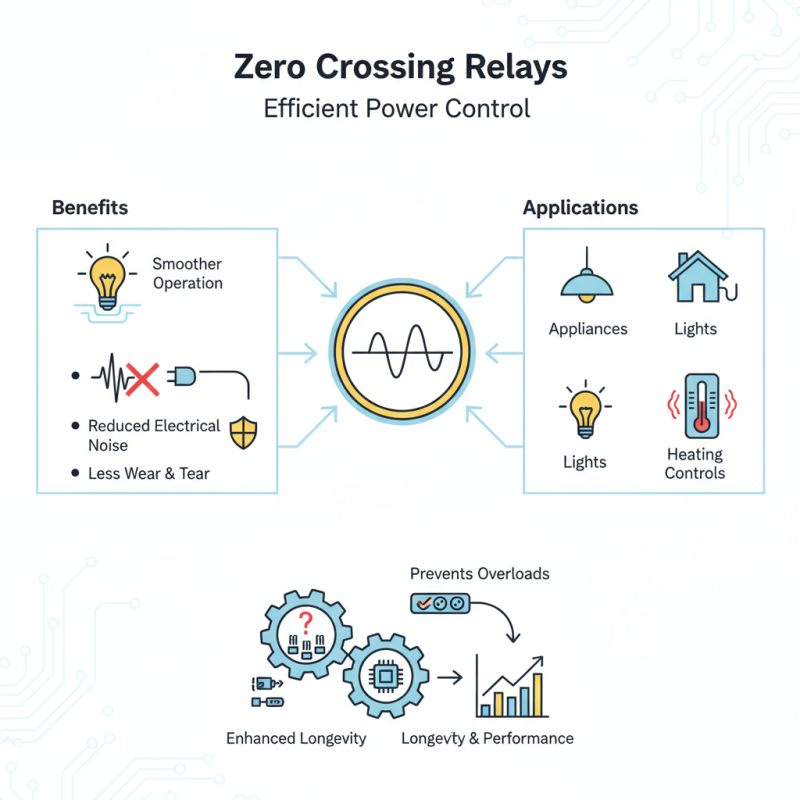
By activating only when the voltage crosses zero, these relays minimize inrush current. This leads to reduced electromagnetic interference. Many industries are tapping into this technology for appliances, lights, and heating controls. The careful use of Zero Crossing Relays can prevent system overloads.
However, not all applications are straightforward. Selecting the right Zero Crossing Relay involves understanding load types and switching capabilities. Some may find the learning curve steep, yet overcoming these challenges pays off in longevity and performance. Exploring this technology reveals the power of efficient control in modern electrical systems.
Understanding Zero Crossing Relays and Their Functionality
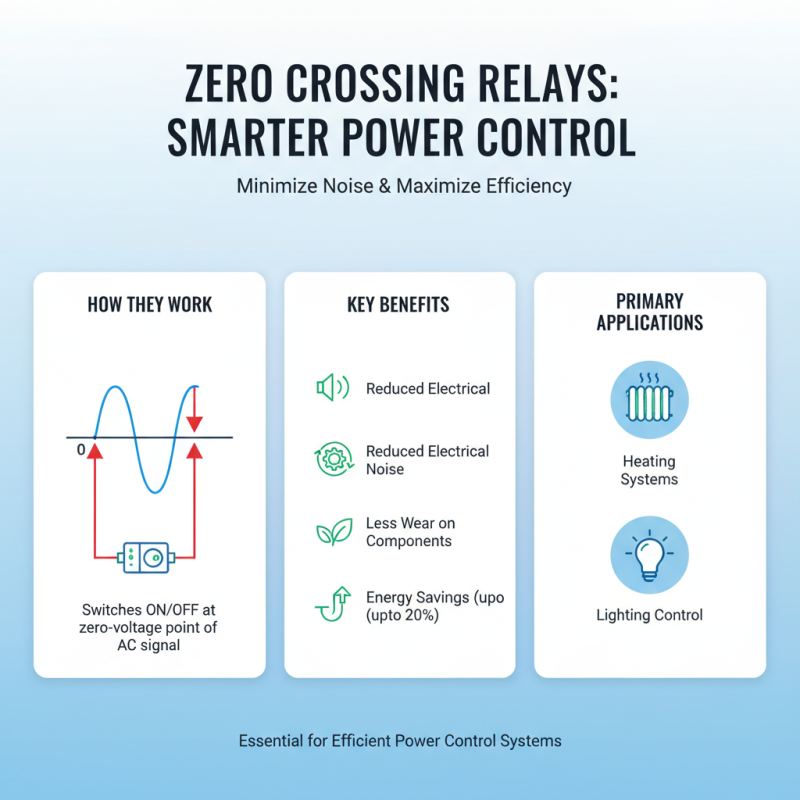
Zero crossing relays are essential components in efficient power control systems. They operate by switching on and off during the zero-voltage point of an AC signal. This technique minimizes electrical noise and reduces wear on mechanical parts. Research indicates that using these relays can lead to energy savings of up to 20% in some applications. Key sectors, including heating and lighting, benefit significantly from this technology.
When implementing zero crossing relays, consider the load type. Resistive loads, like incandescent bulbs, work best with these relays. However, complex loads can cause challenges. Non-linear loads can introduce harmonics that affect relay performance. Regular assessments can mitigate these issues.
**Tip:** Ensure proper filtering to address any potential noise issues that may arise from non-resistive loads. This can prolong relay life. It’s crucial to regularly monitor performance data to optimize efficiency. Utilizing real-time monitoring can lead to immediate adjustments, enhancing overall system reliability.
Key Benefits of Using Zero Crossing Relays for Power Control
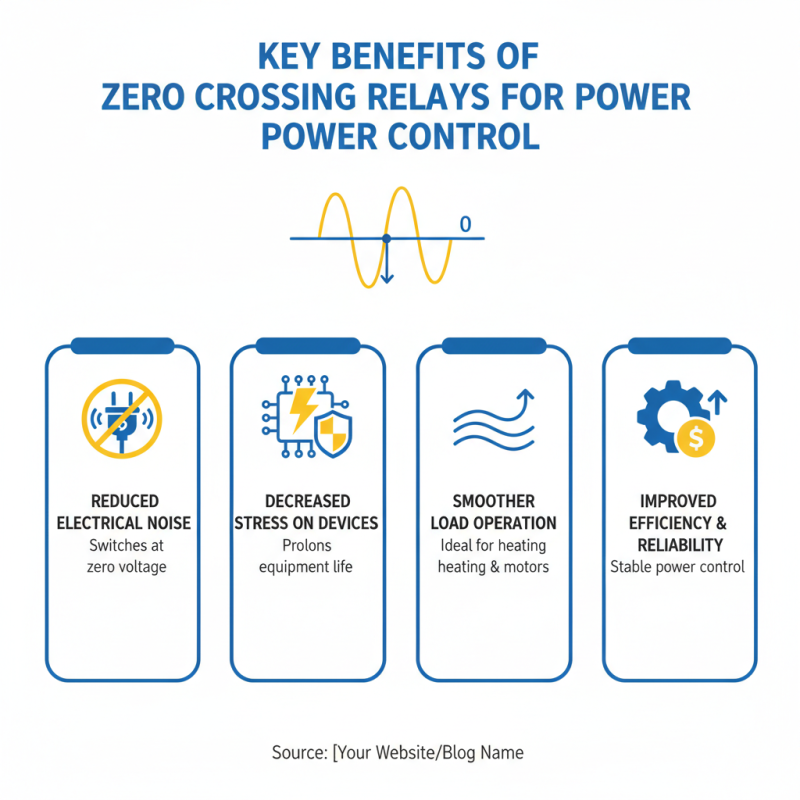
Zero crossing relays (ZCRs) have gained attention for their ability to control power efficiently. They operate when the voltage crosses zero, reducing electrical noise and stress on devices. This feature leads to smoother operation of connected loads, making them ideal for heating elements and motor controls.
The benefits of ZCRs extend to energy saving. By switching at zero voltage, they minimize wasted energy. This results in lower utility bills over time. Furthermore, they enhance the lifespan of electrical components by reducing contact wear. ZCRs also increase safety by lowering the risk of arcing during switching.
Tips for using zero crossing relays effectively include ensuring proper ratings for your application. Match the relay's voltage and current capabilities to prevent overload. Also, consider proper installation to optimize their performance. Regular maintenance can identify any potential issues early on. Monitoring the operating environment helps in making necessary adjustments for efficiency.
Step-by-Step Guide to Wiring a Zero Crossing Relay
Wiring a zero crossing relay can seem daunting, but it’s crucial for efficient power control. First, prepare your workspace. Gather essential tools like wire strippers, soldering iron, and multimeter. Make sure you have a clear understanding of the relay's specifications. Knowing the voltage and current ratings is vital. Incorrect dimensions can lead to issues.
Start by identifying the relay terminals. Typically, there are three main connections: input, output, and neutral. Connect the input terminal to your control circuit. This could be a microcontroller or a simple switch. Next, wire the output to your load. Make sure this connection is secure, as loose wires can create heat buildup.
Don't overlook the importance of grounding. A good ground connection improves relay performance. After wiring, test the connections before powering on. Use a multimeter to check for continuity. If things don’t work the first time, don’t be discouraged. There might be a wiring mistake or a faulty component. Patience is key. Adjustments can lead to a more efficient setup.
Common Applications of Zero Crossing Relays in Power Management
Zero crossing relays (ZCRs) are essential in power management, particularly in dimming lighting systems and motor control applications. These devices minimize electromagnetic interference and ensure smooth operation by turning on and off when the voltage crosses zero. According to a report from the International Energy Agency, smart technology, including ZCRs, contributes to energy savings of up to 30% in residential buildings.
In industrial settings, ZCRs can efficiently control heating elements and compressors. They enhance system longevity by reducing wear from abrupt changes in voltage. A study published in the Journal of Electrical Engineering & Technology indicated that using ZCRs in heating applications led to a reduction in energy consumption by approximately 25%. Additionally, ZCRs are often employed in HVAC systems to maintain temperature consistency while minimizing power wastage.
However, there are challenges. Not every application benefits equally from ZCRs. For example, systems with low-frequency operations may experience issues with response time. Additionally, incorrect installation can lead to operational inefficiencies. Ensuring compatibility and understanding specific system requirements are crucial for optimal results. Proper training and testing are vital to harness the full potential of zero crossing relays in various applications.
Common Applications of Zero Crossing Relays in Power Management
Tips for Optimizing Efficiency with Zero Crossing Relays
Zero crossing relays (ZCRs) are crucial in optimizing power control, especially in industrial applications. By switching loads at zero voltage, they minimize electrical noise. This results in reduced electromagnetic interference, important for sensitive environments. According to industry data, using ZCRs can improve energy efficiency by up to 25%. This statistic highlights their importance in power management systems.
To enhance efficiency, consider the load type when implementing ZCRs. Resistive loads function well, but inductive loads may cause delays in switching. These delays can lead to energy loss. Therefore, always assess the specifics of the load to achieve the best outcomes.
Another factor to consider is the timing of the relay activation. Accurate timing ensures that the relay operates at the optimal point of the AC waveform. While ZCRs are designed for this, real-world conditions can introduce variability. Calibration and testing are essential to confirm performance in practice. Adjustments may be necessary based on seasonal load changes or fluctuations in power quality. Regular maintenance checks will aid in sustaining efficiency over time.