INQUIRY
Leave Your Message

What Is a Proximity Sensor and How Does It Work?

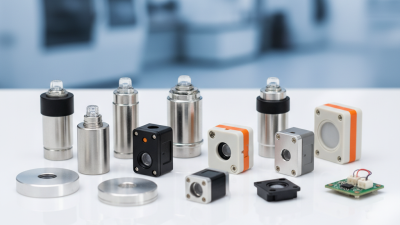
A Proximity Sensor may look like a small black cylinder, but it performs a precise job: detecting an object without physical contact. Mounted beside a conveyor, robot arm, or machine guard, it can sense metal, plastic, glass, or changing distance. Its response may trigger a motor, stop a press, count products, or warn an operator.

Jacob Fraden, author of Handbook of Modern Sensors, defines a sensor as “a device that receives a stimulus and responds with an electrical signal.” This idea explains the core of a Proximity Sensor. It observes a nearby change, converts that change into an electrical signal, and sends the result to a control system. The sensing method matters. Inductive models create an electromagnetic field for metal targets. Capacitive models detect changes in capacitance. Photoelectric versions use light, while ultrasonic designs measure reflected sound.

The details are practical. A dusty lens can weaken optical detection. A nearby metal bracket can disturb an inductive field. Incorrect spacing may cause missed signals. Small errors matter.

This guide examines what a Proximity Sensor is, how it works, and where each technology fits. It also considers installation limits, detection distance, target material, wiring, and maintenance. The explanation will remain useful, but not pretend every factory has perfect conditions. Real machines are noisy, crowded, and occasionally unpredictable. That is where careful selection and testing become essential.

What Is a Proximity Sensor and How Does It Work?

What a Proximity Sensor Is and What It Detects

A proximity sensor detects an object without physical contact. It converts a nearby change into an electrical signal. The detected change may involve metal, light, capacitance, sound, or magnetic fields. An inductive sensor detects metal targets, while a capacitive sensor can detect plastic, glass, powder, or liquid. Photoelectric sensors detect reflected or interrupted light. Ultrasonic models detect distance through high-frequency sound.

The sensor does not always identify an object’s material or shape. It usually confirms presence, absence, position, or approximate distance. This distinction matters on production lines. A metal bracket passing two millimetres away may trigger an inductive sensor reliably. Dust, moisture, vibration, and uneven surfaces can reduce accuracy. That assumption can fail. Practical commissioning should test the real target, not only a laboratory sample.

Demand reflects broader automation growth. The International Federation of Robotics reported 541,302 industrial robots installed worldwide in 2023, showing the scale of equipment requiring reliable detection. MarketsandMarkets estimated the proximity sensor market at approximately 4.4 billion US dollars in 2023, with continued growth projected through 2028. These figures support strong industrial adoption, but they do not guarantee performance in every setting. Engineers still need to check sensing range, response time, mounting clearance, and false-trigger risk. A small gap matters.

What Is a Proximity Sensor and How Does It Work?

A proximity sensor detects the presence of an object without physical contact. Different sensor types use electromagnetic fields, changes in capacitance, light, sound, or magnetic fields to identify targets such as metal, plastic, liquid, solid objects, or magnets.

The chart shows representative nominal sensing distances commonly used in industrial applications. Inductive sensors typically detect metal at short range, while photoelectric and ultrasonic sensors can detect objects from much farther away. Actual performance depends on sensor design, target material, target size, alignment, and environmental conditions.

The Main Types of Proximity Sensors

What Is a Proximity Sensor and How Does It Work?

The Main Types of Proximity Sensors

A proximity sensor detects an object without physical contact. Its internal circuit sends and receives a signal, then measures a change in the nearby field. Inductive sensors create an electromagnetic field and detect metal targets. They perform reliably around oil, dust, and machine vibration. Capacitive sensors detect changes in electrical capacitance. They can sense plastic, glass, powder, liquid, and human hands.

Photoelectric sensors use light beams. A blocked or reflected beam indicates an object’s position. Ultrasonic sensors send sound pulses and calculate distance from the returning echo. They suit transparent materials and uneven surfaces, although foam and strong airflow can reduce accuracy. Magnetic sensors respond to magnetic fields and often monitor doors, cylinders, or moving machine parts.

According to a MarketsandMarkets industry report, the global proximity sensor market was projected to grow from about USD 4.3 billion in 2023 to USD 6.8 billion by 2028. This growth reflects wider automation in factories, vehicles, and logistics equipment. However, market figures differ between research firms and product definitions. That detail matters. A sensor may work perfectly in a laboratory but struggle beside electrical noise or metal reflections. Engineers should check sensing distance, target material, response time, ingress protection, and temperature limits before installation. Small errors can become costly stoppages. Experience still matters.

How Proximity Sensors Detect Nearby Objects

What Is a Proximity Sensor and How Does It Work?

How Proximity Sensors Detect Nearby Objects

A proximity sensor detects an object without touching it. It creates a sensing field, then watches for changes caused by a nearby target. The detection distance depends on the sensor type, target material, size, and installation angle. Small changes matter.

Inductive sensors generate an electromagnetic field. They respond strongly to metal objects, such as a steel gear passing a few millimeters away. Capacitive sensors detect changes in electrical capacitance. They can sense plastic, glass, liquid, or paper, but humidity may affect their readings. Photoelectric sensors send light toward a target and measure reflected or interrupted light. Ultrasonic sensors use sound waves and calculate distance from the returning echo. The principle sounds simple. Real conditions are not.

In practical equipment, correct positioning improves reliability. A loose mounting bracket can create false triggers as vibration changes the sensing gap. Dust may weaken optical detection, while a wet surface can confuse capacitive sensing. A technician should check the target material, detection range, response speed, and surrounding interference before installation. Testing only one object is also a weakness; different colors, shapes, and surfaces may produce different results. Sensor specifications provide useful limits, but they cannot replace testing in the actual environment. A few millimeters of extra clearance may prevent contact, yet reduce detection stability. That trade-off deserves careful review.

Key Components Inside a Proximity Sensor

A proximity sensor detects an object without physical contact. Its internal structure explains both its accuracy and its limits. The sensing element creates an electromagnetic, electric, or ultrasonic field. When a nearby target changes that field, the circuit measures the disturbance.

The oscillator generates the initial signal and defines the sensing range. Signal-conditioning circuits then filter noise and strengthen the returning response. A comparator checks the response against a preset threshold. The output stage converts that decision into a switching signal for a control system.

Many designs also include voltage regulation, temperature compensation, and protective housing. These parts are small, but installation errors can make them seem unreliable. MarketsandMarkets’ Proximity Sensor Market report projects growth from about USD 4.3 billion in 2023 to USD 6.4 billion by 2028. The forecast suggests rising demand for compact detection systems across industrial equipment and vehicles.

Tips: Match the sensing method to the target material. Metal usually suits inductive sensing, while plastic may require capacitive or ultrasonic detection. Keep cables away from strong electrical noise. Test the real target, not only a laboratory sample. One overlooked issue remains mounting distance. A sensor can work perfectly on a bench, then fail beside vibrating machinery. Temperature and moisture deserve testing too.

Common Uses and Selection Considerations

A proximity sensor detects an object without physical contact. It usually senses changes in an electromagnetic field, light beam, or sound pattern. When a target enters its sensing range, the sensor sends an electrical signal to a control system. The response may trigger counting, positioning, stopping, or warning functions. Small detail, big effect.

In manufacturing, sensors check parts moving along conveyors and confirm whether a machine door is closed. They can detect metal pieces, plastic containers, liquid levels, or vehicle positions. In automated storage areas, they help track bins and prevent collisions. I have found that installation conditions matter greatly. Dust, vibration, oil, and nearby metal surfaces can cause unexpected readings. A clean test setup may not represent the real workplace.

Selection should begin with the target material and required sensing distance. Inductive models suit metal targets, while other technologies handle nonmetal objects more effectively. Check response time, switching frequency, output type, mounting space, and operating temperature. Sealed construction is valuable in wet or dusty areas. Electrical compatibility also matters, especially with long cables or noisy machinery. A specification sheet can look convincing, yet practical testing may reveal blind spots. Leave enough spacing between sensors and avoid mounting them beside large metal brackets. If the target shape changes, the sensing distance may change too. That detail is easy to overlook.

What Is a Proximity Sensor and How Does It Work? - Common Uses and Selection Considerations

Typical characteristics are provided for general selection guidance. Actual performance depends on the sensor model, target material, installation conditions, and electrical configuration.
Sensor Type Operating Principle Typical Detection Range Suitable Targets Common Uses Main Advantages Important Limitations
Inductive Generates an electromagnetic field and detects changes caused by conductive objects, especially metals. Approximately 1–30 mm Steel, stainless steel, aluminum, brass, copper, and other conductive metals. Machine position sensing, metal part counting, end-of-stroke detection, and conveyor automation. Reliable in dust, oil, and moisture; no mechanical contact; long service life. Usually cannot detect plastic, wood, glass, or other nonconductive materials; range is relatively short.
Capacitive Detects changes in capacitance caused by a target entering the electric field. Approximately 2–20 mm Liquids, powders, granules, plastics, glass, wood, paper, and metals. Level detection in tanks, material presence checks, packaging lines, and nonmetallic object detection. Can detect both conductive and nonconductive materials; suitable for through-container sensing in some applications. Sensitive to humidity, dust, target composition, and changes in material density; often requires sensitivity adjustment.
Photoelectric Emits light and detects interruption or reflection from a target. Approximately 10 mm to 60 m Most opaque objects; some transparent targets require specialized configurations. Object counting, conveyor monitoring, packaging inspection, presence detection, and safety-related sensing. Long detection range; fast response; detects many materials without physical contact. Performance can be affected by ambient light, dust, dirt, reflective surfaces, and transparent objects.
Ultrasonic Transmits high-frequency sound waves and measures the returning echo or time of flight. Approximately 20 mm to 10 m Solid or liquid targets, including materials with dark, shiny, or irregular surfaces. Distance measurement, liquid-level monitoring, object detection, and height or position control. Works with many colors and surface finishes; useful where optical sensing is difficult. Accuracy may be affected by temperature, air movement, soft materials, foam, and angled surfaces.
Magnetic / Reed Uses a magnetic field to operate a reed switch or magnetic sensing element when a magnet approaches. Approximately 1–50 mm Permanent magnets or objects fitted with a magnet. Door and cover position monitoring, cylinder position sensing, and simple limit detection. Simple design; low power consumption; electrically isolated switching is possible with reed contacts. Requires a magnet; mechanical reed contacts may wear or bounce; detection distance is limited.
Magnetic Inductive Detects changes in a magnetic field produced by ferromagnetic objects or an applied magnetic target. Approximately 2–60 mm Iron and steel objects; magnetic targets depending on sensor design. Steel part detection, position sensing, and monitoring through certain nonmagnetic barriers. Can detect ferromagnetic targets through some nonmetallic materials; resistant to many surface contaminants. Generally does not detect nonferromagnetic metals such as aluminum or copper without a suitable magnetic target.
Radar / Microwave Transmits electromagnetic waves and evaluates reflected signals, often using frequency or time-of-flight methods. Approximately 0.1–100 m Large solid objects, vehicles, bulk materials, and some liquids. Vehicle detection, outdoor presence sensing, bulk material monitoring, and long-range measurement. Long range; can operate in darkness, fog, rain, and some dusty environments. More complex and costly than short-range sensors; target shape, angle, and surrounding objects can influence results.
Eddy Current Induces electrical currents in conductive targets and measures changes in the resulting electromagnetic field. Typically less than 10 mm Conductive metals, including nonferromagnetic metals. Precision displacement measurement, shaft monitoring, vibration analysis, and dimensional inspection. High resolution; suitable for fast-moving targets and demanding noncontact measurements. Requires a conductive target; readings depend on target material, geometry, temperature, and probe spacing.
Key Selection Considerations: Choose the sensing technology according to the target material, required detection distance, response speed, accuracy, environmental conditions, mounting space, electrical output, supply voltage, and installation constraints. Also check whether the application requires normally open or normally closed switching, analog or digital output, flush or non-flush mounting, ingress protection, temperature tolerance, and resistance to vibration or chemical exposure.