Leave Your Message
Choosing a Solid State Power Controller in 2026 means balancing protection, switching speed, thermal performance, and long-term serviceability. Global buyers also need to check supply voltage, load type, control interfaces, and documentation before comparing prices. A unit that looks suitable on a product page may behave differently inside a hot cabinet, where airflow is restricted and nearby components add heat. Small details matter.
Electrical science pioneer Michael Faraday wrote, “Nothing is too wonderful to be true, if it be consistent with the laws of nature.” Faraday was not discussing modern SSPCs, but the principle remains useful: verify performance claims against real operating conditions. Ask for test data, fault-response details, derating curves, and clear guidance on installation. A polished datasheet is not the same as proven performance.
This guide examines the 2026 options for buyers serving different regions and applications. It considers switching capacity, protection functions, operating temperature, communications, certifications, and technical support. It also asks practical questions: Can the controller manage the expected inrush current? Is replacement stock available? Will the supplier answer detailed engineering questions? These checks can prevent costly surprises.
No single model suits every system. That is worth remembering. A compact controller may fit a tight panel yet require careful thermal planning. A feature-rich model may add complexity without improving the application. The strongest choice is the one whose specifications match the actual load, environment, and maintenance plan—and whose limits are stated plainly.
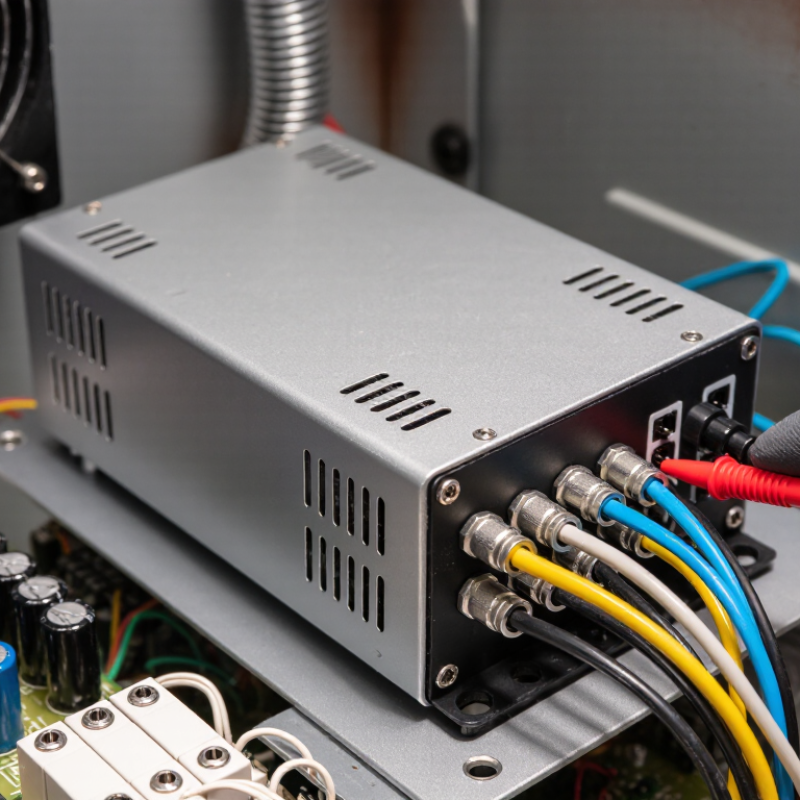
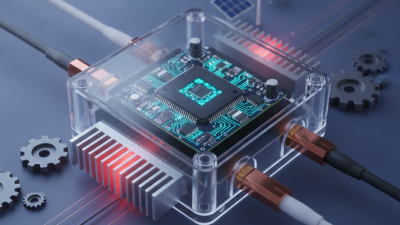
A solid state power controller, or SSPC, switches and protects an electrical circuit using semiconductor devices rather than mechanical contacts. A controller may use MOSFETs or IGBTs, with sensors and control logic monitoring current and voltage. If a load draws excessive current, the SSPC can interrupt power electronically, often within milliseconds. Some designs also report faults or allow remote reset. No contact movement. Less wear, but not zero failure risk.
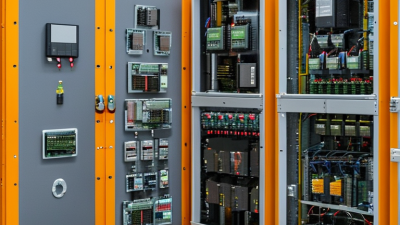
Picture a cabinet powering pumps, lights, and control units. Each protected branch can be switched independently, while current readings help technicians locate an overloaded circuit. The U.S. Department of Energy’s 2014 United States Industrial Electric Motor Systems Market Opportunities Assessment reports that motor-driven systems account for about 68% of U.S. industrial electricity consumption. That figure describes energy use, not SSPC performance; it does show why dependable load control matters. An SSPC does not automatically reduce a machine’s energy consumption.
Selection depends on supply type, rated voltage, normal and inrush current, fault-clearing behavior, and cooling. Semiconductor switches generate heat, so enclosure temperature and airflow matter. A device sized only for steady current may trip during motor startup. That detail is easy to miss. I’d also check whether the controller’s fault data integrates with the existing monitoring system; “smart” features are less useful when nobody can read them. Industry specifications, including IEC 60947-4-3 for semiconductor controllers and contactors, provide a useful reference, but the final choice should match the actual load and installation conditions.
A solid state power controller (SSPC) is an electronically controlled power switch that uses semiconductor devices instead of mechanical contacts. Ratings and features vary by design; verify all values against the product datasheet and applicable system requirements.
| Evaluation Dimension | What It Means | Practical Buyer Guidance |
|---|---|---|
| Switching technology | Semiconductor switches control the load without mechanically opening and closing contacts. DC designs commonly use MOSFETs; AC designs may use devices such as MOSFETs, IGBTs, triacs, or thyristors, depending on the circuit. | Confirm the controller is designed for the supply type and load: DC and AC switching requirements are not interchangeable. |
| How it works | A control signal commands the semiconductor switch on or off. Depending on the design, electronics may also measure current or voltage and respond to faults. | Check the control interface, command logic, fault reporting, and whether the controller supports the required remote or local operation. |
| Supply voltage | SSPCs are designed for specific voltage classes. Examples used in different systems include 28 V DC, 270 V DC, and 115 V or 230 V AC; these are system examples, not universal SSPC ratings. | Match the rated operating voltage and frequency, where applicable, to the actual system. Review transient and surge limits as well. |
| Load current and capacity | Continuous current capacity depends on the specific design, ambient temperature, cooling, installation, and load profile. There is no single standard current rating for all SSPCs. | Size for continuous current and startup or inrush current. Check derating curves and the permitted load duty cycle. |
| Protection functions | Depending on the model, protection can include overcurrent, short circuit, overtemperature, undervoltage, or overvoltage response. Available functions and trip behavior differ by design. | Confirm which faults are detected, how quickly the output disconnects, whether the trip is latched or automatically recoverable, and how faults are indicated. |
| Current limiting and coordination | Some controllers limit current electronically or use configurable trip thresholds; others provide different protective behavior. An SSPC does not automatically replace every upstream protective device. | Review coordination with wiring, power sources, upstream protection, and downstream loads. Validate the protection settings for the complete system. |
| Control and communication | Control may use discrete input signals or a digital communication interface. Interfaces and supported protocols are product-specific. | Check signal levels, isolation, connector and pinout, communication protocol, status reporting, and compatibility with the host system. |
| Switching speed and cycling | Semiconductor switching avoids mechanical contact movement and contact wear. Actual switching frequency and operating limits depend on the circuit and load. | Check the specified switching rate and compatibility with inductive, capacitive, resistive, or motor loads. |
| Off-state leakage and heat | Semiconductor switches can have off-state leakage and generate heat while conducting. These characteristics differ from those of an open mechanical contact. | Check leakage-current limits, on-state voltage drop or resistance, thermal data, mounting conditions, and required cooling. |
| Environmental and safety requirements | Temperature range, vibration tolerance, ingress protection, insulation, and compliance depend on the specific controller and intended application. | Verify the required environmental ratings, certifications, and installation conditions for the destination market and end-use system. |
| Selection checklist | A suitable SSPC must fit the electrical supply, load, control system, protection strategy, thermal design, and operating environment. | Before purchase, compare datasheets for voltage, continuous and inrush current, protection behavior, interfaces, thermal limits, dimensions, and required approvals. |
Note: Values and functions are application- and model-dependent. The examples above describe general SSPC characteristics and are not a substitute for manufacturer datasheets or system-level engineering validation.