INQUIRY
Leave Your Message

2026 Top Photoelectric Sensor Manufacturers and Suppliers

The 2026 market for Photoelectric Sensor manufacturers and suppliers reflects growing demand for reliable automation, precise detection, and smarter production lines. These devices help identify objects, measure gaps, count products, and monitor movement across packaging, logistics, electronics, food processing, and material handling. A dependable sensor can prevent a costly stoppage. Small details matter.

This guide examines leading companies through practical purchasing criteria rather than name recognition alone. Product consistency, detection range, response time, housing quality, optical stability, and resistance to dust or moisture all deserve careful review. Technical support also matters, especially when engineers integrate sensors with PLCs, vision systems, conveyors, or safety controls. Certification records, warranty terms, regional inventory, and documented testing can reveal a supplier’s professional maturity. Field experience often exposes weaknesses that a polished brochure hides.

No single manufacturer suits every factory. A low-cost diffuse sensor may perform well on a clean conveyor, while a through-beam model may offer greater stability in difficult conditions. Reflective surfaces, dark packaging, vibration, ambient light, and changing product heights can complicate installation. Supplier rankings can also become outdated as product lines and service networks change. That limitation deserves recognition.

The companies discussed here are assessed using available technical information, application suitability, customer support, and evidence of consistent quality. Readers should verify specifications against their own operating environment before ordering. A careful comparison can reduce replacement frequency, simplify maintenance, and improve production visibility. Performance in the real world remains the final test.

2026 Top Photoelectric Sensor Manufacturers and Suppliers

What Are Photoelectric Sensors and How Do They Work?

Photoelectric sensors detect objects without physical contact. They convert light changes into switching signals for machines. A light-emitting diode sends a focused beam, while a receiver monitors returned or interrupted light. When an object changes the received intensity, the sensor activates an output. No contact is required. The 2024 Photoelectric Sensors Market report by MarketsandMarkets estimated the global market at about USD 2 billion and projected growth of nearly 7% annually through 2029. This expansion reflects rising automation in packaging, logistics, and process equipment.

Their operating method depends on the optical arrangement. Through-beam sensors place the emitter and receiver opposite each other. An object breaks the beam. Retro-reflective models use a reflector, while diffuse sensors read light reflected directly from the target. Dark, shiny, transparent, or uneven surfaces can confuse simple detection. Modulated light and adjustable sensitivity reduce interference from factory lighting. A 2024 industrial automation report from Grand View Research identified sensing and inspection functions as important contributors to smarter production systems.

Installation still requires judgment. A sensor aimed at a glossy metal surface may detect a false reflection. Dust on the lens can slowly weaken the signal. Small targets expose flaws. Technicians should check alignment, sensing distance, response time, and output logic under real operating conditions. Datasheets provide limits, but they cannot reproduce vibration, condensation, or changing background colors. In practice, a carefully tested setup is often more reliable than a theoretically perfect selection.

Key Types and Applications of Photoelectric Sensors

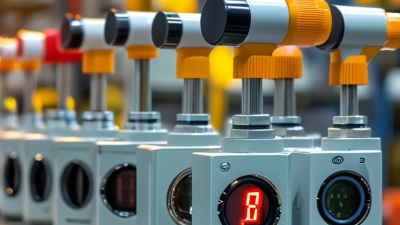
Photoelectric sensors detect objects without physical contact, using light and a receiver. Their performance depends on sensing distance, surface color, alignment, and surrounding light.

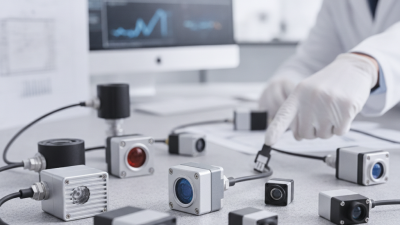
Through-beam sensors use separate emitters and receivers. They provide stable detection across longer distances and suit conveyor counting, door protection, and package tracking. Retro-reflective sensors combine both elements in one housing and use a reflector. They work well where installation space is limited, although shiny packaging can cause false signals. Diffuse-reflective sensors detect light returned directly from an object. They are convenient for short-range inspection, but dark or uneven surfaces may reduce reliability. Background-suppression models measure distance more selectively. Fiber-optic versions fit narrow spaces and high-temperature areas, with the amplifier installed away from the sensing point.

Applications vary by production condition. In bottling lines, sensors verify cap presence and detect gaps between containers. On assembly equipment, they confirm part position before a pneumatic action begins. Warehouse conveyors use them to count cartons and identify jams. In dusty environments, lens contamination can gradually weaken the signal. Small alignment errors matter.

Test the real target material.

A sensor may perform perfectly on a white sample and fail on black plastic. Field technicians should check detection margins, vibration, ambient light, and cleaning access. I have found that specifications alone can mislead. A longer range is not always better. Mounting geometry, response time, and maintenance habits often decide whether a sensor remains dependable. Even careful designs need review after installation.

How to Evaluate Photoelectric Sensor Manufacturers and Suppliers

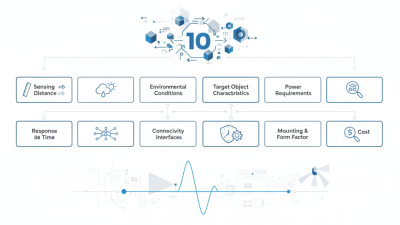
Choosing a photoelectric sensor supplier requires more than comparing prices and detection distances. A reliable evaluation begins with the application. Record the target material, color, surface finish, sensing distance, conveyor speed, and ambient light. A glossy black package may behave differently from a matte white box. Ask manufacturers for test data using similar objects, not only ideal laboratory samples. Check response time, repeatability, minimum detectable size, and performance during vibration.

Review the supplier’s engineering process carefully. Look for traceable calibration records, documented quality inspections, stable component sourcing, and clear change-control procedures. Certifications can support credibility, but they do not replace practical testing. Request samples from normal production, then test them across temperature changes and several mounting angles. Keep the results. Small differences matter.

Talk with technical staff before placing a large order. They should explain wiring, reflector selection, installation tolerance, and failure symptoms without vague promises. Examine delivery history, spare-part availability, warranty terms, and after-sales response times. A neat datasheet is not proof. I once trusted a stated sensing range too quickly; dust and reflective packaging reduced the real margin. That mistake changed the evaluation method. Suppliers should welcome difficult questions and provide repeatable evidence. If they avoid application-specific testing, treat that as a warning sign.

2026 Top Photoelectric Sensor Manufacturers and Suppliers

How to Evaluate Photoelectric Sensor Manufacturers and Suppliers

This procurement framework allocates 100% of the evaluation weight across the main factors used when comparing photoelectric sensor suppliers. Detection performance and product reliability receive the highest weighting because they directly affect machine accuracy, uptime, and maintenance requirements. Buyers should verify each supplier’s claims through datasheets, test reports, compliance documentation, sample testing, and delivery records.

Method note: The percentages represent a transparent buyer-defined evaluation baseline rather than market share, revenue, or company-specific performance data.

2026 List of Leading Photoelectric Sensor Manufacturers

The 2026 list of leading photoelectric sensor manufacturers should focus on verified performance, not advertising language. Reliable suppliers usually provide clear detection ranges, response times, wiring diagrams, and operating temperature data. Their products support diffuse, retro-reflective, and through-beam applications. These designs serve packaging lines, conveyor systems, machine tools, and warehouse equipment.

A strong manufacturer also documents testing methods and quality controls. Look for stable sensing under dust, vibration, changing light, and reflective surfaces. Technical support matters when a sensor must connect with PLCs or safety circuits. Field experience shows that installation guidance can prevent more failures than higher specifications. Still, no list is permanent. Product revisions, supply changes, and regional service quality can affect practical results. A polished datasheet is not proof of long-term reliability.

Tips: Compare detection performance at the actual target distance. Check connector type, housing rating, and adjustment method before ordering. Request sample units when surface color or shape may cause unstable readings. Record false triggers during a short production trial. This small test often reveals problems that laboratory figures miss. Reliability should be judged by evidence, service response, and consistent operation, not by ranking alone.

2026 Top Photoelectric Sensor Manufacturers and Suppliers - 2026 List of Leading Photoelectric Sensor Manufacturers
Supplier Segment Core Sensor Technologies Common Detection Range Typical Response Time Common Light Sources Typical Output Options Typical Environmental Protection Common Industry Applications Relevant Standards and Compliance References Supply Position in 2026
Global industrial automation suppliers Through-beam, retro-reflective, diffuse-reflective, background suppression Approximately 0.01–30 m, depending on sensing method and reflector Approximately 0.1–1 ms Visible red LED and infrared LED PNP, NPN, push-pull, relay, IO-Link Commonly IP65–IP67 Conveyors, packaging lines, assembly machines, material handling IEC 60947-5-2; IEC 60529; IEC 61000-6-2 and IEC 61000-6-4 where applicable Broad catalog coverage and strong global distribution
Machine-vision and inspection specialists Contrast, color, luminescence, laser triangulation, edge and mark detection Typically 10–300 mm for inspection sensors; longer ranges available for laser units Approximately 0.05–5 ms Red, green, blue, white LED and laser diode Discrete output, analog voltage/current, Ethernet, IO-Link Commonly IP54–IP67 Print registration, label verification, web inspection, part orientation IEC 60825-1 for applicable laser products; IEC 61000 series for EMC Strong differentiation in high-speed and precision inspection
Compact factory-automation suppliers Miniature through-beam, diffuse, retro-reflective and fork sensors Approximately 1 mm–2 m Approximately 0.2–2 ms Red LED and infrared LED PNP, NPN, push-pull and connector-based outputs Commonly IP65–IP67 Small assembly equipment, electronics manufacturing, robotics and feeders IEC 60947-5-2; IEC 60529; applicable regional EMC requirements Competitive for compact dimensions and machine integration
Heavy-duty and outdoor automation suppliers Long-range through-beam, polarized retro-reflective and rugged diffuse sensors Approximately 0.1–60 m, subject to optical configuration Approximately 0.5–10 ms Infrared LED, visible red LED and laser diode PNP, NPN, relay, analog and industrial network interfaces IP67–IP69K options available Steel processing, logistics, loading systems, vehicle detection and outdoor equipment IEC 60529; IEC 61000 series; IP69K tested under applicable procedures Focused on mechanical durability, washdown resistance and long-distance sensing
Food and beverage equipment suppliers Washdown-rated diffuse, retro-reflective and through-beam sensors Approximately 10 mm–15 m Approximately 0.5–5 ms Red LED, infrared LED and white LED PNP, NPN, IO-Link and hygienic connector configurations IP67–IP69K options available Bottling, filling, capping, carton handling and hygienic packaging IEC 60529; EHEDG design principles where specified; applicable food-contact requirements for installation materials Emphasis on corrosion resistance, cleanability and sealed construction
Logistics and warehouse-automation suppliers Long-range photoelectric, fork, array, time-of-flight and barcode-related sensing Approximately 5 mm–20 m for standard sensors; longer distances for specialized systems Approximately 0.25–10 ms Infrared LED, red LED and laser diode PNP, NPN, IO-Link, Ethernet-based interfaces and fieldbus gateways Commonly IP54–IP67 Sortation, pallet handling, parcel detection, storage and retrieval systems IEC 60947-5-2; IEC 60529; industrial network and EMC requirements as applicable High demand for high-speed switching, low false-trigger rates and easy commissioning
Automotive manufacturing suppliers Presence, position, contrast, color, fork and area-array photoelectric sensing Approximately 1 mm–15 m Approximately 0.1–3 ms Red LED, infrared LED, blue LED and laser diode PNP, NPN, IO-Link, analog and safety-related interfaces where applicable Commonly IP65–IP67 Body assembly, powertrain, battery production, welding cells and robotic stations IEC 60947-5-2; IEC 61000 series; machinery safety requirements for integrated systems Strong focus on traceability, cycle time, vibration resistance and integration
Electronics and semiconductor equipment suppliers Micro-photoelectric, fiber-optic, laser displacement, contrast and wafer-detection sensors Approximately 0.05 mm–1 m Approximately 0.02–2 ms Red, blue and infrared LED; laser diode Digital, analog, serial and IO-Link outputs Commonly IP40–IP67 PCB assembly, component placement, wafer handling and precision positioning IEC 60825-1 for applicable laser products; IEC 61000 series; cleanroom requirements by installation Prioritizes repeatability, low hysteresis, compact form factors and low particle generation
OEM and custom-solution suppliers Application-specific photoelectric modules, embedded sensors and customized optical assemblies Typically 1 mm–10 m, engineered for the target application Approximately 0.1–10 ms Selected according to target material, ambient light and optical geometry Custom digital, analog, serial, connector or cable outputs Application-dependent Medical equipment, laboratory instruments, specialty machinery and custom automation Application-specific IEC, EMC, electrical safety and sector requirements Competes through engineering support, customization and integration services
Value-oriented industrial suppliers Standard diffuse, retro-reflective and through-beam photoelectric sensors Approximately 10 mm–10 m Approximately 1–20 ms Red LED and infrared LED PNP, NPN and relay outputs Commonly IP54–IP67 General machinery, packaging, material handling and basic process automation IEC 60947-5-2; IEC 60529; applicable regional EMC requirements Positioned around cost efficiency, standardization and short lead times
Note: The technical values shown are representative commercial ranges for photoelectric sensor categories. Actual performance depends on the sensing principle, target material, optical accessories, wiring, ambient light, installation conditions and the specific product configuration.

Industry Trends and Selection Criteria for 2026 Procurement

2026 Top Photoelectric Sensor Manufacturers and Suppliers

Industry Trends and Selection Criteria for 2026 Procurement

Automation demand continues to shape photoelectric sensor procurement. The International Federation of Robotics reported 541,302 industrial robots installed worldwide in 2023. This creates demand for faster detection, smaller housings, and stronger diagnostic functions. MarketsandMarkets also projects continued growth in the photoelectric sensor market through 2028. However, market forecasts vary. Procurement teams should compare assumptions, not only headline numbers.

Selection should begin with the application, not the catalogue. Check sensing distance, target color, surface reflectivity, response time, and switching frequency. A dark package on a glossy conveyor can expose weak detection stability. Ambient sunlight can also reduce reliability near loading bays. For dusty or wet areas, review the IP rating, housing material, connector design, and temperature range. Request test samples and measure false signals during actual production cycles. A perfect specification sheet can still fail beside a vibrating machine.

Tips: Build a short validation table before requesting quotations. Record target size, belt speed, installation distance, light conditions, and cleaning chemicals. Require documented compliance with relevant IEC requirements, electrical limits, and quality procedures. Ask suppliers for lifecycle data, calibration guidance, spare-part availability, and response support. Do not select on unit price alone. Downtime, alignment work, and repeated commissioning may cost more than the sensor. One practical weakness remains: many evaluations use clean laboratory targets. Real factories are rarely that polite.