Best Switching Power Supply Options for Global Buyers?
In today's fast-paced tech landscape, selecting the right Switching Power Supply is crucial for efficiency and reliability. Global buyers encounter diverse options, each tailored for unique applications. Understanding the specifications and standards of these supplies can be overwhelming.
Switching Power Supplies offer compact designs and high efficiency, which are essential for modern electronics. Their versatility makes them ideal for consumer devices, industrial equipment, and more. Yet, not every option is perfect. Poor choices can lead to subpar performance or safety hazards.
Buyers must consider factors like voltage, current requirements, and load characteristics. A detailed analysis enhances decision-making, ensuring long-term satisfaction. Manufacturers should provide clear specifications and support. Ultimately, the right Switching Power Supply can make a significant difference in performance and durability.
Understanding Switching Power Supply Basics for Global Buyers
Switching power supplies (SPS) have become essential in various industries due to their efficiency and compact design. These power supplies convert electrical power using switching devices that turn on and off. According to a report by ResearchAndMarkets, the global SPS market is projected to reach $50 billion by 2025, growing significantly each year. This growth highlights the increasing reliance on these devices.
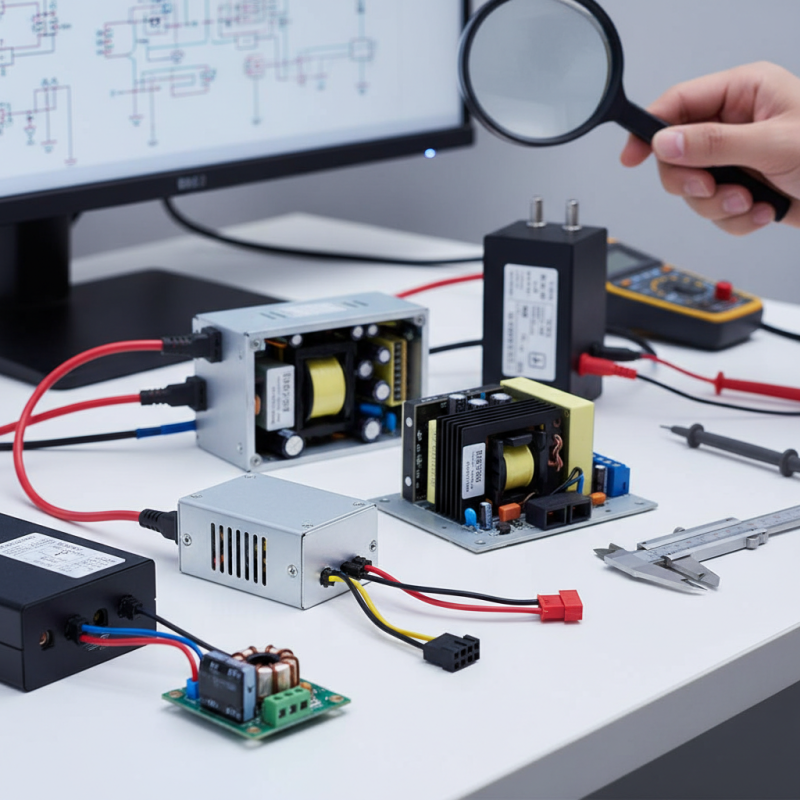
Understanding the basic components of switching power supplies is crucial for global buyers. They consist of transformers, inductors, and capacitors, which work together to regulate output voltage and current. For instance, a well-designed SPS can provide up to 90% efficiency, minimizing energy loss. However, not all power supplies meet these standards. Some may exhibit electromagnetic interference, which can negatively impact circuit performance.
Selecting the right SPS involves considering factors like load requirements and environmental conditions. Many buyers overlook thermal management, a critical aspect of device reliability. Poor thermal management can lead to overheating, reducing lifespan. Identifying potential failures in power supply design can enhance performance and reliability, aligning with the needs of various industries.
Best Switching Power Supply Options for Global Buyers
| Power Rating (W) |
Input Voltage (V) |
Output Voltage (V) |
Efficiency (%) |
Cooling Type |
Form Factor |
Applications |
| 150 |
100-240 |
12 |
85 |
Active |
Open Frame |
Industrial, LED Lighting |
| 300 |
90-264 |
24 |
90 |
Passive |
Encapsulated |
Telecommunications, Robotics |
| 600 |
85-265 |
48 |
92 |
Active |
ATX |
Computers, Servers |
| 1000 |
100-240 |
5 |
94 |
Active |
Modular |
Audio Equipment, Medical Devices |
Key Factors to Consider When Choosing a Switching Power Supply
When choosing a switching power supply, several key factors demand attention. Efficiency is crucial. According to a recent industry report, power supplies consume about 14% of the global electricity demand. A more efficient supply can greatly reduce this energy wastage. Buyers should consider efficiency ratings, such as 80 PLUS certification, which indicates a minimum level of energy efficiency. Higher ratings mean lower energy costs over time.
Another important aspect is output voltage and current specifications. Different applications require specific voltages and currents. For example, a PC may need 12V, while some industrial devices may require 24V. Understanding the requirements of your devices helps in selecting the right power supply.
Tips: Always check the compatibility of the power supply with your devices. Measure the power needs accurately.
Thermal performance is also vital. Excess heat can lead to decreased performance and even failure of electrical components. A power supply equipped with
good cooling mechanisms can greatly improve reliability. Look for units with built-in fans or heat sinks.
Tips: Regularly monitor temperatures during operation. Make adjustments for ventilation if needed.
Addressing these factors ensures a suitable choice for
reliable performance. Keep these considerations in mind as you navigate the market for switching power supplies.
Top Brands and Models for Switching Power Supplies Worldwide
When choosing a switching power supply, consider essential features. Reliability is paramount. A good power supply should maintain constant voltage. It should also handle fluctuations in load without issues. Look for models that offer over-voltage and under-voltage protection. These features protect your equipment.
Next, efficiency matters. A highly efficient power supply saves energy and reduces heat generation. Systems that run cooler generally have a longer lifespan. Pay attention to the certification ratings. These ratings indicate efficiency levels. High-quality models often have certifications that help you gauge their performance.
Many options exist across different markets worldwide. Look for reputable manufacturers that focus on quality standards. User reviews offer valuable insights into usability and durability. Remember, not every model will meet your specific needs perfectly. It’s essential to evaluate what features are most critical for your projects. Through research and comparison, you can find the right balance for your requirements.
Comparative Analysis of Efficiency Ratings in Power Supplies
When evaluating power supplies, efficiency ratings play a crucial role. These ratings indicate how well a power supply converts AC to DC energy. An efficient unit minimizes energy waste and generates less heat. Common rating systems, such as 80 Plus, highlight this efficiency with various tiers. Users often seek gold or platinum ratings for higher efficiency.
However, achieving optimal efficiency is not without challenges. Variability in load conditions affects performance. Under low load, some power supplies exhibit lower efficiency. This can lead to energy waste over time. Additionally, higher-rated units may come at a premium price. It's essential to consider the balance between cost and efficiency.
Different applications demand different power supply characteristics. For instance, a gaming PC may benefit from high efficiency under load. In contrast, a basic workstation might prioritize cost over top-tier efficiency ratings. Users must analyze their needs before making decisions. Each choice involves trade-offs that can impact long-term performance and costs.
Efficiency Ratings of Various Power Supply Options
Global Compliance Standards for Switching Power Supply Selection
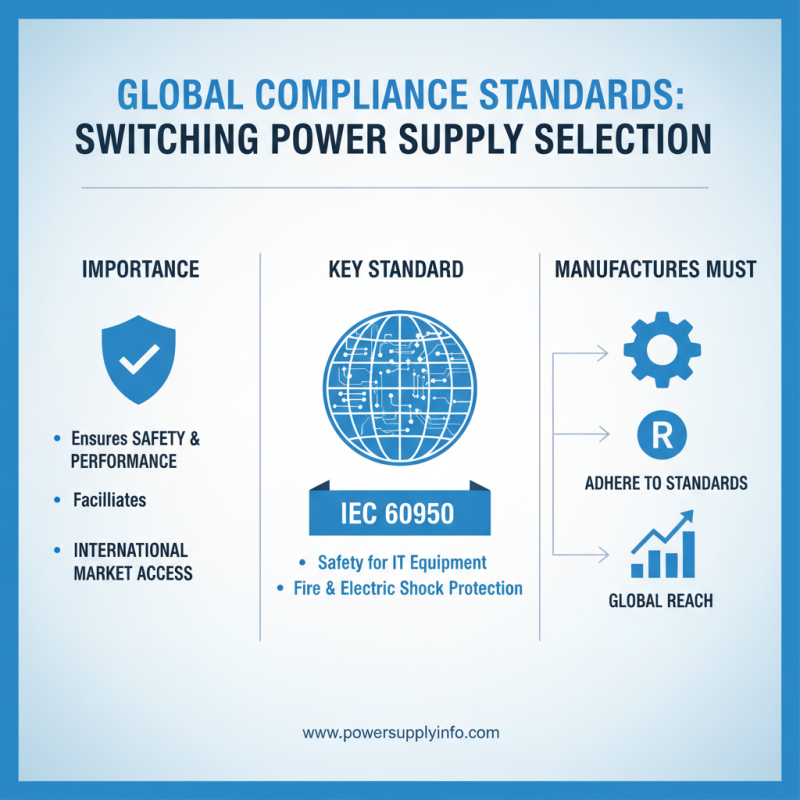
When selecting a switching power supply, global compliance standards are essential. These standards ensure safety and performance across various regions. For instance, the IEC 60950 standard focuses on safety for information technology equipment. It emphasizes the importance of fire resistance and electric shock protection. Adhering to such standards is crucial for manufacturers aiming for international markets.
Moreover, the energy efficiency of power supplies is increasingly being scrutinized. Reports indicate that power supplies account for about 20% of global energy consumption in electronics. Compliance with standards like Energy Star can enhance energy efficiency by at least 20%. Yet, meeting these standards isn't just a matter of compliance; it demands ongoing investment and innovation. Manufacturers need to reflect on their processes and improve designs continuously.
Market trends also highlight the need for rigorous testing. The UL certification process ensures that products meet necessary safety criteria. It includes failing tests to identify weaknesses early in the design phase. Despite the challenges, passing these tests ensures reliability and consumer trust. Companies must ask themselves: Are their products consistently meeting these high standards?