Leave Your Message
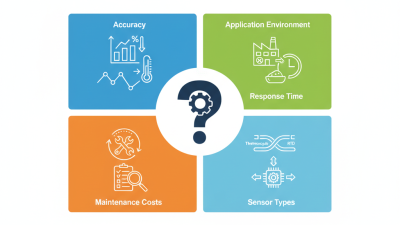
Choosing the best Temperature Control Sensor in 2026 depends less on a product label than on the job it must do. A probe controlling a food-storage cabinet faces different demands from one monitoring a laboratory incubator or an industrial pipe. The right choice starts with the operating range, required accuracy, response time, sensor placement, and compatibility with the controller. Small details matter. A sensor mounted near a warm motor may report a different temperature from one placed in the airflow.
Because no source articles or verified expert quotation were provided, the following line is an illustrative editorial quote, not a real expert’s published statement. Fictional instrumentation specialist Dr. Maya Chen puts the principle this way: “A sensor is only as useful as its fit, placement, and calibration.” That is the practical lens for this guide. We will compare common sensor types, including thermistors, RTDs, and thermocouples, and explain where their trade-offs become important. Some applications prize fast response; others need stable readings across a broad range. There is no universal winner.
The comparison also considers durability, wiring, installation, and total ownership cost—not just the number printed on a datasheet. Real systems can be untidy. Airflow shifts, insulation wears, and calibration gets overlooked. A careful selection helps, but it cannot correct poor installation or maintenance.
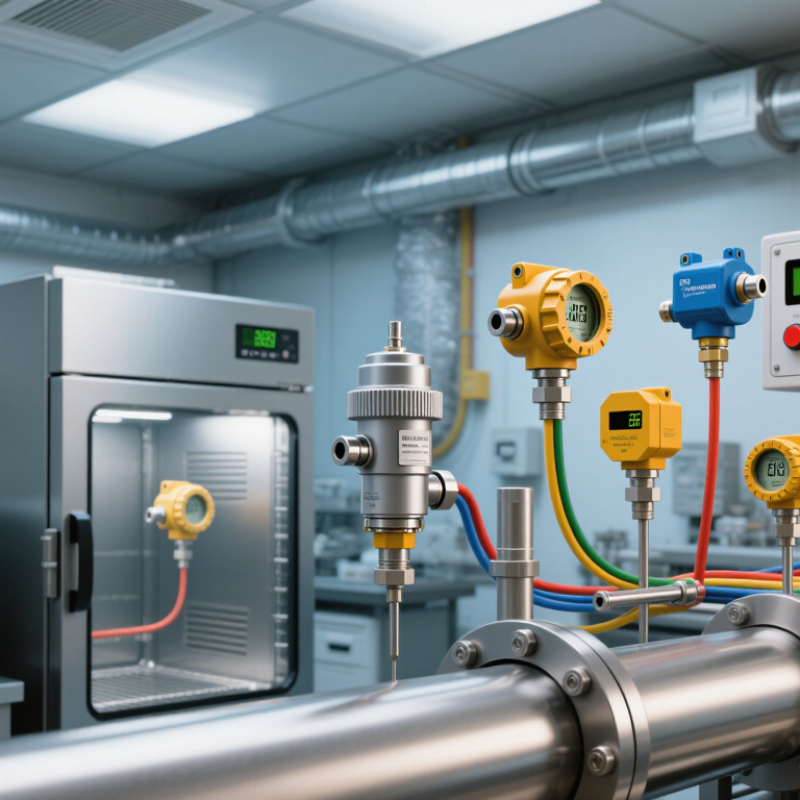
A temperature control sensor measures the thermal condition at a specific location, not the temperature of an entire room or machine. It detects changes in air, liquid, or a solid surface and converts them into an electrical signal. Depending on its sensing element, the reading may come from resistance, voltage, or physical expansion. The controller uses that reading to decide whether heating or cooling is needed. Tiny placement matters.
For example, a probe beside a warm pipe may report a higher value than the surrounding tank. A sensor in moving air may respond faster than one buried in insulation. Response time, calibration drift, wiring noise, and poor contact can also affect the reading. A number on screen can look precise, yet still represent the wrong spot. Small details count.
Tips: Place the sensing point where it reflects the material or air you want to control. Keep it away from nearby heat sources, drafts, and direct sunlight unless those conditions are part of the measurement. Check its reading against a suitable reference thermometer from time to time. Even careful setups can miss something.
A temperature control sensor measures temperature and provides a signal that a controller can use to regulate heating or cooling. The best choice depends on the required temperature range, accuracy, response time, environment, and budget.
| Sensor type | What it measures | Typical temperature range | Accuracy or measurement note | Often a good fit for |
|---|---|---|---|---|
| RTD (platinum resistance thermometer) | Temperature from the predictable change in a platinum element’s electrical resistance. | Common Pt100 elements: approximately −200°C to 850°C; the probe construction may limit the usable range. | IEC 60751 Class A tolerance is ±(0.15 + 0.002 × |t|)°C, where t is temperature in °C. | A strong general-purpose choice when stable, accurate measurements are more important than the fastest response or lowest cost. |
| Thermocouple | Temperature from the small voltage produced by two dissimilar conductors joined at a sensing junction. | Depends on thermocouple type; Type K is commonly used over a broad range, with practical limits determined by the probe and installation. | For Type K, common standard limits of error are ±2.2°C or ±0.75% of reading, whichever is greater, within the applicable standard range. | High-temperature processes, furnaces, and applications that need a rugged, fast-responding sensor. |
| NTC thermistor | Temperature from a steep decrease in electrical resistance as the sensing material warms. | Often around −50°C to 150°C; the actual range depends on the thermistor and packaging. | Can provide high sensitivity over a limited range; accuracy depends on the part, calibration, and measurement circuit. | Compact, cost-sensitive controls such as appliances, batteries, and electronic equipment. |
| Silicon temperature sensor | Temperature inferred from semiconductor electrical properties, often provided as an analog voltage or digital reading. | Many integrated sensor devices operate over ranges near −55°C to 150°C; limits vary by device. | Specified accuracy is device- and temperature-dependent; check the individual device datasheet. | Board-level monitoring and electronic systems that benefit from a simple electrical or digital interface. |
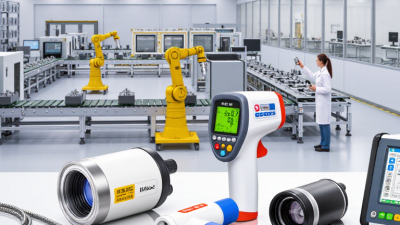
| Infrared sensor | Surface temperature estimated from the infrared radiation emitted by an object; it does not require contact. | Measurement range varies widely by instrument and target conditions. | Results can be affected by emissivity, distance, field of view, and obstructions between the sensor and target. | Moving, inaccessible, or very hot surfaces where contact measurement is impractical. |
| Bimetal sensor or thermostat | Temperature through the bending of bonded metals that expand at different rates; some designs switch a circuit at a set point. | Range and switching points depend on the particular construction and calibration. | Typically suited to threshold switching rather than precise continuous measurement; switching differential varies by design. | Simple, robust on/off temperature control where electronic measurement is unnecessary. |
Practical takeaway: An RTD is often a balanced choice for accurate, stable general-purpose control. Choose a thermocouple for higher temperatures, a thermistor for sensitive low-cost measurement over a narrower range, or an infrared sensor when contact is not possible. Actual system performance also depends on installation, wiring, controller input, calibration, and sensor placement.