INQUIRY
Leave Your Message

China Top 10 Temperature Controller Manufacturers

China Top 10 Temperature Controller Manufacturers examines a market shaped by precision, energy efficiency, and connected production. Temperature controllers regulate ovens, injection moulding machines, laboratories, HVAC systems, and semiconductor equipment. A small reading error can spoil an entire production batch.

Recent reports from Grand View Research and MarketsandMarkets indicate steady growth in the global temperature control and industrial automation markets. Their estimates vary because product definitions differ. Some studies include standalone controllers, while others include integrated process-control systems. This difference deserves attention.

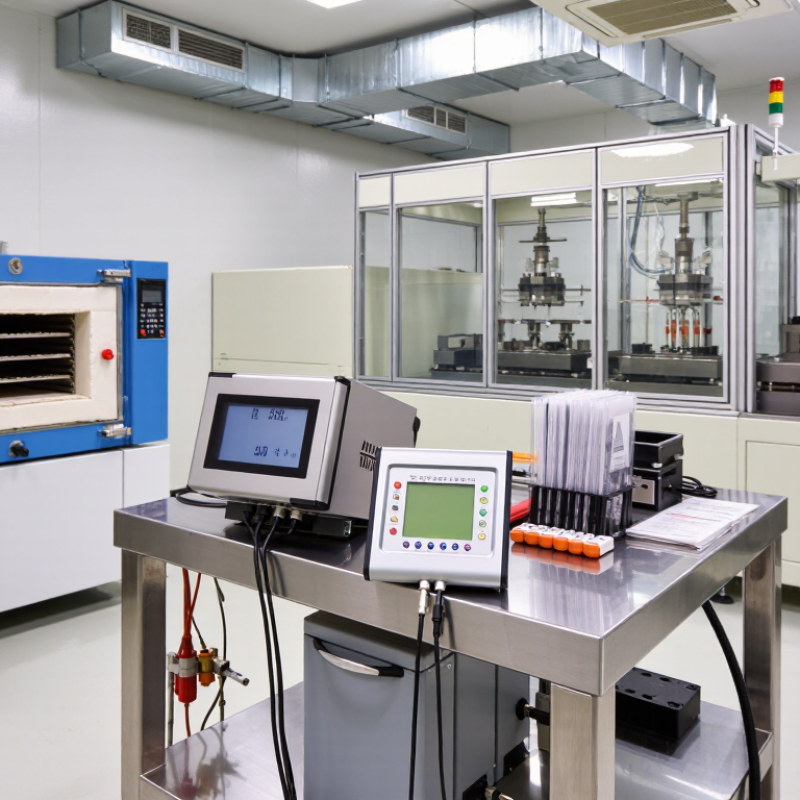
The review will assess ten Chinese manufacturers using practical criteria. These include control accuracy, sensor compatibility, response time, output options, certifications, software support, warranty service, and export experience. Factory evidence matters. A clean test bench, traceable calibration records, and stable after-sales communication often reveal more than a polished brochure.

Lord Kelvin’s measurement principle remains highly relevant: “If you cannot measure it, you cannot improve it.” He was a leading authority in thermodynamics and measurement science. His statement reminds buyers to examine repeatability, not only advertised resolution.

The selected companies may serve different priorities. One manufacturer may offer strong OEM customization. Another may provide better documentation or international support. No ranking is universally correct. Application conditions change the answer.

Readers should verify current specifications directly with suppliers. Product lines, certifications, and production capacity can change quickly. This guide therefore combines public company information, industry reports, technical documentation, and buyer-focused analysis. It is informative, not a substitute for application testing.
China Top 10 Temperature Controller Manufacturers

Temperature Controllers: Definition, Functions, and Main Applications

Temperature controllers maintain a target temperature by measuring process conditions and adjusting heating or cooling output. A sensor sends readings to the controller, which compares them with the setpoint. It then uses on-off, proportional, PID, or other control logic. Small errors matter. A two-degree deviation can affect viscosity, curing time, or product texture.

Their functions extend beyond simple heating. Modern controllers support alarm limits, data logging, sensor failure detection, and communication with automation systems. According to MarketsandMarkets, the temperature controller market is projected to grow from about USD 2.3 billion in 2023 to USD 3.1 billion by 2028, reflecting wider industrial automation. However, a higher specification does not guarantee better control. Poor sensor placement, unstable wiring, or incorrect tuning can still produce uneven results.

Applications appear in plastics processing, food production, laboratories, HVAC systems, pharmaceuticals, and semiconductor manufacturing. The International Energy Agency reports that industry uses roughly 37% of global final energy, making efficient thermal control increasingly important. In a production line, a controller may hold a mold near 180°C, regulate a storage chamber at 4°C, or protect a reactor from overheating. Field testing often reveals the uncomfortable part: the controller works correctly, but the process design does not.

China’s Temperature Controller Manufacturing Industry and Market Landscape

China’s temperature controller manufacturing industry has grown with automation, energy management, and process control. Production clusters support electronics, sensors, metal housings, and software integration. This concentration helps manufacturers control costs and shorten delivery cycles. However, product quality varies widely across suppliers and application fields.

The market serves heating equipment, plastic machinery, cold storage, laboratories, food processing, and industrial ovens. Basic controllers remain price-sensitive, while advanced systems require accurate sensing and stable communication protocols. Buyers should examine temperature range, control accuracy, response time, relay life, and installation conditions. Factory audits and sample testing offer stronger evidence than catalog claims. Rankings of the top ten manufacturers can be useful, but they may reflect visibility rather than engineering performance. That weakness deserves attention.

Tips: Request test reports, calibration records, and warranty terms before placing a large order. Confirm whether the controller supports local voltage, sensor types, and required communication interfaces. Ask for failure-rate data when available. A small pilot order often reveals packaging problems, unstable readings, or slow technical support. Do not judge reliability from low pricing alone. Experience shows that a slightly higher purchase cost may reduce replacement work, although this is not guaranteed in every project.

China Top 10 Temperature Controller Manufacturers - China’s Temperature Controller Manufacturing Industry and Market Landscape

Industry and product landscape overview based on commonly adopted technical standards, manufacturing practices, and application requirements in China

No. Industry Dimension China Manufacturing and Market Fact Typical Product or Application Scope Reference Basis
1 Core Controller Types Chinese suppliers commonly manufacture on/off, PID, programmable, single-loop, and multi-loop temperature controllers for industrial equipment and process automation. Ovens, furnaces, plastic machinery, packaging equipment, laboratory equipment, and HVAC systems. Industrial automation product architecture and standard control practice.
2 Sensor Compatibility Common input options include thermocouples K, J, T, E, R, S, and B, as well as Pt100 resistance temperature detectors and standardized analog signals. Low-temperature process control, high-temperature furnaces, food processing, chemical production, and precision equipment. IEC 60584 series for thermocouples and IEC 60751 for industrial platinum resistance thermometers.
3 Control Output Formats Relay, voltage pulse, solid-state relay drive, 4–20 mA, and 0–10 V outputs are widely used according to load type and system design. Heaters, contactors, solid-state power modules, proportional valves, and plant control systems. Common industrial control interface practices and IEC-compatible control system designs.
4 Accuracy and Control Performance General-purpose PID controllers commonly specify measurement and control performance around ±0.1% to ±0.5% of full scale, depending on sensor, range, calibration, and model design. Standard industrial heating applications and processes requiring stable set-point control. Actual performance must be verified against the individual product datasheet and test conditions.
5 Panel and Installation Sizes The most common panel formats include 48 × 48 mm, 48 × 96 mm, 72 × 72 mm, and 96 × 96 mm, supporting replacement and retrofit demand. Control cabinets, machine panels, testing systems, production lines, and compact automation equipment. Widely adopted DIN-style industrial instrument dimensions.
6 Power Supply Configuration Universal 100–240 VAC supplies are common for panel instruments, while 24 VAC/DC versions are widely selected for machine automation and control cabinets. Factory automation, OEM machinery, laboratory systems, and low-voltage control panels. Common industrial electrical design requirements; exact ratings vary by product series.
7 Communication and Smart Control RS-485 with Modbus RTU remains a common wired communication combination for integrating temperature controllers with PLCs, HMIs, SCADA, and data acquisition systems. Remote monitoring, recipe management, alarm handling, production traceability, and centralized process control. Modbus application protocol and established industrial serial communication practice.
8 Major Application Sectors Demand is distributed across plastics, packaging, food processing, pharmaceuticals, electronics, metallurgy, chemical processing, HVAC, and general machinery. Heating and cooling systems, extrusion lines, injection molding machines, dryers, sterilizers, ovens, and environmental test chambers. Industrial process-control application categories used in China and international markets.
9 Manufacturing and Supply-Chain Regions The Yangtze River Delta, Pearl River Delta, Bohai Rim, and selected central-China industrial cities provide strong ecosystems for electronics, sensors, control panels, machining, and OEM equipment. Component sourcing, contract manufacturing, cabinet assembly, machine integration, and export-oriented production. Established regional clusters in China’s electronics, machinery, and industrial automation supply chains.
10 Quality and Export Requirements Export-oriented temperature controller production commonly addresses electrical safety, electromagnetic compatibility, environmental substance restrictions, documentation, traceability, and factory quality management. OEM exports, replacement instruments, machinery integration, and private-label industrial control projects. Applicable requirements may include CE-related conformity assessment, RoHS restrictions, EMC testing, and ISO 9001-based quality systems, depending on destination and application.

Note: Technical specifications, certifications, accuracy, communication functions, and market positioning vary by individual product and supplier. Buyers should verify current datasheets, test reports, and destination-market compliance before procurement.

Selection Criteria for Evaluating Chinese Temperature Controller Manufacturers

Selecting China’s top temperature controller manufacturers requires more than comparing catalog prices. A 2024 Grand View Research report valued the global industrial automation market at USD 214.3 billion in 2023. That scale increases choice, but also increases supplier differences. Use that context carefully.

Evaluate control accuracy, repeatability, response time, and operating range. Ask for test data at low, medium, and high temperatures. A controller rated to ±0.1°C may perform differently under electrical noise or rapid heating. Trial samples matter. Test them with the actual sensor, heater, and power load. IEC 60584 compatibility is relevant for thermocouple inputs, while RTD applications require correct wiring and resistance compensation. Small details often expose large weaknesses.

Review firmware stability, alarm logic, communication protocols, and calibration procedures. Modbus compatibility helps, but poor register documentation can delay commissioning. Check whether each unit has a traceable serial number and calibration record. ISO 9001 certification indicates process discipline, not guaranteed temperature accuracy. Request production inspection records, failure-rate data, and spare-part availability. Published specifications are useful, but incomplete. A factory audit can reveal inconsistent labeling, rushed assembly, or weak final testing. The cheapest quotation may become expensive after unstable readings, repeated replacements, and engineering hours. Supplier evaluation should include total ownership cost, technical response time, customization control, and evidence from comparable industrial installations.

This chart presents a neutral procurement scoring model for evaluating Chinese temperature controller manufacturers. Product quality and consistency, control performance, compliance, application fit, after-sales support, delivery capability, and total cost of ownership are commonly reviewed before supplier selection. The percentages represent suggested evaluation weights and are not manufacturer rankings or brand-specific data.

Profiles of China’s Top 10 Temperature Controller Manufacturers

China’s top ten temperature controller manufacturers reflect a broad industrial landscape. Their products serve ovens, plastic machinery, cold storage, laboratories, and energy systems. Many companies combine sensor input, programmable control, and alarm protection in compact panels. Factory engineers often value stable readings more than impressive specifications. A controller that holds 180°C within a narrow range can protect an entire production batch.

The first group focuses on PID controllers for manufacturing lines. These suppliers usually provide relay, voltage, and current outputs for different heating systems. Another group develops digital thermostats for refrigeration and food equipment. Their strengths include clear displays, quick installation, and resistance to humid environments. Several manufacturers also produce modular units for laboratory and testing equipment. These models often support thermocouples, resistance sensors, and remote monitoring.

The strongest profiles show more than product variety. They reveal testing procedures, calibration methods, enclosure standards, and technical support capacity. Experienced manufacturers commonly test controllers under heat, vibration, and repeated switching conditions. This matters when equipment operates continuously beside dust, steam, or electrical noise. Some suppliers offer useful customization, but delivery consistency can vary between projects. That is a point buyers should examine carefully.

Certifications and factory audits add confidence, yet documents alone cannot prove long-term field performance. Trial orders, sample testing, and clear warranty terms remain practical safeguards. No manufacturer is flawless; even a capable supplier may need closer communication during integration.

Product Comparison, Quality Standards, and Purchasing Considerations

China’s top ten temperature controller manufacturers should be compared by measurable performance, not catalog appearance. Check sensor compatibility, control range, display accuracy, and response time. A controller supporting PT100 and common thermocouples offers broader production flexibility. For heated tanks, ±0.5°C accuracy may be adequate; laboratory processes may require tighter calibration.

Quality evidence matters. Look for ISO 9001 production controls, traceable calibration records, and test reports based on relevant IEC requirements. Inspect the enclosure rating, terminal insulation, relay life, and resistance to vibration. In factory audits, small details often reveal more than certificates. Loose terminals are a warning.

Ask for samples.

Purchasing teams should compare unit price, minimum order quantity, tooling fees, delivery time, and spare-part availability. Confirm whether the quoted controller includes sensors, mounting hardware, and software access. Request a batch inspection plan with temperature drift, alarm function, and power-cycle testing. A supplier that explains failure limits clearly is usually easier to manage. Still, no specification sheet proves long-term reliability. Trial units may perform well while larger batches vary. This is where my own assessment can be incomplete. Keep records from installation, calibration, and service calls. Those records support a more honest supplier comparison and prevent low purchase prices from hiding higher operating costs.