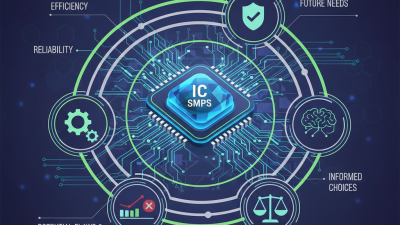
In today's rapidly evolving business landscape, choosing the right Area Sensor is crucial for operational success. These sensors, designed for monitoring specific spaces, can significantly enhance efficiency and safety. Various industries utilize Area Sensors, from manufacturing to retail, making their selection critical for tailored applications.
Understanding the features and capabilities of different Area Sensors can be overwhelming. Each sensor offers unique advantages, yet they also present distinct challenges. For instance, some may excel in precision but struggle with environmental conditions. Businesses must weigh these factors carefully.
Ultimately, the right Area Sensor can deliver reliable data and insights. As technology continues to advance, it’s essential to stay informed and adapt to new sensor options. The good news is that with proper research and expert consultation, you can find an Area Sensor that fits your needs. This guide will help you explore the top options available, ensuring you make an informed decision for your business.

Area sensors play a crucial role in enhancing operational efficiency for various businesses. These sensors monitor specific regions and gather data on movement, proximity, and presence. According to recent industry reports, the global market for area sensors is projected to reach $20 billion by 2026, growing at a compound annual growth rate of 12%. This rapid growth underscores the rising importance of automation and smart technology in business operations.
Understanding the significance of area sensors can lead to substantial improvements in various processes. For instance, effective space management in retail can lead to a 15% increase in sales, as customers are more likely to explore products in an organized layout. Additionally, shifting to sensor-based inventory management can reduce stock discrepancies by up to 75%. However, companies must reflect on the potential challenges. Integrating these technologies requires initial investment and staff training. Maintaining data security and addressing privacy concerns is essential for fostering customer trust.
As businesses continue to evolve, reliance on area sensors will only grow. Ensuring the reliability and accuracy of these devices impacts decision-making and resource allocation. Thus, taking a proactive approach to understand and implement area sensors can be vital for future competitiveness.
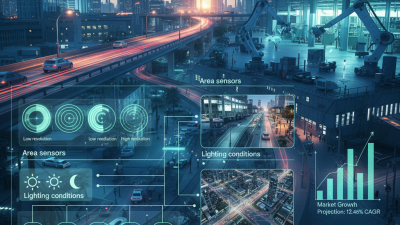
When selecting area sensors for your business, understanding their types and applications is crucial. Area sensors primarily fall into categories such as proximity sensors, imaging sensors, and temperature sensors. Each of these serves distinct functions that cater to various business needs.
Proximity sensors are often used in automated systems. They detect the presence or absence of objects without physical contact. These sensors are crucial for security and inventory management. Imaging sensors, on the other hand, capture visual data for surveillance and quality control. They enable businesses to monitor operations closely, ensuring safety and compliance. However, the setup can be complex and may require specialized knowledge.
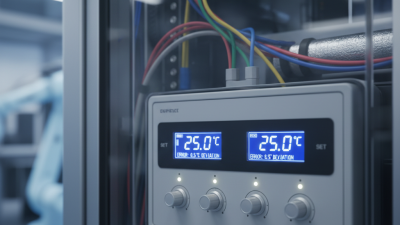
Temperature sensors are essential in environments such as food storage or manufacturing. They gauge temperature fluctuations that could affect product quality. While deploying temperature sensors appears straightforward, calibration is key. Mishandling this could lead to incorrect readings. Each type has its merits, but careful consideration of the specific application is vital.
Testing different sensors may yield unexpected results, prompting reflection on your initial choices. Businesses must remain adaptable and open to refining their sensor strategies.
Choosing the right area sensors for your business is crucial. Many factors come into play. One key consideration is the sensor type. There are various options available, such as infrared, ultrasonic, and laser sensors. Each type offers unique advantages and drawbacks. For example, ultrasonic sensors work well in noisy environments but may struggle with soft materials.
Another important factor is the sensor range. Depending on your application, you might need a sensor that detects over short or long distances. Industry reports show that 70% of businesses fail to measure the right range, which leads to functionality issues. Selecting a range that aligns with your operational needs can make a significant difference.
Additionally, integration capabilities must not be overlooked. Are you using existing systems? The sensor chosen should easily integrate with your current technology. Reports indicate that 65% of sensor failures stem from integration issues. This highlights the necessity for careful planning during the selection process to avoid unnecessary complications. A well-thought-out choice saves time and resources in the long run.
When considering area sensors for your business, features are key. These sensors come equipped with various technologies, including ultrasonic, infrared, and microwave capabilities. Each type has unique traits that cater to specific applications. For instance, ultrasonic sensors excel in detecting distance and movement, making them ideal for object detection in warehouses. Infrared sensors can monitor temperature changes, suitable for HVAC systems and safety applications.
Understanding the benefits is vital for decision-making. Area sensors can increase efficiency by automating processes. They support inventory management by tracking stock levels in real-time. In security, these sensors provide 24/7 monitoring, which can deter potential intrusions. Additionally, they enhance workplace safety by detecting unauthorized access in restricted areas.
Use cases vary widely across sectors. In retail, area sensors can analyze foot traffic, aiding in strategic layout planning. Manufacturing plants employ these sensors for equipment monitoring, reducing downtime. However, not all sensors are foolproof. Environmental factors like lighting and obstructions may affect performance. Assessing these limitations ensures smarter integration into your existing systems.
This chart displays the performance indices of the top 5 area sensors that businesses should consider. The performance index is a composite metric based on various criteria such as accuracy, range, and durability. Each sensor type offers unique benefits suitable for different applications.
Integrating area sensors into existing business systems can enhance efficiency and data accuracy. These sensors monitor specific regions, providing real-time data that businesses can use to make informed decisions. However, the integration process often comes with challenges that require careful planning.
One approach is to assess current system capabilities. Identify any limitations that may hinder smooth integration. Focus on compatibility issues, data formats, and existing software infrastructure. This preliminary step can reduce integration headaches later on. Engage with your IT team to understand potential hurdles.
Training staff is essential for a successful integration. People must understand how to work with new sensors and interpret data effectively. Consider providing workshops or tutorials on sensor usage. Encourage team members to share their experiences and challenges. This will foster a supportive environment for adapting to new technologies.
Remember that not every integration will be seamless. It’s crucial to remain adaptable and open to adjustments as issues arise. Sometimes, unexpected technical difficulties can complicate the process. Learning from these experiences helps refine your approach for future implementations.