7 Power Controller Buying Tips for Global Buyers
Global buyers are placing Power Controller decisions under greater technical and commercial pressure. Electricity demand is accelerating across factories, data centers, transport systems, and distributed energy projects. The International Energy Agency’s Electricity 2024 report forecasts global electricity demand to grow by about 4% annually through 2026. That growth increases the need for reliable switching, regulation, protection, and energy management.
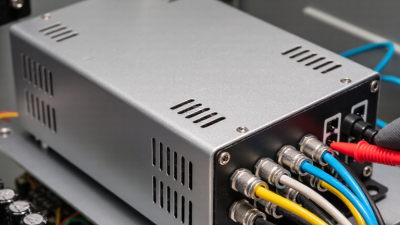
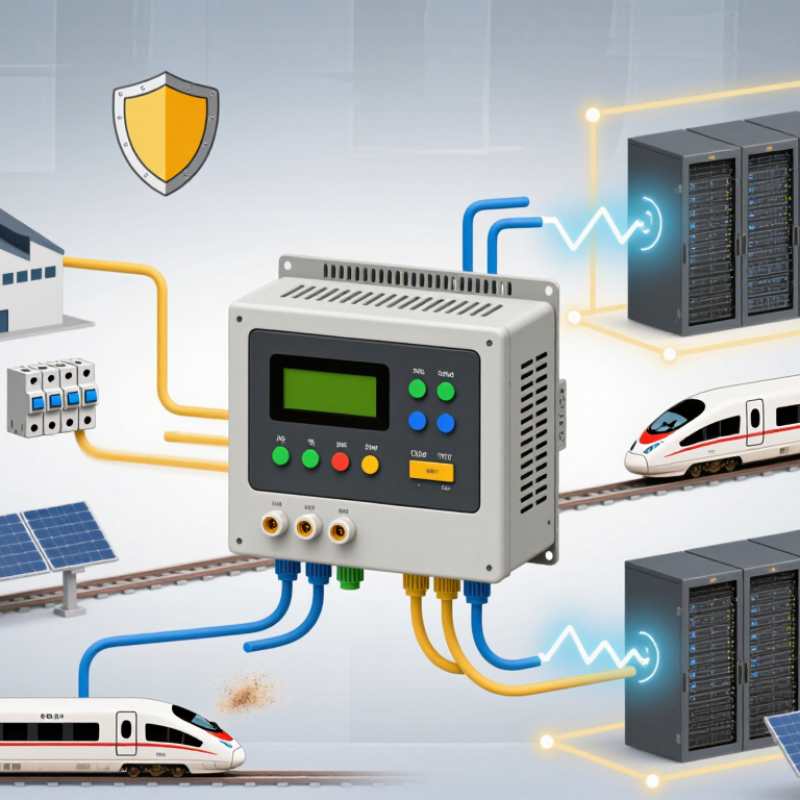
A Power Controller may look like a compact enclosure with terminals, displays, and cooling vents. Its real performance depends on load type, voltage stability, ambient temperature, response time, and control compatibility. The U.S. Department of Energy’s Better Buildings resources repeatedly emphasize efficient motor and industrial-system control as a practical route to reducing energy waste. Buyers should therefore examine lifecycle performance, not only the purchase price. Small details matter. A poorly matched controller can create heat, downtime, nuisance trips, or premature component failure.
This guide presents seven buying tips for international procurement teams. It considers ratings, certifications, communication protocols, installation conditions, supplier capability, maintenance support, and total cost of ownership. It also reflects widely used engineering practices associated with IEC standards and industrial safety documentation. Still, no report can replace site testing. That is where buyers sometimes become overconfident. A datasheet may show excellent laboratory performance, yet field conditions can include dust, voltage fluctuations, limited ventilation, and rushed installation. Careful questioning, sample evaluation, and documented technical support can reduce those risks. For global projects, the best choice is rarely the cheapest unit. It is the controller that remains predictable, serviceable, and compliant throughout its operating life.
Understanding Power Controllers and Their Main Applications
7 Power Controller Buying Tips for Global Buyers
Understanding Power Controllers and Their Main Applications
A power controller regulates electrical energy before it reaches a load. It can adjust voltage, current, switching time, or output power. Common designs include phase-angle, zero-cross, pulse-width, and closed-loop controllers. Each method suits different equipment. Heating elements need stable thermal control. Motors may require smoother starting and speed adjustment. Lighting systems often need low flicker and accurate dimming. Battery equipment demands careful current management and fault protection.
Buying tips: Match the controller with the load type, voltage, frequency, and maximum current. Check continuous ratings, not only short-term peaks. Confirm cooling needs, enclosure space, wiring terminals, and control signals. For international projects, review applicable safety, electromagnetic compatibility, and installation requirements. Clear technical documents reduce costly misunderstandings between suppliers and engineering teams.
Field evaluations often reveal a simple problem: the controller is correctly rated, but the system still overheats. Poor ventilation, harmonic distortion, or an unsuitable switching method may be responsible. A neat specification sheet can still mislead. Ask for load compatibility data, protection functions, test conditions, and expected service life. For industrial heaters, temperature feedback can improve consistency. For motors, overload response and ramp control matter more than impressive maximum power. For lighting, flicker performance should be checked under real operating conditions. No controller fits every load. A careful buyer compares the complete application, not just the price.
Defining Load, Voltage, Current, and Control Requirements
Global power controller buyers should define the load before comparing specifications.
Resistive heaters, motors, solenoids, and switching supplies behave differently. A motor may draw several times its running current during startup. That surge can trip an undersized controller, even when the nameplate current looks acceptable.
The International Energy Agency’s Electricity 2024 report projects global electricity demand to grow by about 4% annually through 2026. This growth increases pressure on efficiency, thermal management, and reliable control. Record nominal voltage, operating range, frequency, continuous current, peak current, and inrush duration. Also identify whether the load is single-phase, three-phase, inductive, or highly variable. Measure at the load. Do not guess.
Tip
Match control signals to the existing system. Analog input, digital switching, pulse-width modulation, and communication control require different interfaces. Check isolation, response time, fault feedback, and emergency shutdown behavior. IEC 60204-1 remains a useful reference for electrical equipment safety and control practices, but local installation rules still matter.
Tip
Leave practical headroom. A controller rated exactly at the measured current may run hot inside a sealed cabinet. Review ambient temperature, ventilation, cable length, altitude, and duty cycle. A spreadsheet can still mislead if it ignores inrush or heat. One imperfect assumption may become a costly field failure. Request test data, derating curves, and protection details before approval.
Verifying Global Standards, Certifications, and System Compatibility
A reliable power controller begins with the system, not the product label. Record input voltage, current, frequency, load type, control signal, and fault conditions. Then match the controller to applicable standards, such as IEC 60947 for low-voltage switchgear or IEC 61000 for electromagnetic compatibility. Certification must cover the exact model, ratings, and destination market. A similar-looking certificate is not enough.
Ask for the certificate, test report, issuing laboratory, and production date. Verify whether the laboratory follows ISO/IEC 17025 requirements. Check thermal performance at the enclosure’s real temperature, not only at 25°C. Review ingress protection, vibration limits, isolation distance, and surge resistance. Small details matter. Paperwork is not proof. The IEA’s Electricity 2024 report expects global electricity demand to grow by an average 3.4% annually through 2026. Higher demand can expose weak cooling, unstable inputs, and undersized switching components.
Compatibility also requires practical testing. Confirm communication protocols, signal levels, response time, wiring polarity, and fail-safe behavior. Test the controller with the actual motor, heater, inverter, or battery interface. IRENA reported 585 GW of renewable capacity additions in 2024, representing 92.5% of total new power capacity. That growth increases the need for controllers that tolerate fluctuating supply and frequent switching. I would still leave room for doubt: laboratory results may not reflect dust, long cable runs, or rushed installation. Request a sample, reproduce key tests, and document every deviation before approving a global purchase.
Comparing Suppliers, Total Cost, Support, and Long-Term Reliability
7 Power Controller Buying Tips for Global Buyers
Comparing suppliers requires more than reading the lowest quotation. Ask for load ratings, control tolerances, enclosure details, test reports, and production lead times. A reliable supplier explains assumptions clearly. Vague answers usually create costs later. Request a sample inspection plan, including wiring checks and thermal testing. Small details matter, especially when equipment operates in dusty workshops or hot warehouses.
Calculate the total cost, not only the unit price. Include freight, import duties, installation labor, spare modules, training, and possible downtime. A controller priced 10 percent lower may become expensive after repeated failures. Compare warranty terms carefully. Check whether replacement parts remain available for several years. Confirm delivery dates in writing, because optimistic promises can disrupt an entire production schedule. I have seen buyers overlook connector compatibility, then pay for unnecessary redesign work.
Technical support should be measurable. Ask how quickly engineers respond across time zones and whether remote diagnostics are available. Request service procedures for alarms, firmware updates, and emergency replacement. Long-term reliability depends on documented testing, stable component sourcing, and honest maintenance guidance. Review references from similar applications, not unrelated industries. Be willing to question your own assumptions. The cheapest option may be adequate, but only after its risks are visible. Reliability is never proven by a polished brochure alone.
7 Power Controller Buying Tips for Global Buyers
Recommended decision weighting for comparing suppliers, total cost, technical support, and long-term reliability.
This normalized benchmark gives the greatest weight to reliability, total cost of ownership, and supplier support. Buyers should validate efficiency, safety compliance, warranty terms, spare-parts availability, and lead times against project requirements and applicable standards such as IEC 61000 and IEC 61800.