INQUIRY
Leave Your Message

What Is a Solid State Power Controller?

A Solid State Power Controller, or SSPC, is an electronic device that switches and protects electrical loads without relying on conventional mechanical contacts. It uses semiconductor components to control power, monitor current, and respond to abnormal conditions. In an aircraft electrical bay, for example, an SSPC can disconnect a faulty branch before excess heat damages wiring. The details matter. Response time, load type, temperature, and fault settings all affect performance.

Power-electronics scholar Ned Mohan’s textbook work offers a useful foundation: “Power electronics is the application of solid-state electronics for the control and conversion of electric power.” This broad principle helps explain the SSPC’s role, though an SSPC is more than a switch. It combines switching with sensing and protective control. Engineers must assess its behavior under real operating conditions, not just read its rated current. A motor, lamp, and capacitive load can each produce different electrical demands.

There are trade-offs. Solid-state devices can switch quickly and avoid contact wear, but they may generate heat and can fail in ways that require careful system design. No single controller suits every circuit. A sound selection process checks voltage, current, cooling, fault response, and compatibility with the load. Small details count. And specifications deserve scrutiny: ratings alone do not tell the whole story.
What Is a Solid State Power Controller?

Definition and Purpose of a Solid State Power Controller

A solid state power controller (SSPC) is an electronic switch that controls and protects an electrical load. Semiconductor devices replace mechanical contacts, while sensing circuits monitor current and can disconnect a branch during an overload or short circuit. The purpose is practical: distribute power, reduce contact wear, and provide fault information to maintenance teams. In an aircraft, an SSPC may switch power to avionics or cabin systems and help isolate a faulty circuit without relying on a conventional breaker alone. Fast switching matters. NASA technical publications on more-electric aircraft describe 115/200-volt AC and 270-volt DC distribution architectures, illustrating the range of electrical buses these controllers may serve. The controller must match its load, bus voltage, and fault-clearing requirements; it is not a universal plug-in replacement.

Tips: Check the load’s normal and inrush current, then confirm the SSPC’s trip behavior and thermal limits. A motor drawing a brief startup surge needs different settings from a steady avionics load. Also verify how the unit reports faults to the aircraft’s monitoring system. One detail is easy to miss: electronic switching can improve diagnostics, but it does not make wiring or coordination decisions automatic. The design still needs careful testing.

What Is a Solid State Power Controller? — Definition and Purpose

Aspect Description Purpose or Practical Note
Definition A solid state power controller (SSPC) is an electronic device that switches and manages electrical power to a load using semiconductor components rather than mechanical contacts. It controls the delivery of power and may also monitor the circuit and respond to abnormal conditions.
Typical switching devices Depending on the design and whether the circuit is AC or DC, switching may use MOSFETs, IGBTs, or thyristor-family devices. The semiconductor type is selected to suit factors such as voltage, current, switching frequency, and heat dissipation.
How it operates A control signal commands the semiconductor switch to conduct or stop conducting. Some controllers can also regulate power rather than simply switch it on or off. AC designs may use zero-cross or phase-angle control; DC designs may use switching techniques such as pulse-width modulation, depending on the controller.
Power control An SSPC can connect or disconnect a load and, in suitable designs, adjust the amount of power delivered. Control capabilities vary; not every SSPC provides continuous power regulation.
Protection functions Many models monitor current or temperature and can trip or limit the output during conditions such as overload, short circuit, or overheating. Available protection and response behavior depend on the specific design and system configuration.
Status and monitoring Some controllers provide status signals or measured information, such as switch state, fault indication, or load current. These features can support system diagnostics and help identify a fault without relying solely on local inspection.
Common applications SSPCs are used in systems that need controlled distribution of electrical power, including aircraft electrical systems, industrial equipment, and other specialized power-distribution systems. They are useful where electronic control, monitoring, or repeated switching is important.
Compared with a mechanical circuit breaker An SSPC switches electronically, while a conventional circuit breaker generally uses mechanical contacts and a trip mechanism. Electronic switching can enable faster control and monitoring, but semiconductor devices have their own voltage, current, and thermal limits.
Key design considerations Selection requires checking the supply type, operating voltage, continuous and peak current, load characteristics, protection behavior, control interface, and thermal requirements. Correct sizing and coordination with the load and upstream protection are essential for reliable operation.

How a Solid State Power Controller Operates

A solid-state power controller (SSPC) switches and protects an electrical load using semiconductor devices rather than mechanical contacts. A sensing circuit continuously measures current and, in many designs, voltage and temperature. The controller compares these readings with programmed limits. If current rises above a threshold, it can limit output or switch off the channel. Some units also report faults to a central control system. The response is fast. But heat remains.

The operating limits depend on the power system and the connected load. MIL-STD-704F specifies 28 volts DC as a nominal aircraft electrical-system voltage, giving designers a defined bus reference. An SSPC on that bus must handle normal demand while distinguishing brief inrush current from a sustained fault. That distinction is not always simple: a motor may draw a high starting current without being damaged. Designers therefore coordinate trip thresholds, response delays, and wiring protection. Semiconductor losses also create heat, so thermal monitoring and adequate cooling matter. In practice, a controller’s fault log can help technicians trace an intermittent overload, though sensor readings may not reveal the root cause by themselves.

What Is a Solid State Power Controller? How It Operates

A solid state power controller (SSPC) uses semiconductor switches and electronic monitoring to control power. In this representative 28 V DC waveform, current rises above a 12 A limit during an overload. The controller briefly limits current, then disconnects the output; the load current and output voltage fall to zero. Actual limits and response times vary by system.

Key Components and Control Functions

What Is a Solid State Power Controller?
Key Components and Control Functions

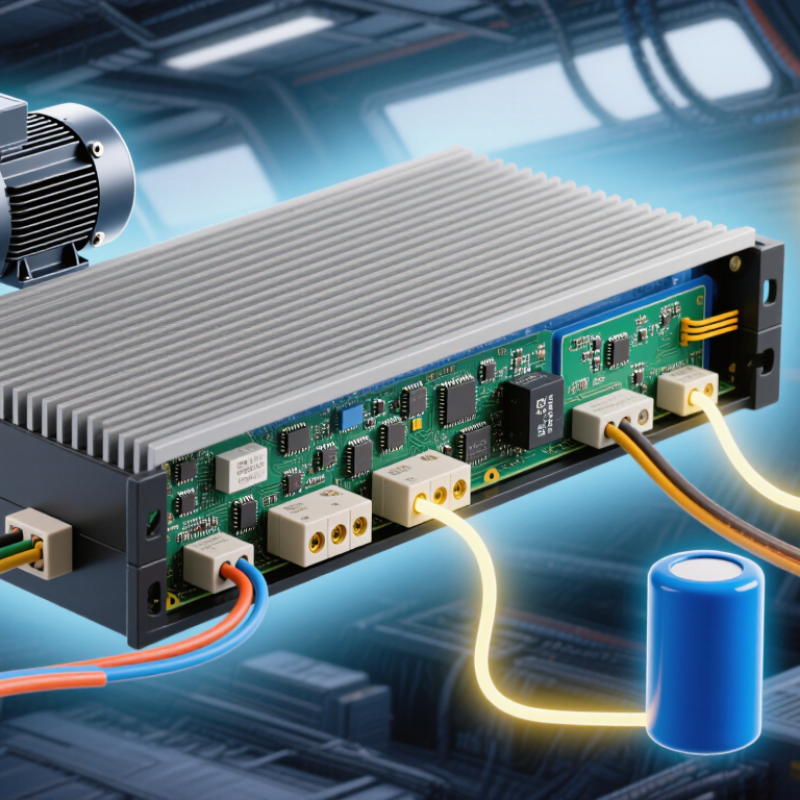
A solid state power controller (SSPC) switches electrical loads using semiconductor devices rather than mechanical contacts. Depending on the circuit, these may include MOSFETs or IGBTs. A gate driver controls the switching devices, while a current sensor tracks the load. The controller processes these signals and communicates with a system command interface. Heat sinks or other thermal paths help carry heat away from the components. That detail matters: repeated switching can raise temperatures, even when the load appears modest.

Control functions typically include switching, current monitoring, and fault protection. An SSPC may disconnect a load when it detects an overload or short circuit, then report the event to a supervisory system. Some designs also support programmable current limits or controlled restart behavior. Exact functions vary by application, so check the device’s ratings and operating documentation. Solid-state protection can respond quickly, but it does not remove every system-level risk. Coordination with wiring, upstream protection, and thermal limits still deserves careful review.

Tips: Compare the controller’s voltage, current, and fault ratings with the actual load. Watch for brief startup surges; they can trigger protection unexpectedly. A test under realistic conditions is useful. So is a second look at the assumptions.

Common Types and System Configurations

Solid state power controllers (SSPCs) switch and protect electrical loads using semiconductor devices instead of mechanical contacts. Common types include DC controllers, AC controllers, and multi-channel units that protect several branches independently. DC designs often use MOSFETs; AC designs may use different switching arrangements to handle alternating current. The choice depends on voltage, load behavior, and fault-clearing requirements. Small, but important.

System layouts are commonly centralized or distributed. A centralized unit sits near the power source and feeds multiple circuits, simplifying monitoring but concentrating wiring. Distributed controllers sit closer to loads, such as pumps or cabin equipment, which can shorten power runs. The U.S. Department of Defense’s MIL-STD-704F specifies aircraft power characteristics including 28 V DC and 115/200 V, 400 Hz AC. These values help explain why aircraft SSPCs must be selected for the intended supply, not by current rating alone.

Single-channel controllers suit dedicated loads; multi-channel units can isolate one faulty branch while keeping others powered. Some systems use dual power feeds or redundant controller paths for critical loads. Parallel power modules require deliberate current sharing, not just duplicated wiring. A tidy diagram can hide a difficult detail: motors and capacitive loads may draw brief inrush currents that trigger nuisance trips. Test the actual load profile. That part is easy to overlook.

Applications, Benefits, and Limitations

A solid-state power controller (SSPC) uses semiconductor switches to control and protect electrical loads. Unlike a traditional breaker, it can monitor current and disconnect a circuit electronically. In aircraft, vehicles, and industrial equipment, SSPCs can manage pumps, fans, lighting, and other loads. A controller may detect an overload and shut down a circuit before wiring becomes dangerously hot. Fast response matters. Some designs also report faults, helping technicians trace a problem without checking every branch by hand.

SSPCs have no moving contacts to wear out, and programmable protection can reduce nuisance trips. Their compact size can also simplify dense control panels. But they are not a universal upgrade. Semiconductor devices generate heat, so installation needs careful thermal design, especially in a sealed enclosure. They can also allow small leakage currents when switched off, and switching may create electrical noise. High inrush loads can challenge protection settings. Engineers should test real load behavior, wiring, and cooling together. A neat specification sheet is not enough; field conditions can be less tidy.